Would the World Be More Peaceful with More Female Heads of State?
'Women are pacifists and men are aggressors': a gender stereotype that has lasted for centuries.
But how biologically accurate is this? Pro-aggression and warfare have partly formed the foundation of politics for centuries under male leadership. But as the number of female Heads of State increases, could this foundation be challenged?
Bio-evolutionary factors have thus far assigned women more dovish social roles, with men, in contrast, taking up the role of "hawk". Men historically experienced greater reproductive pressure than women, with some facing exclusion whilst others would procreate with many. Kingsley Browne from Wayne State University argues in Women at War: An Evolutionary Perspective | Academia (2001) that male reproductive success has historically been associated with status and wealth, both of which men would traditionally gain through war.
Therefore, Browne argues that men have evolved to be greater natural risk-takers and more inclined towards aggression, as these qualities were necessary to succeed in battle. Success here means not only survival, but also greater status and wealth, and therefore greater reproductive success. As a product of this evolution, Browne suggests that war is viewed more favourably by men than by women, as their heightened aggression encourages conflict despite seemingly unimportant risks.
Browne concludes that there will therefore be less warfare with more female Heads of State, as they lack men's biological enthusiasm for war. However, doesn't the competition inherent in politics attract women who enjoy conflict, challenging Browne's generalisation that women are less inclined towards such behaviour?
Considering the role of risk-taking in decisions about war, we might assume that politicians who are more willing to take risks are also more likely to initiate conflict, given the uncertainty and potential consequences involved. Researchers using the Thrill and Adventure Seeking subscale of the "Sensation Seeking Scale" (1960s-1970s) found that "males took risks even when it was clear that it was a bad idea to take a risk", whereas females "seemed to be disinclined to take risks even in fairly innocuous situations or when it was a good idea to take a risk" (as referenced in Women at War: An Evolutionary Perspective | Academia). This suggests that men are typically greater risk-takers than women, making them more likely to enter into conflict and consequently leading to more warfare under male leadership.
On the other hand, whilst heedless risk-taking may lead to more warfare, an inability to take risks can also compromise national security. In 1938, British Prime Minister Neville Chamberlain's policy of appeasement allowed Hitler to annex Czechoslovakia, contributing to the outbreak of World War II. This showcases how risk aversion can, in fact, result in wartime disaster. Risk avoidance is a characteristic that the Sensation Seeking Scale associates with women rather than men (as quoted above), suggesting instead that more war could result from having more female Heads of State. To what extent, though, can we rely on the Sensation Seeking Scale's generalisations? Chamberlain provides evidence that not all men are risk-takers, so could women be the opposite? Surely, too, the position of Head of State attracts women who are risk-takers, given that the role requires them to risk public hostility and even potential assassination attempts.
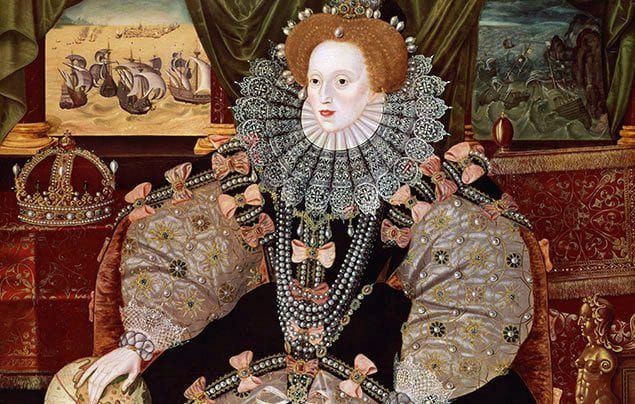
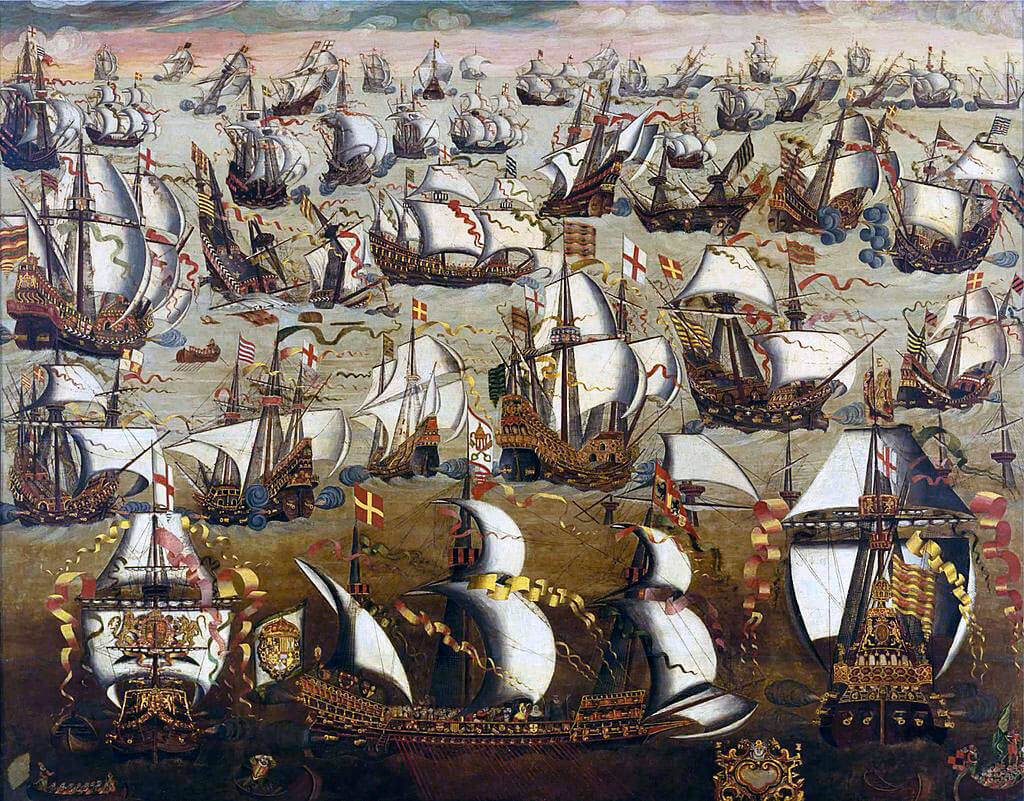
The adage "only Nixon could go to China" therefore becomes a vital counterpart when considering female military success as Heads of State, with history showing that a leader's bellicose reputation can allow for greater peace. Queen Elizabeth I (featured) is iconic for her bellicose reputation, encouraging privateering and challenging Spanish domination of the Americas to strengthen England. Her speech in 1588, rallying troops before the Spanish Armada, remains famous today: "I know I have the body of a weak and feeble woman; but I have the heart and stomach of a king." This reflects the pressure on female Heads of State to adopt traditionally masculine aggression, suggesting that feminine input would not necessarily lead to less war.
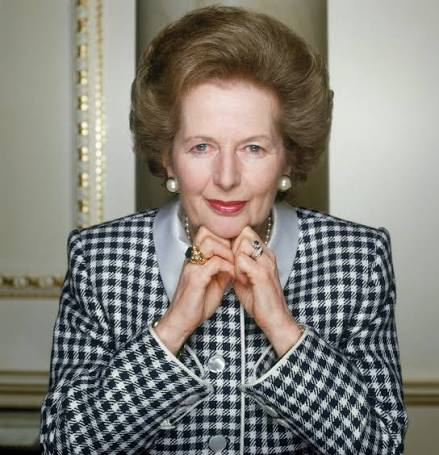
Margaret Thatcher's ruthlessness went on to earn her the nickname of the "Iron Lady", a term often used to describe female Heads of State. Thatcher profoundly reformed Britain as its first female Prime Minister (1979-1990), implementing policies of economic privatisation and free markets, despite the resulting mass short-term unemployment. Arguably, these two examples of strong, determined women challenge Kingsley Browne's and the Sensation Seeking Scale's assertions that women are weak and passive, suggesting that more female Heads of State would not necessarily lead to less war.
Socialisation suggests that this outcome is not inevitable. A nationwide Pew Research Centre survey of Social and Demographic Trends (2017) shows that perceived gender differences in the US have decreased since the 1970s. This reduction in gender stereotypes suggests that the conventional, weaker feminine role may be a result of socialisation rather than evolution. Socialisation also brings the possibility of change, offering hope for a future in which women can pursue their preferred policies without the pressure to appear tough. The research also found that the American public places greater value on a President having what they perceive to be typically male traits than typically female ones. To exemplify these traits, the majority of the public associated men with dominance, whilst women were seen as more egalitarian. However, as perceived gender differences decrease, highly valued "male" traits may become less closely associated with men and more accessible to women, potentially increasing public support for female Heads of State. Perhaps, then, female Heads of State will be able to create a more peaceful world without unjust sexism discouraging them from pursuing peace.
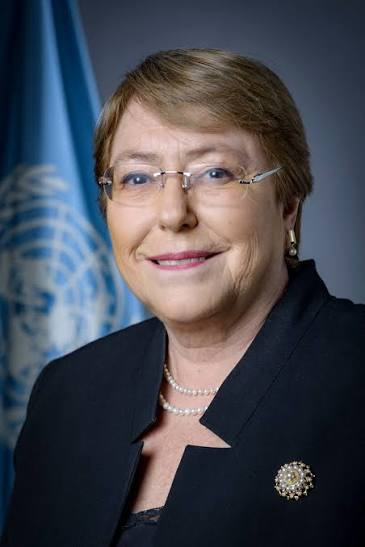
Elaborating on this, former President of Chile and former Executive Director of UN Women, Michelle Bachelet, said: "gender equality will only be possible with the solidarity of both women and men" (2011). With such gender "equality" and "solidarity", female Heads of State would not need to become "Iron Ladies" to conform to the public's preference for perceived masculine traits. Instead, they could have the opportunity to pursue their preferred policies, finally creating a genuine opportunity to establish whether female leadership will, in fact, nurture a more peaceful world.
Regardless, women are constantly disproving the gender stereotypes discussed here, from being risk-averse and passive to being ruthlessly aggressive and even pro-peace. This demonstrates that women cannot be confined to generalisations or stereotypes. Having more female Heads of State would not definitively lead to a more peaceful world, as women are too complex and varied to be associated solely with peace and never with war.
By Honor Barclay