Engineering the Mind: The Art of Social Manipulation


Most people understand social engineering as a purely technical threat, a matter of malicious code, compromised passwords, and deceptive phishing emails sent to the elderly. In reality, social engineering has existed long before the internet, and in some of its most potent forms, it completely bypasses the need for the internet altogether. At its core, social engineering is built around the key ideas of emotional appeal, social proof, plausibility and tactical repetition. By weaponising emotion, a narrative can bypass logical processing and encourage immediate action, whether to facilitate fraud or promote a business through limited-time sales.
Once a behavioural trend begins, social proof is established within a community as people observe others' actions to seek direction, especially when feeling uncertain. This is a key principle of persuasion identified by Robert Cialdini in his book Influence. This biological urge, driven by the social aspects of the human psyche, leads to a compounding network effect, creating environmental saturation. This means that some unverified sources of information can subconsciously become the baseline truth for the majority. While social media and digital algorithms have accelerated the speed at which new information can reach a wider audience, the phenomenon of large-scale psychological manipulation has been recorded as far back as 1374.
Key mass Psychogenic outbreaks
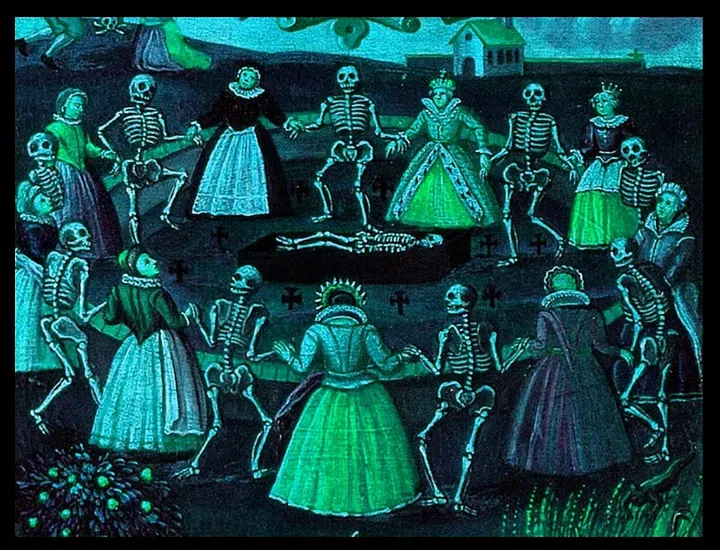
The Dancing Plague, originating in Strasbourg, Alsace, in 1518, was an incident in which hundreds of people began dancing uncontrollably for days on end, to the point of exhaustion or even death. It is estimated that as many as 15 people may have died per day at its peak, with up to 100 deaths overall during the course of the month, although experts have not established an exact number.
Some theories arose, with historians arguing that the plagues of medieval Europe may have been caused by Ergot; a mind-altering mould found on the stalks of damp rye, which can cause twitching, jerking, and hallucinations - a condition known as St Anthony’s Fire.
However, this theory was challenged in 2009 by historian John Waller in his book A Time to Dance, a Time to Die. He explained that while ergot can cause these convulsions, it also restricts blood flow to the extremities; therefore, a person poisoned by it would simply be unable to dance for several days in a row.
To this day, we still have no fully rational explanation for why this occurred. However, it is theorised to have been driven by severe socioeconomic stress and intense religious anxiety, as Alsace had begun to experience internal divisions and religious reformation was taking place during the 16th century. Some contemporary accounts claim that people danced out of fear of Saint Vitus, causing others to join, as it was believed that Saint Vitus himself would punish sinners by making them dance uncontrollably.
One seventeenth-century chronicle by the Strasbourg jurist Johann Schilter quotes a now-lost manuscript poem:
Many hundreds in Strassburg began
To dance and hop, women and men,
In the public market, in alleys and streets,
Day and night; and many of them ate nothing
Until at last the sickness left them.
This affliction was called St Vitus’ dance.
Modern explanations have yet to fully establish why this plague became so widespread, particularly as many similar outbreaks occurred across Europe during the century. However, the sight of others dancing may have triggered a subconscious, compulsive psychogenic response in observers, causing a group of roughly 400 people to take to the streets.
The tulip bubble in the Dutch Republic in 1637 arose through artificial scarcity, an innate fear of missing out on advantageous opportunities and human greed, leading to the perceived value of tulip bulbs becoming disproportionately inflated. A single bulb was traded for more than the cost of a luxury estate, with the variety of "broken" bulbs carrying the mosaic virus being the most highly valued. The most famous of these was the Semper Augustus. This continued until the social paradigm shifted in February 1637, when buyers stopped showing up to fulfil contracts and new buyers no longer entered the market. This caused a catastrophic market crash, with prices dropping by more than 95% in one week. Some people even committed suicide by jumping into the canals of Amsterdam, while others celebrated their newly acquired fortunes. In 1637, the state introduced a new arrangement for the tulip trade, taking the situation in hand and creating a small-scale, controllable system. Psychologists and economists summarise the event as follows: the bulbs mattered less than the story people had started telling themselves about what someone else would pay tomorrow.
The tulip becomes a mirror. Everyone thinks they are seeing value. Many are really seeing other people’s desire reflected back at them.
Tulip mania was a vital example of herd behaviour, as a collective buying frenzy fuelled a speculative model in which people bought and sold promises for the following year's tulips. People had no true gain or value in their wealth, but their desperate desire to monopolise a new market fuelled an illusion of prosperity.

Finally, the Tanganyika laughing plague occurred in 1962 in what is now modern-day Tanzania. The outbreak began in a girls' school, inducing large-scale cases of uncontrollable laughter, sometimes to the point of physical pain, across multiple villages and affecting around a thousand people. This caused widespread disruption, with 14 schools having to close temporarily and healthcare services facing confusion, as cases lasted for months. The plague began with just one schoolgirl experiencing "a case of anxiety-induced laughter". Symptoms among those affected included recurring laughing attacks and inconsolable crying, which could last from a few hours to up to 16 hours a day. General restlessness was also a common accompaniment, with aimless pacing, running and sometimes even acts of violence being observed. However, there was no evidence of organic causes across the database of 1,000 patients. It is now understood that the physical act of laughter served as a high-salience behavioural cue that other observers would involuntarily replicate, with Christian Hemplemann from Texas A&M University describing the epidemic as a case of:
“mass psychogenic or sociogenic illness, a malady that has the capacity to strike in a variety of high stress settings. The stress factor here… included the unfamiliar expectations imposed in the British-run schools and the uncertainties created by Tanganyika’s independence, achieved barely a month before”

While we have now listed some of the key cases, it is important to recognise that these were not isolated incidents, with similar cases still occurring across the world. Their most common denominator is the presence of extreme socioeconomic stressors within the population. To better understand how these stressors can translate directly into behavioural abnormalities, we must begin to examine some of the key aspects of human attention, memory and cognitive science. A cognitive trap can consist of multiple lures and psychological targets; however, the focus here will be on social salience, repetition and suggestion.
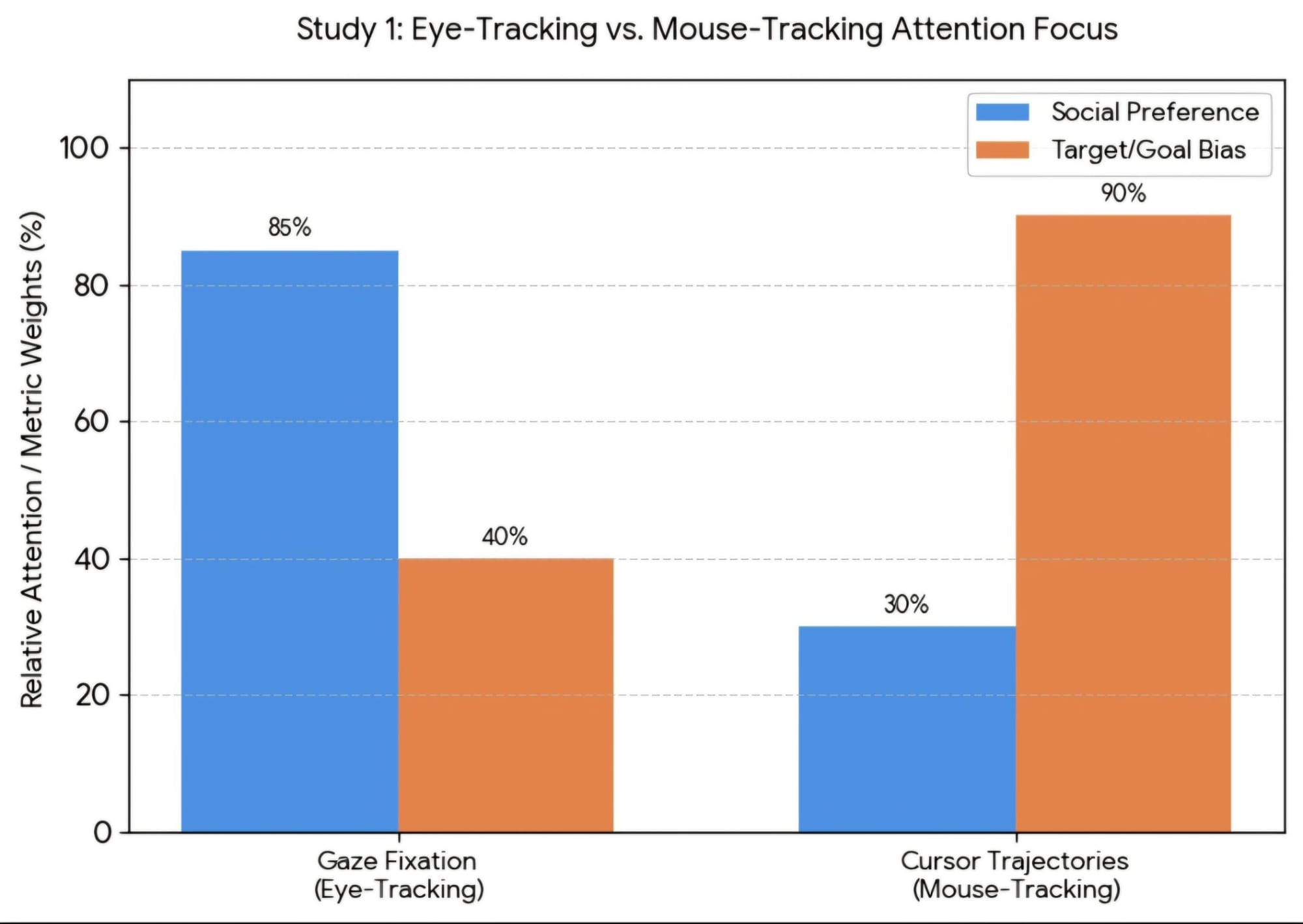
Human attention is highly selective and naturally prioritises certain elements within a complex environment. One of the key focuses of attention is social information, or people, known as social salience. Research by Ge, Y. et al. (2026) utilised a web-based "spot-the-difference" task to analyse how social information is processed within naturalistic visual scenes (Behaviour Research Methods, 58(12)). Their findings show that our cognitive architecture has an acute sensitivity to social anchors. When an object, face or behaviour carries significant social relevance, it dominates our visual and mental processing capacity, with gaze fixation being greatest for social regions regardless of where the target difference was located. However, the mouse-tracking data still reflected more goal-oriented behaviour. Statistical values are assigned placeholder values to follow the trend, as the data was not disclosed.
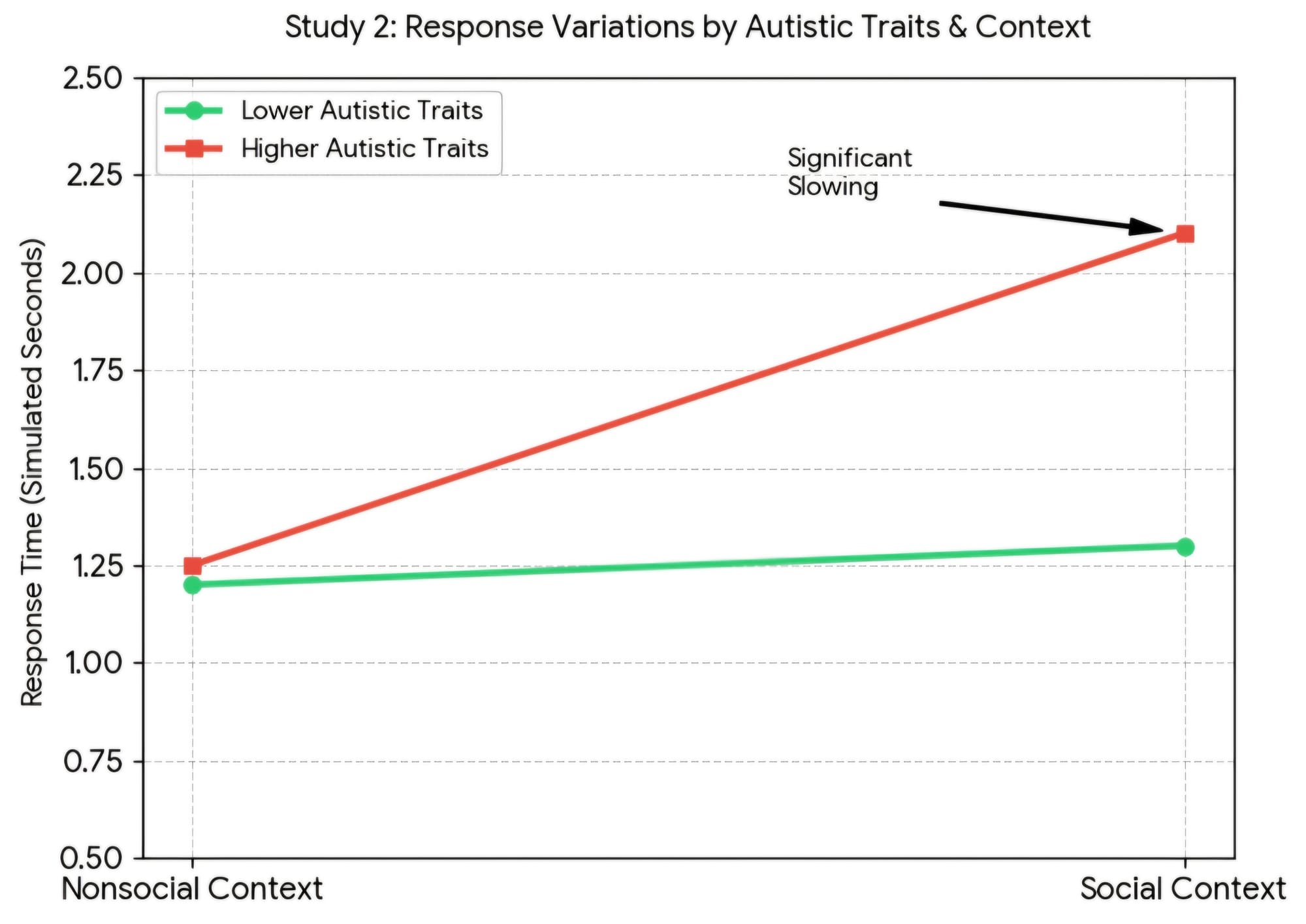
Furthermore, Study 2 showed that people with autism, while slower to respond specifically to social components of the image, still followed the same patterns as the first group. This indicates that, even when it may not be apparent, the brain has a subconscious bias towards social information, which can therefore be used to capture immediate attention and shift deeper logical analysis into the background.
Memory is also not a static recording device, as many believe, but rather a highly malleable, multi-step process. Psychological frameworks established by Elizabeth Loftus demonstrate how human memory can easily be contaminated through suggestive phrasing, as documented through Loftus' published research in 2001. For the key points, analysis by Reeves (2003) will be used. In an original study, 16% of people exposed to a false advert for Disneyland containing Bugs Bunny later reported that they had actually seen the character. In a newer version, 30% of people exposed to the Bugs Bunny advert reported remembering or knowing that they had met Bugs Bunny, while a further 40% of those in the double-exposure group (who had seen both a false advert and a cardboard cutout of the character) reported the same thing.
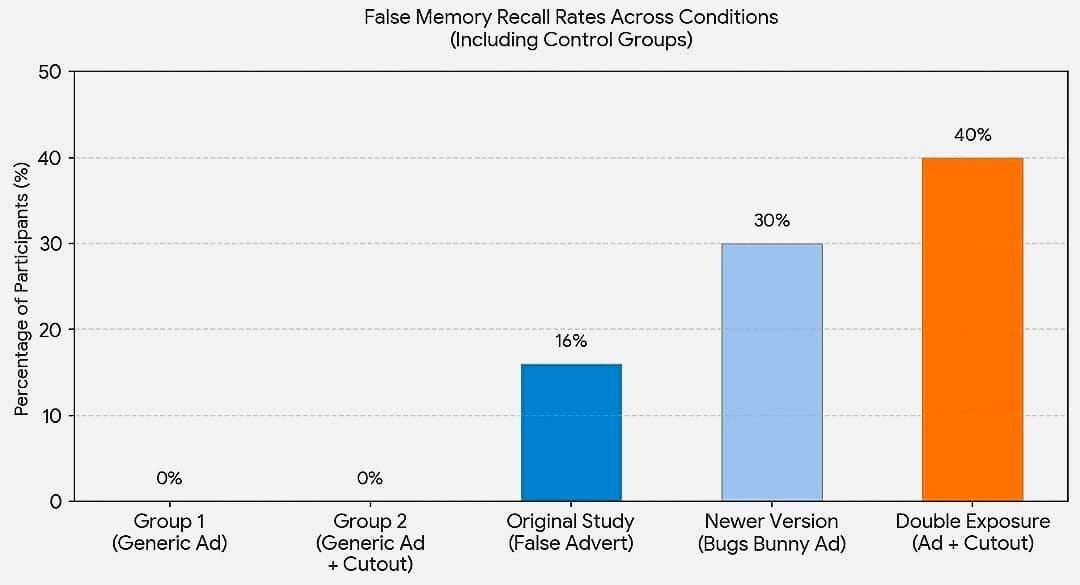
In this research, remembering is categorised as having an actual recollection of the event, while knowing is categorised as having no real memory of it but being certain that it happened. This study illustrates how individuals can be led to recall entirely false events through the correct procedures, with Pickrell explaining that:
“Creating a false memory is a process. Someone saying, ‘I know it could have happened’ is taking the first step to actually creating the memory."
This highlights how plausibility, along with repeated exposure to subtle visual cues, suggestive questions and social validation, can contribute to the creation of entirely false memories, often without our awareness. In later suggestive interviews following the questionnaires to test memory, less than 20% of all the people exposed to two suggestive interviews claimed that false information or memory could have influenced their recall. We can also see how this affects the brain beyond the immediate effect through the observable ripple effect in the study, as people who were exposed to the false advertising were also more likely to associate Bugs Bunny with other unrelated things in Disneyland, rather than solely the handshake suggested in the advert.
Media relevance today
These cognitive weak points and flaws identified by psychologists accumulate through digital industrialisation to shape modern algorithms. Platforms do not merely host content. They serve as optimised pipelines designed to maximise engagement and profit by adapting to consumers' behavioural patterns. Automated systems evaluate user behaviour and prioritise content with high emotional appeal, artificially increasing exposure to divisive, sensational or shocking material. This replicates the conditions often found in historical psychogenic events by ensuring that users' mental states are constantly exposed to high-arousal stimuli.
An important point to note is that new data has also found that AI itself is vulnerable to self-propagating ideas between agents, potentially causing an interconnected network of databases to operate according to very similar principles. On social media, it is much easier to create social proof and repetition, as the social evaluation of media can be quantified directly through interactions with content.
However, data shows that automated traffic across the internet grew almost eight times faster than human activity in 2025, with Cloudflare's Radar dashboard putting bots at 57.5% of all HTTP access requests for HTML content and people at only 42.5%. The same report also explains how activity from AI tools such as OpenClaw, which perform tasks autonomously for users, increased by 8,000% in the space of just one year. Large language models also play a significant role, with an increase of 187% from January to December 2025. This quantifiable social proof can therefore become much less reliable than previously suspected, potentially creating an artificial consensus that changes the collective perceptions of consumers.
“The internet as a whole was created with this very basic notion that there’s a human being on the other side of the computer screen, and that notion is very rapidly being replaced,” Stu Solomon, CEO of Human Security, told CNBC.
The vulnerabilities targeted by malicious social engineers are not flaws unique to digital tools; rather, they are innate biological features that evolved to prioritise quick responses and the understanding of social cues for the prosperity of larger groups. Only now can we see how the increasingly structured reality of our daily lives is based on underlying neurological frameworks and scientific principles.
By Isabelle Kilby
Sources -
Psychology Notes HQ. (2015, August 31). What is the social proof theory? - The psychology notes headquarters. The Psychology Notes Headquarters. https://www.psychologynoteshq.com/social-proof/
Ishak, N. (2025, May 8). How the dancing plague of 1518 left 100 people dead. All That’s Interesting. https://allthatsinteresting.com/dancing-plague
Pennant-Rea, N. (2018, July 10). The dancing plague of 1518. The Public Domain Review. https://publicdomainreview.org/essay/the-dancing-plague-of-1518/
Alsace from the reformation to the revolution - musée Protestant. (2017, November 30). Musée Protestant. https://museeprotestant.org/en/parcours/lalsace-de-la-reforme-a-la-revolution/
Why did the Dutch tulip bubble really burst in 1637? - Pages of history. (2026, September 17). Pages Of History. https://pagesofhistory.org/why-did-the-dutch-tulip-bubble-really-burst-in-1637/
Tulip Mania explained: How the world’s first financial bubble started and collapsed. (2026, May 2). Hidden Fortunes. https://hiddenfortunes.io/tulip-mania-the-first-financial-bubble-in-history/
Holmes, T. T. (2016, January 15). The 1962 laughter epidemic of Tanganyika was no joke. Atlas Obscura. https://www.atlasobscura.com/articles/1962-laughter-epidemic-tanganyika
Ge, Y., Xia, Q., Li, G., Jiang, Y. and Wang, L. (2026). A web-based spot-the-difference paradigm for studying social information processing in naturalistic visual scenes. Behaviour Research Methods, 58(12). https/doi:10.3758/s13428-026-03213-8.
Reeves, R. (2024). False Memories in Disneyland • CODOH. [online] Codoh.com. https://codoh.com/library/document/false-memories-in-disneyland/
AILog. (2026, August 18). Mind viruses demonstrated: Self-spreading ideas between agents. AILog. https://www.aimodeling.com/en/news/slug/mind-viruses-multi-agent-llm
Murti, L. (2026, March 26). AI and bots have officially taken over the internet, report finds. CNBC. https://www.cnbc.com/2026/03/26/ai-bots-humans-internet.html
Predin, J. M. (2026, June 4). Bots now outnumber humans online and the internet was never built for this. Forbes. https://www.forbes.com/sites/josipamajic/2026/06/04/bots-now-outnumber-humans-online-and-the-internet-was-never-built-for-this/