Food For Thought Friday
Food for Thought Friday is our weekly recommendation series, where contributors share the books, podcasts, films and ideas that have shaped how they think. From unexpected perspectives to new intellectual interests, each recommendation offers a glimpse into what our writers are reading, watching and exploring beyond the page.
Week 1
This week, Natasha Callis kicks things off..
"I have been learning Russian at university. It's provided me with something different in my university schedule and it's been enjoyable so far. What has been thought-provoking is the structure of the languages we learn and speak shapes the way we think about the world. For instance, both Russian and German distinguish between being in a particular space and moving into it, whereas English can hide this difference. It is a small thing but it made me consider how much we can learn about our own language when we encounter a different one. What do we do when sentences are not easily translatable and the full meaning remains hidden? This can be related to the politics space as well: from meetings or conferences between world leaders to expressions of politeness between friends and family. I would recommend dipping your toe into the ocean that is the Russian language if you're interested in languages and perhaps want a break from the Latin alphabet. Of course, Russian is a topical language at the moment because of the Russo-Ukrainian war, so if you are interested in current affairs then it would definitely come in handy!"
Natasha Callis is one of our Social Media Leads and a contributing writer. She is currently studying International Relations, German and Russian at the University of St Andrews.
Week 2
This week we hear from Honor Barclay, who read The Selfish Gene by Richard Dawkins.
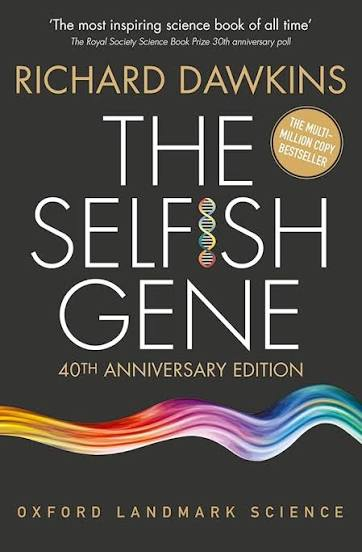
Here is what she had to say:
"Presenting evolution from the perspective of the gene, the book argues that evolution occurs to increase the chance of the gene’s survival. It suggests that the individual is just a mere host for this gene and that our complex behaviours have evolved because they maximise the chance of the gene being passed down the generations and surviving. For example, two unrelated individuals may help each other because this is mutually beneficial for the gene. School teaches evolution from the organism’s perspective, so it was extremely thought-provoking to see that challenged. However, whilst I am persuaded by the idea of evolution occurring to maximise the chance of the gene’s survival, the book does have quite a narrow focus on the gene’s effect on evolution rather than other evolutionary affecting factors such as the environment."
Honor recommends the book to any prospective biology students who have at least a GCSE in the subject, as it is quite a complex book.
Honor is a sixth form student studying A Level Biology, History, English Literature and an EPQ.
Week 3
This week’s recommendation is brought to you by Octavia Brolly.
Her contribution is a feminist book by Lucy Steeds, titled ‘The Artist’.
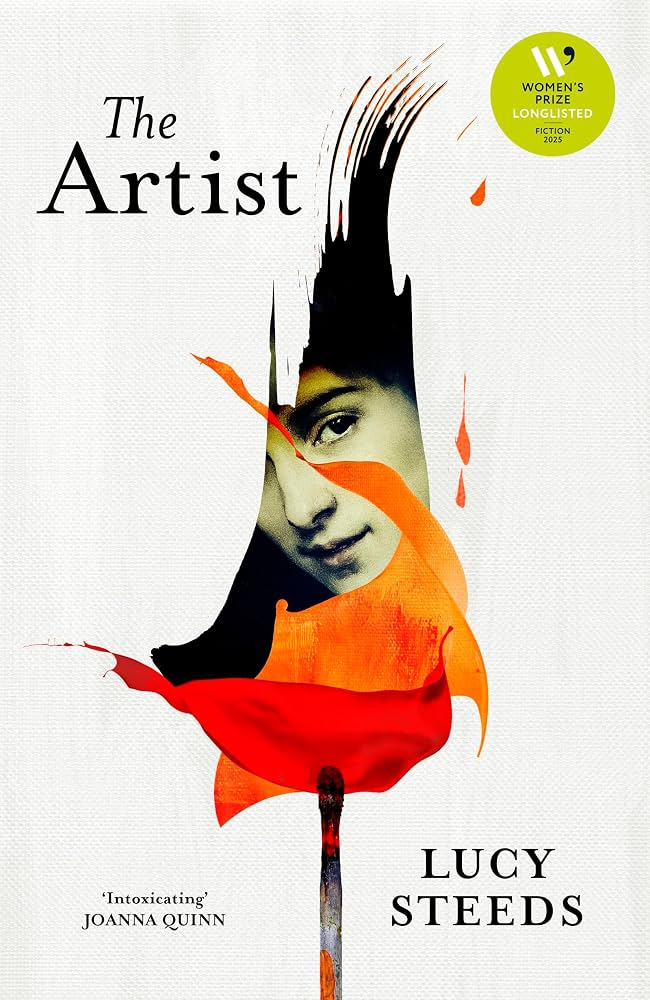
It’s about a silenced woman who is forced to remain in the shadows of her abusive uncle, even though she is equally as talented an artist as he is. In her own words, this is why she found it thought-provoking:
“I thought it played interestingly with the subject of abuse and represented the dependence and love many can feel for their horrendous abuser. Its exploration of feminism and female representation in the arts resonated with me. Steeds’ writing is evocative and her descriptions are powerful.”
Octavia would recommend the book to “anybody who enjoys historic fiction with strong feminist values”.
Octavia is a year 12 sixth form student studying English Literature, Drama and Philosophy.
Week 4
This week's contributor, Innaya Baig, is a sixth form student from London, currently studying A Level Politics, History and Geography.
She aspires to pursue a career in law and is particularly interested in how political decisions, historical events and international legal frameworks shape the modern world.

"I recently listened to an episode of The Rest Is Politics, featuring Andy Burnham, in which he discussed key issues such as Brexit, the centralisation of power in Westminster, artificial intelligence and the future of British politics. One of the main themes was Britain’s sovereignty and whether the country truly has control over its own future, particularly with the growing influence of American and Chinese technology companies."
"I found his discussion about AI particularly thought-provoking, as I feel that many people have yet to fully grasp the scale of its potential implications. With the US and China leading much of the development of AI, Britain’s growing dependence on foreign technology could pose significant national security risks, particularly as AI becomes increasingly integrated into defence systems and critical infrastructure. However, I questioned how realistic Burnham’s proposal for global AI regulation would be, given the geopolitical competition between countries such as China and the US."
"I would recommend this episode to anyone interested in politics, international relations or technology. It connects issues such as Brexit, AI and regional inequality to the wider question of who holds power in Britain. I particularly appreciated how the discussion encouraged me to question political promises and consider their long-term consequences, rather than simply accepting politicians’ arguments at face value."