Dobbs vs Jackson - What has it actually done to the USA?
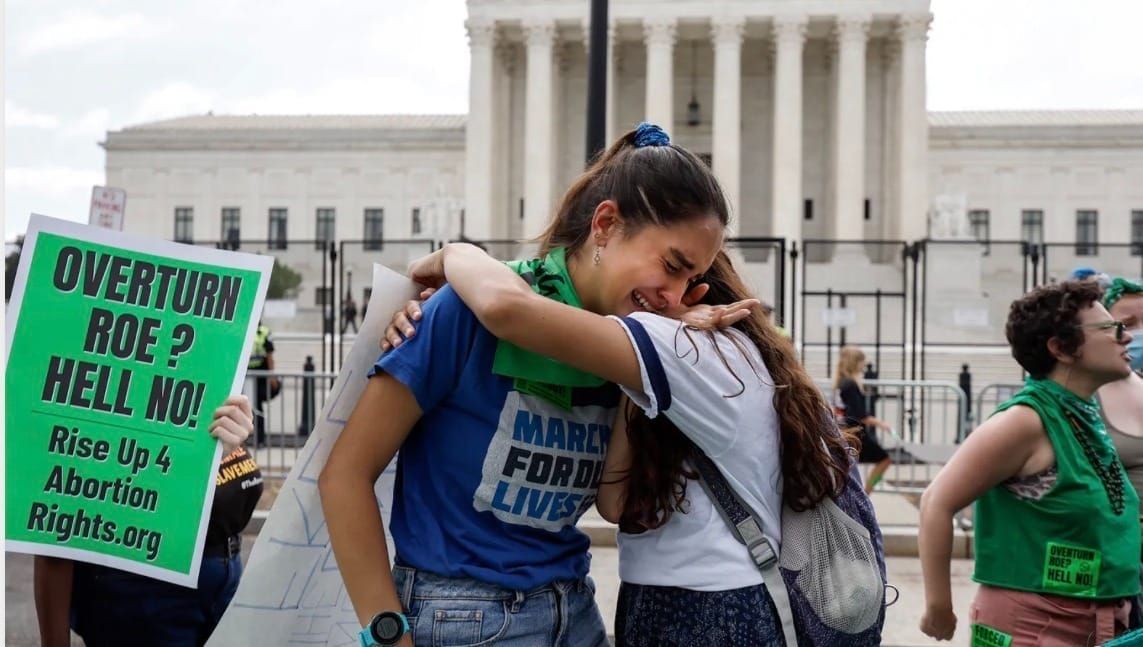
In 2022, the uprising surrounding the overturning of Roe vs Wade remains a cultural phenomenon which has defined legal and cultural shifts in American history. On June 24th, 2022, the Supreme Court dismantled a key law which was part of the fundamental basis of women’s safety, health and their basic human rights.
Abortion is banned or heavily restricted in 13 states across America (Alabama, Arkansas, Idaho, Indiana, Kentucky, Louisiana, Mississippi, North Dakota, Oklahoma, South Dakota, Tennessee, Texas, West Virginia). This patchwork landscape significantly increases the healthcare disproportionality between states, which also exponentially increases risk as there are zero state providers, forcing patients to cross-border travel just to access basic medical care.
It is evident since the summer of 2022 that public trust in the US government has significantly decreased. The overturning of Roe vs Wade catalysed debates and protests around the continent, alongside polarising beliefs between Republicans and Democrats. While this helped galvanise political participation in younger generations, it completely altered the healthcare landscape, economic and corporate stability, and people's everyday lives.
In America, healthcare institutions have been destabilised, establishing profound concern. This is shown through doctors practising abortion despite the fear of verbal prosecution, making routine maternal healthcare operational. This not only increases the anxiety and decision-making time for doctors during labour, but it seriously threatens the mother’s safety, with abortion not being given as an option despite health concerns. Consequently, maternal mortality risks have increased massively in states such as Texas or Louisiana. Furthermore, birthrate statistics have been fluctuating, with a 2-3% increase since 2022. This may be seen as a benefit of the abortion ban, but these restrictions and travel barriers have caused a significant decrease in college enrollment since it occurred, with it decreasing 2.1% in the US. This has disproportionately impacted vulnerable populations and compounded difficulties young women are facing in society today.
Beyond healthcare, corporations have been pulled into the political climate. Major businesses face political pressure and high costs to fund employees seeking reproductive healthcare. This is causing problems as billions of dollars in state revenue are being used, which is negatively affecting the economy.
The ripple effects of Dobbs vs Jackson are shown every day. There has been a cultural shift and a tangible divide between the Republicans and Democrats through protests and campaigns. This is due to their varying conception of state rights. As ‘progressive states’ are beginning to channel more conservative constitutional arguments, it raises the question: has Dobbs vs Jackson genuinely preserved legal tradition, or has it drawn America dangerously close to rolling back the 14th Amendment decades?
By Lauren Berwick
Bibliography:
Redirect notice. (n.d.). Google.com. Retrieved August 17, 2026, from https://www.google.com/url?sa=t&source=web&rct=j&url=https%3A%2F%2Fwww.rollingstone.com%2Fpolitics%2Fpolitics-features%2Fabortion-rights-roe-dobbs-ohio-democracy-1234775783%2F&ved=0CBYQjRxqFwoTCOih37_ap5YDFQAAAAAdAAAAABBu&opi=89978449
People, O. (2026, April 27). Abortion in the United States dashboard. KFF. https://www.kff.org/womens-health-policy/abortion-in-the-u-s-dashboard/
(N.d.). Bmj.com. Retrieved August 15, 2026, from https://www.bmj.com/content/389/bmj.r879
Data and statistics on adolescent sexual and reproductive health. (n.d.). HHS Office of Population Affairs. Retrieved August 17, 2026, from https://opa.hhs.gov/adolescent-health/adolescent-sexual-and-reproductive-health/data-and-statistics-on-adolescent-sexual-and-reproductive-health
(N.d.). Lwv.org. Retrieved August 17, 2026, from https://www.lwv.org/blog/explaining-scotuss-abortion-decision-dobbs-v-jackson-womens-health-organization