The North-South Divide: Can a Budget Really Level Up Britain?

Britain’s economic prosperity is often presented through national statistics, such as GDP growth, employment rates and average wages. However these mere figures can conceal a fundamentally institutional problem: the uneven distribution of investment, infrastructure and economic opportunities available across the country. The stark contrast between London and many other towns and cities across the North of England remains a defining feature of the British economic landscape.
As Chancellor John Healey prepares to deliver the 2026 Autumn Budget in Parliament on the 28th October, an important question emerges; can government spending actually reduce this geographical divide, or will it simply manage its consequences?
The North-South divide itself, is partly rooted in Britain’s industrial history. Northern cities like Manchester, Liverpool and Leeds flourished through manufacturing and trade, which provided employment and supported local economies. However, the decline of traditional industries during the twentieth century left many communities facing high unemployment rates and reduced investment. Although many Northern cities have diversified into finance and technology, the resulting economy's benefits have not been distributed evenly across the region, leaving some communities struggling to recover from industrial decline.
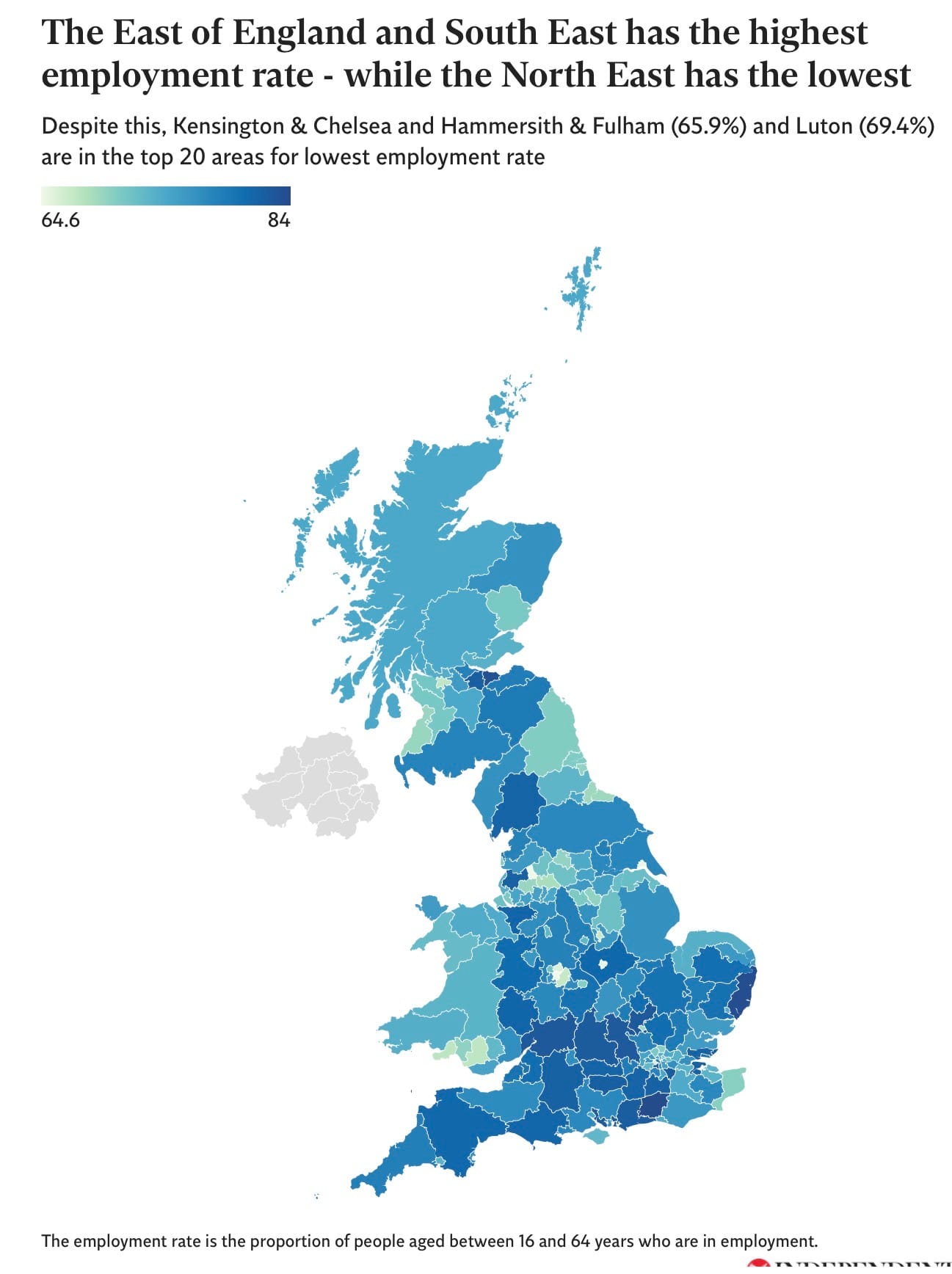
Regional inequalities are also reflected in productivity, which is the economic output generated per worker, per unit time. The OECD identifies persistent productivity gaps across the UK, these gaps are associated with differences in skillsets, transport connectivity and investment. This suggests that regional inequality is not just a consequence of an individual’s economic circumstances, but also of the opportunities available in a single place. Reducing regional inequality by allowing prosperous regions to stagnate is fundamentally different from reducing it by enabling disadvantaged regions to grow. A successful levelling-up strategy that improves productivity and living standards must be implemented across the country rather than merely narrow the statistical gap.
Public spending can influence regional development through investment in transport, education, healthcare and digital infrastructure. Nevertheless public spending challenges the assumption that every Northern region necessarily receives less funding than southern England. The House of Commons Library reports that in 2024/2025, public spending averaged £13,504 per person across the UK. Yet this figure varied considerably across England, with £15,217 in London and £14,102 in the North East. In comparison the South East recorded just £12,031 per person. These figures demonstrate why the divide cannot be understood through a simple geographical comparison. Public spending covers benefits and essential public services, with the amount required varying according to regional differences in population, levels of deprivation and the cost of living. The more important question is whether public money addresses the structural barriers preventing regions from prospering. Spending more does not automatically mean investing more effectively. For example, transport infrastructure can connect communities to employment and attract businesses, but its benefits depend on accessibility and location.
The Budget’s effectiveness will depend on whether investment leads to lasting improvements in the economic prospects of disadvantaged areas. Improved transport links between northern cities could expand labour markets and make commuting more practical; allowing businesses to access a wider workforce.
But infrastructure alone cannot resolve regional inequality. The investment must also support education, as well as research and development in order to expand and improve the opportunities available.
Devolution is of equal importance. Greater Manchester illustrates the importance of local decision-making, allowing prosperity to extend beyond the city-centre to the surrounding towns and communities. Giving regional leaders greater influence in policies regarding transport, housing and employment could allow for them to address the individual needs of an area more effectively.
Despite the benefits, devolution carries risk. Transferring responsibility for public services and economic planning to local authorises does not guarantee effective regional development. Areas with weaker economies may have smaller tax bases and fewer resources to fund improvements independently. Furthermore, local authorities may lack the expertise, administrative capacity nor the infrastructure needed to implement policies successfully. Local decision making alone is therefore insufficient; effective governance and appropriate oversight are necessary to ensure that devolved powers translate into tangible improvements for local communities.
However, greater local autonomy cannot overcome regional inequalities without adequate financial support. Wealthier regions may have a stronger tax base and greater capacity to attract private investment, allowing them to benefit more readily from devolved powers. In contrast, less prosperous areas may lack the financial resources and institutional capacity needed to implement effective development strategies. Without central government redistribution, devolution risks widening the very inequalities it is intended to address, as regions with the greatest need may have the fewest resources to respond. Central government funding must therefore reflect regional needs rather than simply existing economic strength. By combining local decision making with sustained public investment, the government can enable disadvantaged regions to improve infrastructure and attract businesses which will create lasting economic opportunities.
Can one budget deliver meaningful change? Potentially.
The government faces competing demands on public finance, including debt interest and pressure on public services due to our rising population. These constraints limit the funding available for new investment, but reducing investment can also restrict future growth if it leaves regions without the infrastructure and skills needed to attract employers. The challenge is therefore not simply to spend more, but to direct funding towards the structural barriers preventing disadvantaged regions from achieving sustainable economic growth.
The solution is to not assume that every pound spent in northern England will automatically generate economic growth. Instead, the government must establish measurable objectives, evaluate the effectiveness of its policies and maintain investment over a sufficient period of time. Progress should be assessed through tangible improvements in regional productivity, wage growth and access to employment, demonstrating whether investment is translating into greater economic opportunity. However these objectives must be supported by reliable long term funding, particularly in less prosperous areas where limited tax revenues and institutional capacity may restrict the benefits of devolution. Without this support, transferring resp to local authorities risks reinforcing the inequalities that levelling up is intended to address.
Ultimately the North-South divide cannot be resolved by a single Budget announcement. It is a reflection of structural inequalities that have developed over decades and thus require sustained political commitment to overcome. However, levelling up does not mean diminishing southern success. It means ensuring that prosperity is not unnecessarily concentrated in a small number of places, and that geographical location does not impose a limit on opportunity.
The 2026 Autumn Budget must therefore do more than announce investment: it must provide the sustained funding and resources necessary for disadvantaged regions to build productive economies of their own.
Its success should ultimately be measured not by the promises made in Parliament, but by whether those promises creates lasting economic opportunities beyond Britain’s most prosperous regions.
By Arsh Mian
References:
Image: Four charts that show the ‘north-south divide’ – but also reveal a more complicated task for Burnham from the Independent. (2026)
Northern Growth Strategy: Case for change (2026). https://www.gov.uk/government/publications/northern-growth-strategy-case-for-change/northern-growth-strategy-case-for-change.
OECD (2026), OECD Economic Surveys: United Kingdom 2026, OECD Publishing, Paris https://doi.org/10.1787/aa997c6e-en
Public Spending by Country and Region (2026). https://commonslibrary.parliament.uk/research-briefings/sn04033/