The Midterms: A Domestic Rebuke

When nationalism turns to individualism, voters react. But, how will Trump react back?
An Overview
The lead-up to the US midterms was certainly high-stakes. Over this period, the Republicans made it clear that the results truly mattered - take President Trump scrambling to strike a gas deal with Russia in an attempt to ease cost-of-living pressures before the vote.
As election day drew closer, the outlook for Republicans had already begun to deteriorate - yet few could have predicted the sheer magnitude of their loss. The Democrats scored a sweeping victory, securing majorities in both chambers - a particularly comfortable one in the House of Representatives. It was an outcome driven partly by flip wins in traditional Red states, and partly by simply not being the Republicans.
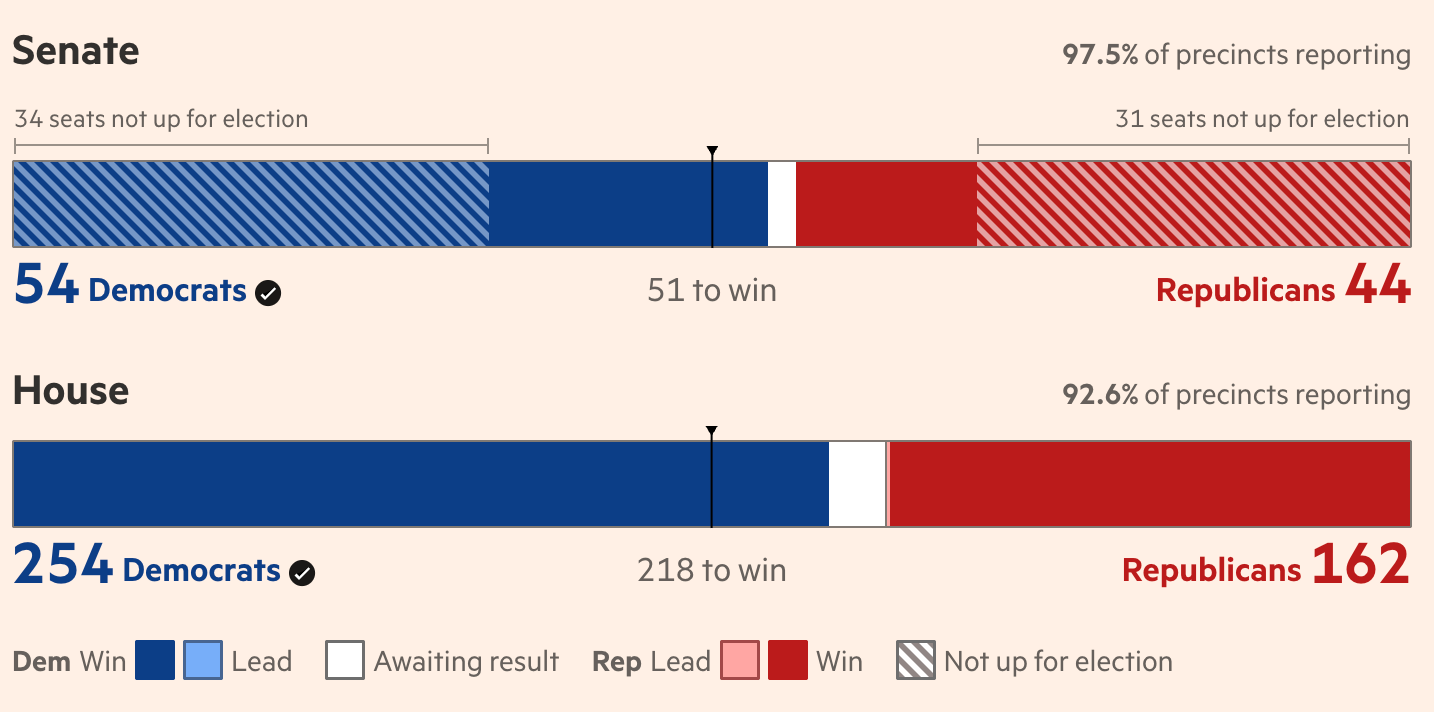
While midterm defeats are no anomaly - take Obama’s “shellacking” in 2010 - losing both chambers is a rare milestone. George W. Bush was the only other term-limited president to suffer the same fate.
The Implications of the Democratic Win
The last two years have been comfortable for the Republicans, allowing them to pass legislation with minimal friction. But with increased opposition heading their way, that complacency will inevitably fade.
To understand why, those of us outside the US must begin by examining the mechanics of Congress, revealing why midterm elections carry such weight.
Congress is divided into two chambers: the House of Representatives and the Senate. The House is where legislation is debated and voted on, and the majority party chooses the Speaker of the House - giving them considerable sway over the legislative agenda. This means Democrats can now push forward policies reflecting their priorities, while blocking or amending Republican proposals. Controlling the House also hands Democrats the power to initiate investigations, as well as that to influence taxation and public spending; a significant delegation of authority that, despite a Republican presidency, reveals the potential for disruption.
Meanwhile, the Senate confirms official presidential appointments, approves treaties and conducts impeachment trials. Control of the chamber hands Democrats authority over critical personnel - including federal judges and cabinet officials - while granting oversight powers. Both are vital leverage points given the mounting scandals and corruption allegations surrounding the current administration.
Gaining control over both chambers marks a significant shift of political command in Washington. Though the President still holds veto power, getting Republican priorities through to the executive branch becomes far more difficult - while opposing Democratic measures that have garnered mass support becomes increasingly fraught.
Hakeem Jeffries - poised to be the next Speaker of the House and widely dubbed as President Trump’s chief antagonist on Capitol Hill - has promised “dramatic change”, declaring that Democrats will “fight to make sure that we make this country affordable for every single American.” Ironically, this message mirrors the Republican’s own 2024 electoral campaign, underscoring just how starkly the GOP failed to deliver on its core promises.
However, context is key. While Republicans started with a relatively clean slate, Democrats now face a mountain of messes to clean up - providing them with a clear blueprint for an immediate policy agenda. Key focus areas, including affordability legislation, tariff reform, expanded healthcare subsidies, and oversight into allegations of corruption against the Trump administration, reveal how quickly Democrats can leverage their new position. By projecting competence, sincerity and control, they can swiftly build on momentum. And, because this directly counters past Republican missteps, it undermines the GOP by highlighting the very qualities the party currently lacks.
A Domestic Rebuke
While the economic and political fallout of the Democratic victory is substantial, the symbolic weight is perhaps even greater.
Trump may still be President, but the weight of the title has significantly diminished. Losing control of Congress leaves him facing persistent opposition from Capitol Hill, resulting in a steady undermining of his authority with every point of dissent.
Beyond legislative friction, the sheer scale of the Democratic victory is telling in itself. This outcome represents far more than a weakening of executive power - it is a stinging rebuke of the party, its actions, and what it stands for. Ultimately, this isn’t a Democratic win; it’s a Republican loss.
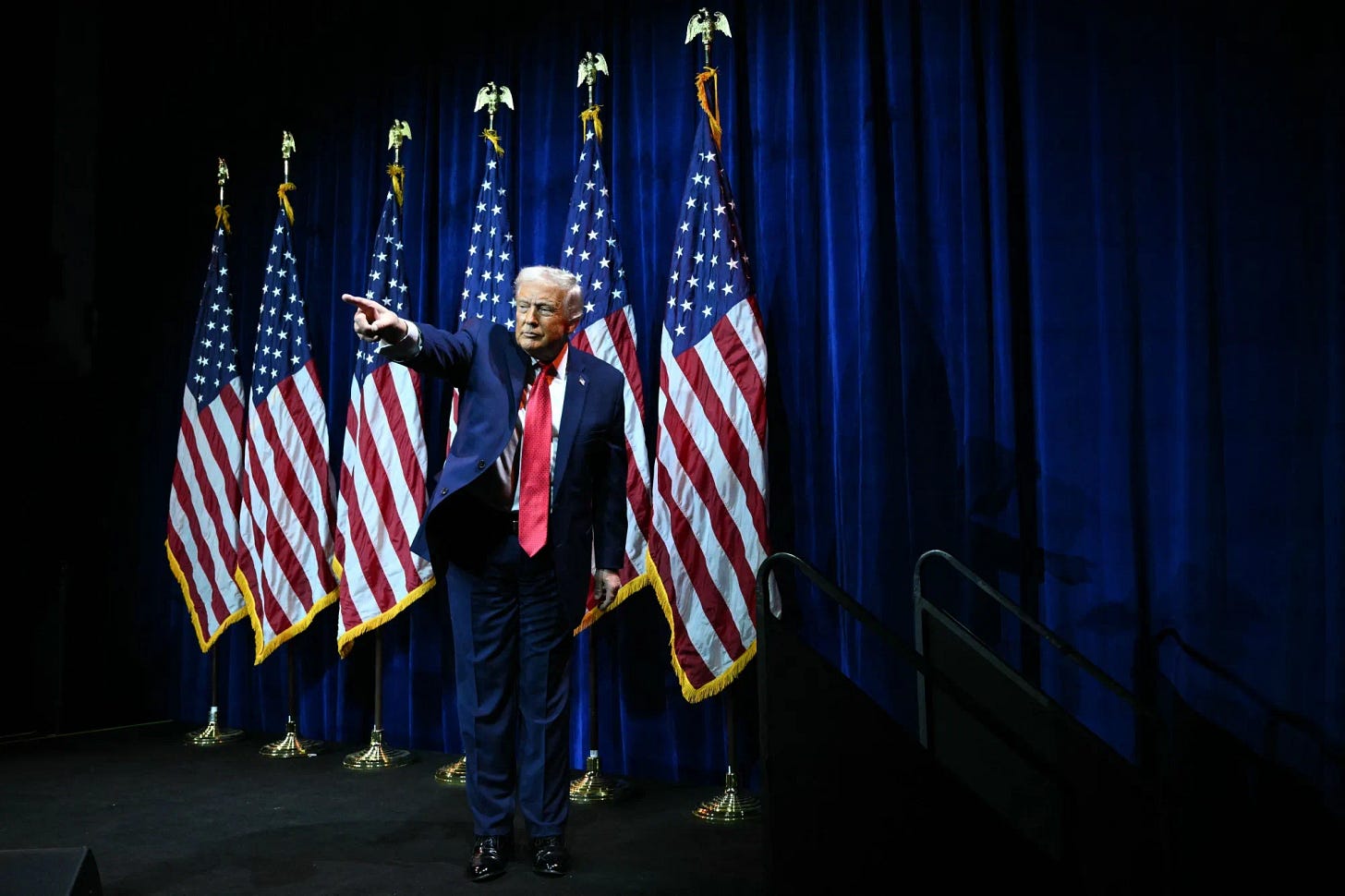
This is already a tough pill to swallow and it exposure on the global stage makes choking a real risk. It is difficult enough to govern, but to lead a country that has actively voiced and voted its opposition to you? To face a world as a hegemon when your internal power has collapsed? That is brutal - especially for a president who was once bolstered by public support.
This leads to the next great irony: it was Trump’s populist narrative that appealed to frustrated voters in the first place. Failing to deliver on the expectations this created made the rebuke all the more acute.
Take tariffs - the president’s trademark policy. Framed as a necessary measure to shrink the trade deficit and reinvigorate domestic manufacturing, the tariffs stemmed from the strong sense of economic nationalism central to the MAGA movement. However, manufacturing employment actually fell from 8.5% in January 2017 to 8% in September 2026, highlighting the policy’s failure to deliver a revival.
Furthermore, while the deficit has narrowed since January 2025, this primarily reflects a stabilisation following a surge in imports, as businesses scrambled to stockpile critical inputs before the hikes took effect. This itself reflects the chaos and uncertainty that became the most tangible impact of the tariffs, with exit polls showing that nearly two-thirds of midterm voters think Trump’s tariffs have hurt the economy.
The other major sticking point has been the Iran War - a needless war of choice that has achieved nothing while inflicting immense economic pain, not on Americans, but around the world. It is entirely understandable that voters are frustrated with prolonged cost-of-living pressures, energy and supply-chain disruptions, and mounting public expenditure - all direct consequences of a misguided, ego-driven decision to pursue the conflict.
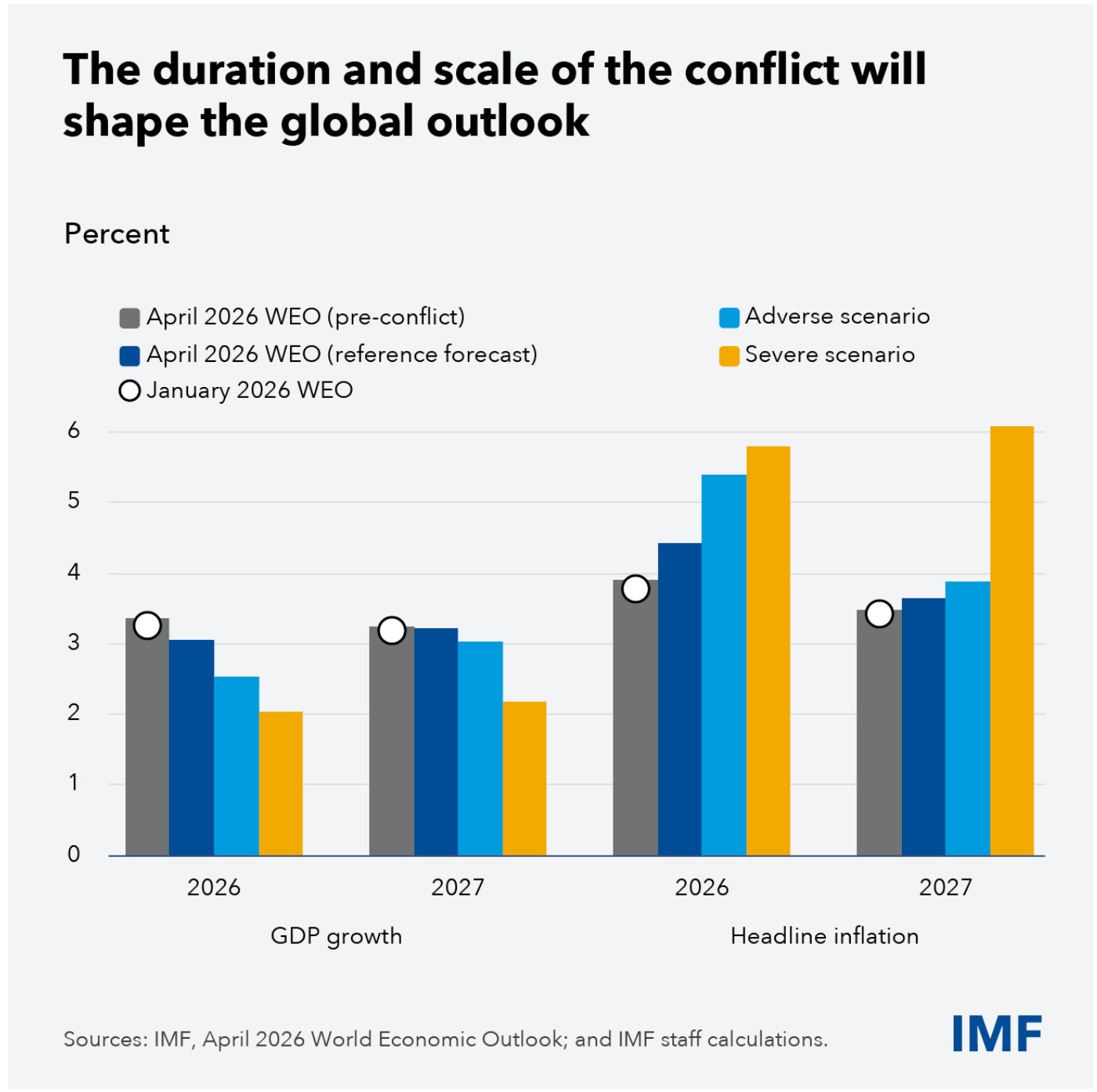
These are just a few examples; looking to foreign policy reveals many more. Taken together, they point to a fundamental truth: Trump’s pursuit of economic nationalism became so aggressive that, somewhere along the way, it devolved into a pursuit of individualism - where decisions have come to be driven by ego over economic rationale, and projection over progress. When the resulting chaos produces tangible consequences, such a severe rebuke is hardly surprising. If anything, the real surprise is that it took so long to materialise.
Conclusion: An Uncertain World
The past few decades have demonstrated that American choices carry profound global consequences. Never has this been more evident than under President Trump, whose second term has ushered in an unprecedented era of economic and geopolitical tension. From the military capture of a sovereign nation’s head of state, to threats of annexing Greenland - part of a historic alliance - a capricious foreign policy has repeatedly served as an instrument for exploiting American power.
What, then, are the implications of a visceral president smarting from a humiliating domestic loss? If the past is any guide, foreign policy may become even more aggressive in an attempt to demonstrate strength and salvage the perception of the US - or, more accurately, preserve Trump’s strongman persona, severely battered by the midterm results.
The world risks becoming significantly more volatile if an emboldened rather than chastened president seeks the respect abroad that has clearly slipped away at home. The first two years have delivered unprecedented turbulence to the global economy; what do the next two hold in store?
By Ananyaa Gupta