'Every Country Has The Government It Deserves'
Today, Joseph de Maistre's famous maxim is often quoted as a cynical indictment of voters - an assertion that citizens bear the blame for the leaders they elect. Yet de Maistre himself was no democrat; writing in 1811, he was a staunch monarchist and counter-revolutionary. To him, the phrase meant that a nation's deep-seated character naturally produces the political order suited to it, and that imported, artificial constitutions are doomed to fail. But recognising the monarchist origin of the thinker himself complicates the quote. Is the relationship between a society and its rulers really that straightforward?
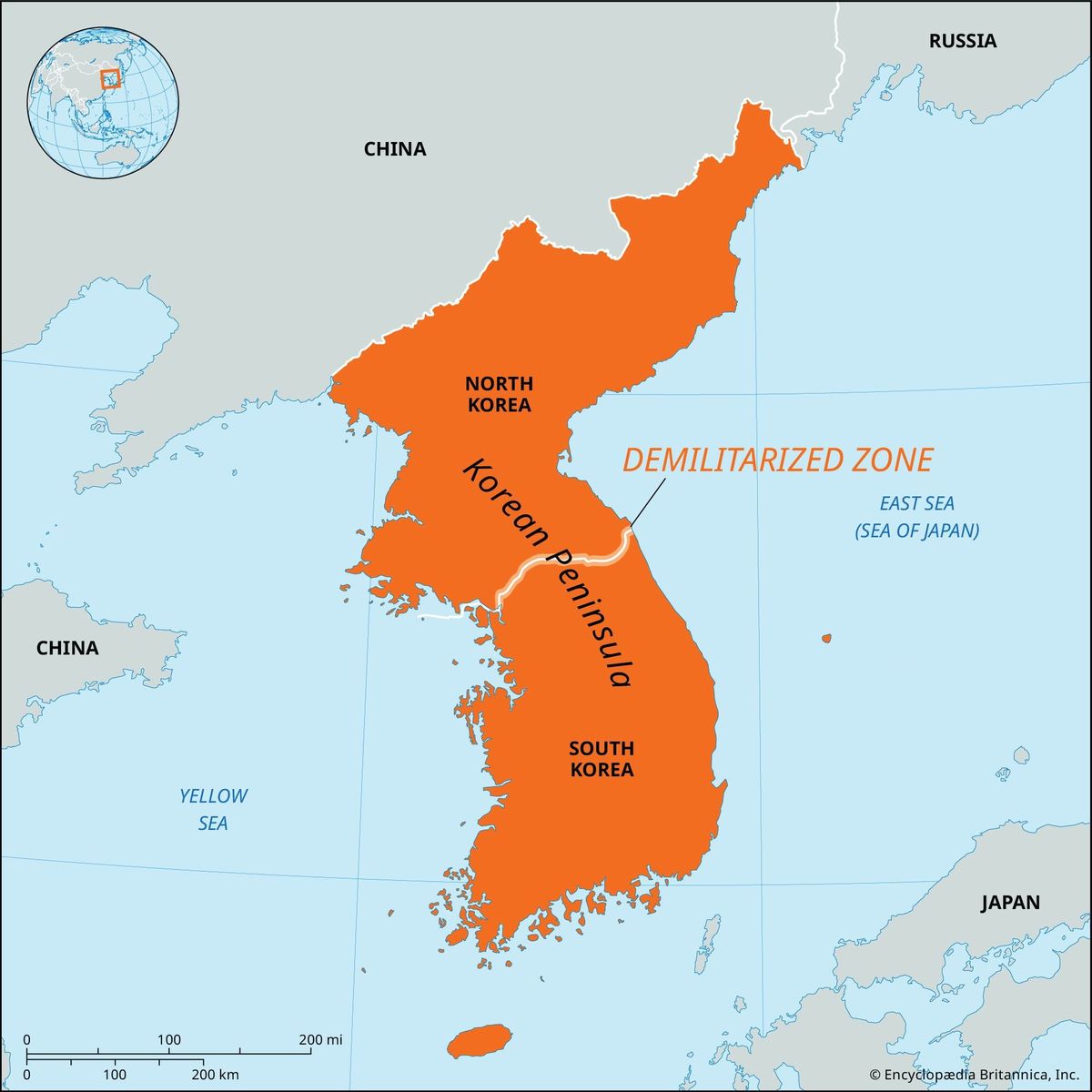
The influence of society in shaping the state is undeniable; however, it is far from the only architect. A modern state is not a small thing; it is a vast, complex structure comprising millions of people, governed by countless forces beyond public willpower - including geography, historical heritage, and foreign intervention. As Daron Acemoglu and James A. Robinson (2012) illustrate through the division of the Korean Peninsula, a single people sharing the same language, history, and culture can end up under radically different political systems. When external powers drew a border and established opposing institutions, they produced two starkly different realities, illustrating that a nation's cultural character alone does not dictate its government.
A similar example can be found in Iran in 1953, when a coup supported by the United States and Great Britain overthrew Prime Minister Mohammad Mosaddegh. This event demonstrates how foreign intervention can shape a country's political direction and limit the ability of its population to determine its own future. In such circumstances, it seems unfair to hold ordinary citizens fully responsible for the political system that emerges. At the same time, imposed institutions are not permanent destiny. Over time, a state's political life is continually reshaped by struggles among its social classes and civic movements. South Korea’s own trajectory demonstrates this clearly: for decades after its division, it was ruled by authoritarian regimes, until the mass pro-democracy protests of 1987 forced open the political system. Together, the two halves of the peninsula capture the central tension of political life - structures constrain what is possible, yet organised citizens still hold the power to transform those structures from within.
Naturally, the situation will be different in a state where the people are genuinely the source of political authority and public officials are accountable for the well-being of citizens - linking a government's quality to its people here makes intuitive sense. Yet in states where political and economic elites monopolise power, blaming ordinary citizens for their own subjugation ignores the immense imbalance of force they face. Still, thinkers who defend de Maistre's premise point to a sobering truth: society is rarely a purely passive bystander. Even under authoritarian rule, regimes survive not only through brute terror, but also through a deeply ingrained human habit of compliance. As the sixteenth-century philosopher Étienne de La Boétie observed in Discourse on Voluntary Servitude:
"A weakness characteristic of human kind is that we often have to obey force; we have to make concessions; we ourselves cannot always be the stronger. Therefore, when a nation is constrained by the fortune of war to serve a single clique, as happened when the city of Athens served the Thirty Tyrants, one should not be amazed that the nation obeys, but simply be grieved by the situation; or rather, instead of being amazed or saddened, consider patiently the evil and look forward hopefully toward a happier future."
La Boétie’s insight cuts both ways: while people often yield to overwhelming force out of pragmatism or habit, tyranny ultimately relies on that continued obedience to endure.
When we consider who is included in the concept of "the people", another problematic aspect of this statement becomes apparent. A person born and raised under an authoritarian regime, someone who is politically indifferent, and a voter whose preferred candidate loses an election are all part of "the people". However, can they really be held equally responsible for the government under which they live? Their opportunities to influence political decisions are not the same, and neither are their levels of political power. Therefore, collective responsibility should not automatically be confused with individual accountability. Also, when we take today's modern constitutional democracies into account, different perspectives emerge. When citizens possess broader rights, freedoms, legal protections, and institutional channels for dissent, the cost of political participation drops - and civic responsibility rises accordingly. In many countries, at least formally, a "tyrant" cannot arbitrarily harm someone simply because they oppose him. Awareness of civil rights and freedoms, particularly a high level of legal consciousness, contributes to reducing fear.
Nevertheless, even democratic systems do not always translate public preferences into political power proportionately. The 2024 general election in the United Kingdom provides an example: the Labour Party received approximately 34% of the national vote but won around 63% of parliamentary seats. This demonstrates how electoral systems can create significant differences between the votes citizens cast and the political representation they receive. Voter apathy, unequal political influence, and the limitations of representative democracy further complicate the idea that citizens always have meaningful control over their governments.
Because every state is forged by a unique mix of history, institutions, and human psychology, de Maistre’s aphorism fails as a universal rule, but it carries a limited truth. Society bears responsibility for the government in power in its country, but this responsibility is greatly influenced by the circumstances imposed upon it and by historical events.
By Zibeyde Bekirli
References - Acemoglu, D. & Robinson, J. (2012). Why Nations Fail.
- Étienne de La Boétie. Discourse on Voluntary Servitude.
-Electoral Reform Society (2024). A System Out of Step: The 2024 General Election.
-Al Jazeera (2013, 20 August). CIA admits organising 1953 Iran coup.