Holding A Punchline or Holding Accountability?
Author's Note: This writing includes discussion of sexual assault and censored misogynistic slurs, some of which might be triggering to certain audiences.
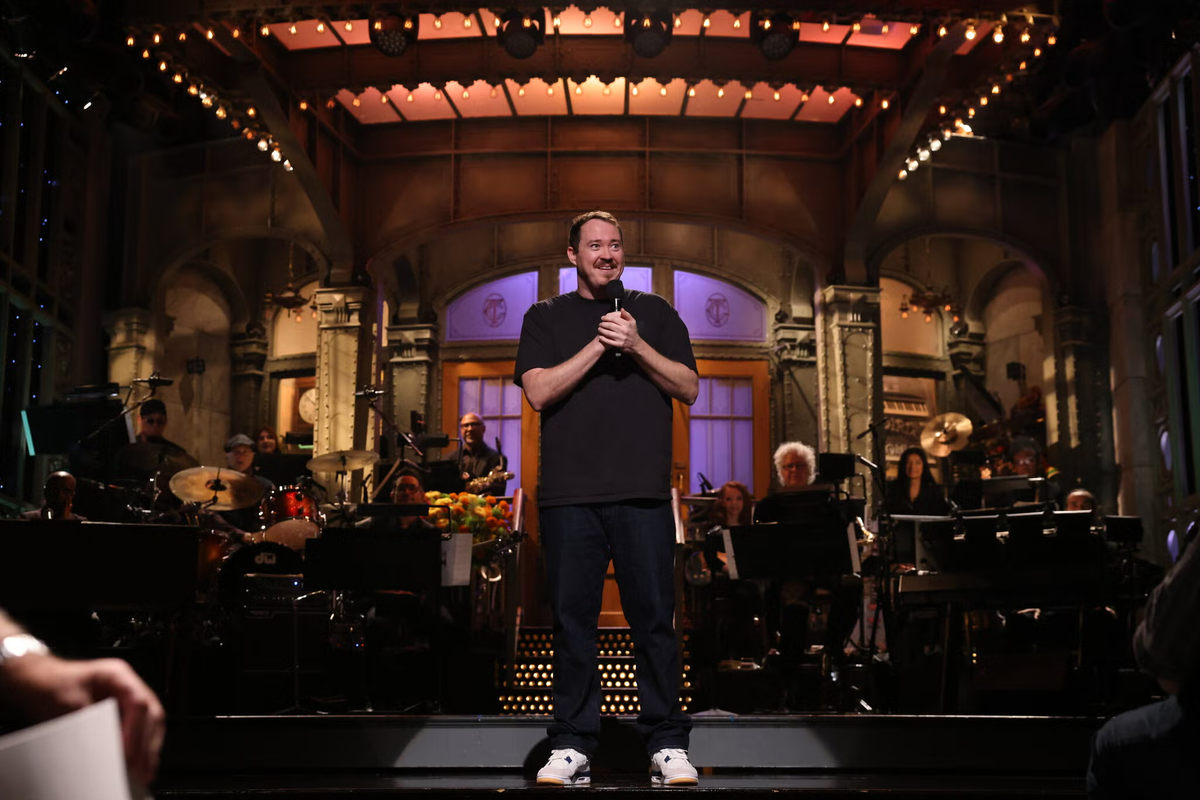
On the 10th of October 2026, American comedian and podcaster Shane Gillis hosted Saturday Night Live for the third time. Among several sketches, Shane Gillis performed his own stand-up routine for the host's monologue - a typical practice for comedian hosts. However, his 7-minute-long monologue caused controversy after including a joke where he called women 'wh*res' for wearing shorts to the gym. The misogynistic joke didn't land, and the moment was only made more awkward as Gillis continued the joke while the faces of musicians in the background slowly faded to stoic expressions. While the joke itself was distasteful and reason enough for backlash, a wider discussion has been brought to light about the rise of normalised misogyny within both comedy and society, alongside the decrease of accountability from these so-called 'comedians'.
After Shane Gillis' joke, social media was quick to criticise and shame the podcaster, with influential figures such as actor Dan Levy coming out to defend women's right to wear what they want. Dan Levy said, on his Instagram story, that he was "speechless that something like that can exist on live national television". SNL cast members, past and present, have spoken up after the incident and in response to Shane's joke. Former cast member Ego Nwodim posted a mirror selfie of herself at the gym, with the caption, "wh*re reporting for duty". With not even the cast backing him, Shane Gillis was the receiver of scrutiny and shame for the week, and rightfully so.
However, just over a month after the episode aired, the joke has been forgotten and the public have moved on, focusing on other cases and incidents, like the Russell Brand trial. The backlash against Gillis made it clear that the general public doesn't agree with misogyny, so much so that online controversy is caused - but then why are there still so many misogynistic jokes, and why do we forget so easily?
Shane Gillis is not the only man to have been scrutinised for a derogatory joke in recent weeks; Vittorio Angelone, a comedian from Belfast, has been criticised for his rape joke about Rebecca Goodwin during a roast on the 'Have A Word' podcast. The simple one-liner placed Rebecca Goodwin, a victim of rape, as the punchline for an event she was not even part of. Unlike Shane Gillis, who is no stranger to controversy, Vittorio Angelone is associated with left-wing politics and general progressiveness, causing confusion as to why he would make a joke like that when it clearly doesn't align with what he preaches.
The answer is simple - because there's no consequence to it. An unfortunate reality for the public, but a fortunate one for these comedians: their careers stay intact, with the most severe punishment being a slap on the wrist, with the bruise lasting less than a week. Today's culture allows for men to make these jokes without any repercussions because it's easier than having punishment. It takes effort to hold men accountable, but it costs nothing to do, well, nothing.
When someone is made aware that they can get away with something, there is no reason for them not to do it because they know they won't face consequences - which is exactly why this rise of misogynistic jokes poses real danger for women. Vittorio Angelone felt free to make a rape joke because he knew he wouldn't face pushback or scrutiny for it. Shane Gillis was able to say his joke on national television because he had been given that platform and he knew it wouldn't be taken away after - because they haven't seen a man be properly reprimanded for it yet. The discomfort from the musicians, the betrayal felt by Goodwin and the prejudice faced by women mean nothing compared to a man's need to feel validated from an audience's laughter.
An argument commonly used when these jokes are criticised is that it is simply 'dark humour'. When something is branded with the name of 'dark humour', a strange thing occurs - it becomes seemingly incontestable. Bigotry and prejudice are protected by the idea that it's okay to joke about them if the purpose of it is to offend. While dark humour can certainly have a place within comedy, its effects have real implications on society - one seemingly justifying misogyny through the lens of it not really mattering in the long run.
To let a man get away with a joke like Gillis' or Angelone's is to let him know he can get away with misogyny. It doesn't matter that it was in a comedic sense or that they claimed all they said was purely a verbal incident; he is now aware that misogyny can be excused if it seems fit. The creation of a grey area regarding when misogyny is and isn't allowed transmits into the real world, where it becomes undeniable and has real physical effects and consequences. Daniel Sloss, a Scottish comedian, is most known for his famous speech about how he ignored his friend's misogynistic jokes until said friend raped someone else. He says, within this speech, that men who deem themselves as 'good guys' should actively do something to prevent a similar incident, otherwise they are no better than their friends who commit the crime. This is an impactful speech and shows a level of accountability and understanding that makes Sloss appear to be a man who understands the risk of misogynistic jokes. And yet he still laughed at what Angelone said about Rebecca Goodwin.
Sloss proved himself to be a hypocrite when he was seen to laugh at the rape joke instead of speaking up and combating it. One would think that after being known for his remorse about not speaking up previously, Sloss would've said something and righted a past wrong. But he doesn't; he sits there and laughs with all the other men and only apologised a whole year later when he got caught after the episode's paywall expired. It’s true that not all men are a danger to women, but it’s also true that not all men will listen to Sloss’ advice about speaking out, including Sloss himself.
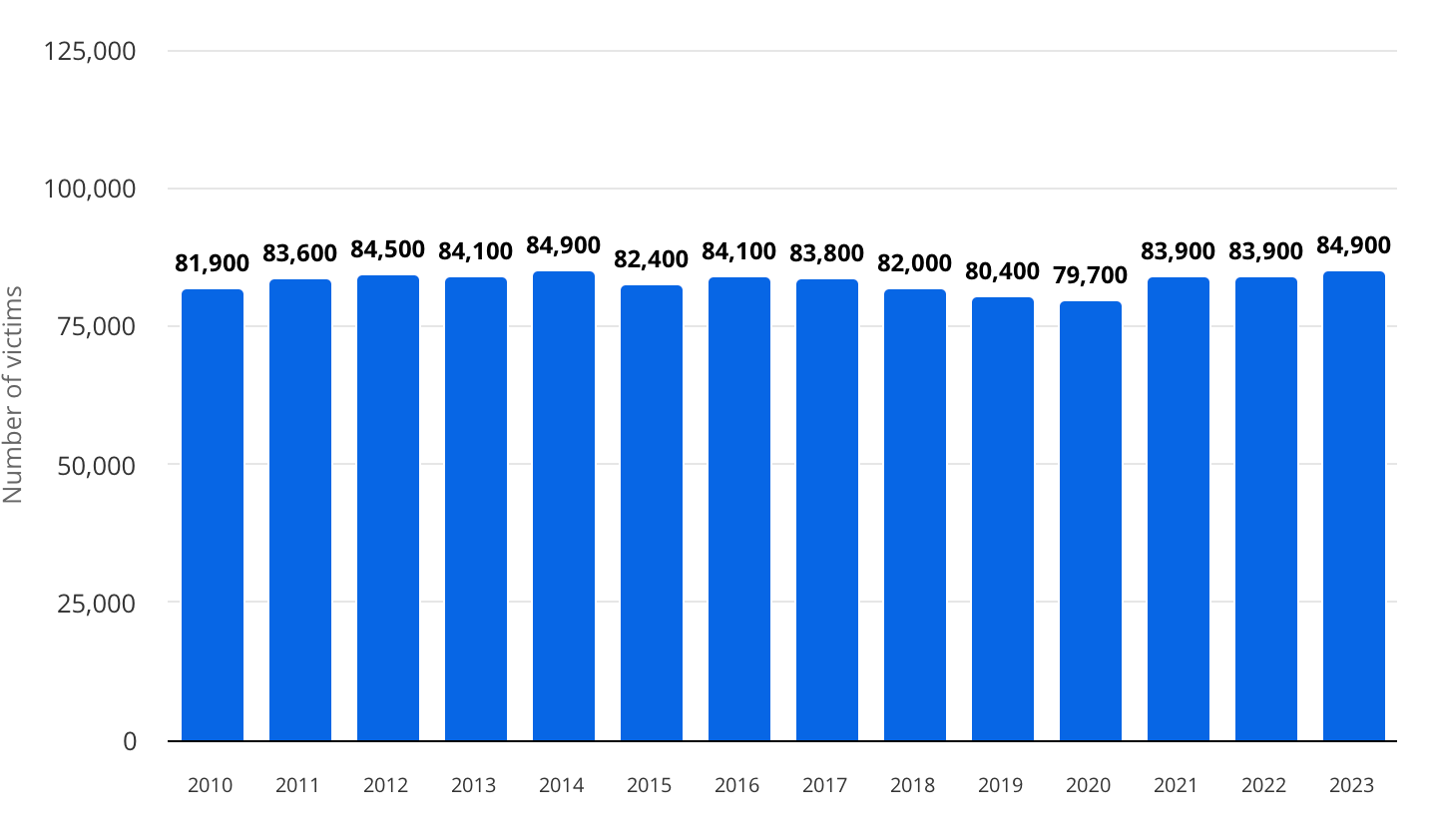
This is not to imply that any of the aforementioned men necessarily pose any physical danger to women, but it's wrong to say that their jokes do not. Words carry weight, and jokes lighten that weight into something we can sweep under the rug. Misogyny is not something to look away from or ignore. The world today has shown an increase in femicide (violence against women driven by gender) in a large number of countries, along with the rapidly declining rights of women across the globe. In 2020, it was reported that men kill one woman every three days in the UK, and globally a woman is killed every 10 minutes, as reported in 2024 by the United Nations.
When it comes to rights, UN Women director Sarah Hendricks said that there is a regression with female rights, which can be seen almost everywhere: from the overturning of Roe v. Wade in America to the repression of the Women, Life, Freedom Iranian movement. In the midst of events like these, misogynistic jokes should not be given a platform that can shape and change the perception of the severity of a misogynistic punchline.
An assist to the change of perception regarding the severity of misogyny is also a key element in the increase of domestic violence and femicide, and that is where Johnny Depp comes into play.
In 2022, the defamation case of Amber Heard vs Johnny Depp was talked about worldwide, with countless videos and posts about the trial reaching staggering numbers on every social media platform. Despite the popularity of this trial, the majority of viewers were not accurately informed on what the case actually was, simply believing what they had seen on their devices and transmitting it to others freely. Misinformation about both Amber Heard and the trial itself was spread globally, framing her as a liar and Depp as innocent. Posts mocked Amber Heard's rape testimony, laughed at her tears and nit-picked everything Heard said or did during the three months the trial went on. Nothing, however, was said about Johnny Depp and his blasé response to accusations regarding rape and assault, or his text messages to Marvel actor Paul Bettany regarding killing Amber Heard - "Let’s drown her before we burn her!!!".
Johnny Depp was a household name when the trial occurred, with endless supporters and fans in his corner. A hate campaign, filled with misogyny, was targeted towards Amber during her attempt to defend herself and hold Depp accountable. Fans of the actor seem to ignore the 12 guilty verdicts out of 14 incidents mentioned in The Sun's article that referred to him as a 'wife-beater', of which Depp sued them for and then subsequently lost. Despite this, Amber Heard still faced continuous misogyny from men and women alike, with the opinions towards her only changing recently for the public majority. Johnny Depp claimed that Amber's accusations had ruined his career, and yet his new mix-reviewed film is currently out in cinemas.
When asked about the trial and why none of Depp's other exes have come forward about abuse, Amber Heard said "look what happened to me when I came forward. Would you?". Heard's testimony and openness about the violence she faced at the hands of Depp did nothing except lead to public ridicule and frame Johnny as a victim, consequently starting a rise of male celebrities weaponising misogyny against any victims that come forward in the press, through smear campaigns or turning to far right ideologies like Russell Brand - undermining the point of the justice system and reducing women's stories to only a she said, he said situation.
Another male celebrity domestic violence allegation came to light in 2022, when Angelina Jolie accused Brad Pitt of drunkenly attacking her and two of her children during a flight in 2016 from France to Los Angeles. Jolie filed for divorce only a few days after the alleged attack, and over the years, as her and Pitt's six children have grown to the age of 18, they have dropped 'Pitt' from their last names, with four out of the six only carrying 'Jolie' as their surname. Angelina Jolie is a prominent figure in Hollywood, much more than Amber Heard, and so one would think that her story would deeply affect Pitt's career. However, Pitt has added 27 films to his filmography just as a producer/executive producer since 2022, with no signs of an affected career at all.
More recently, on the 5th of November 2026, Russell Brand was found guilty of rape and three sexual assault charges in a UK court, receiving a sentence of 10 years and 6 months. Not long after, on the 10th of November 2026, David Walliams was accused of sexual misconduct towards minors and young women after losing a battle to prevent these allegations from being published. Both of these men are now facing deserved public scrutiny and exile from these allegations which, while it is of basic decency, is a rare occurrence for men of their status. Johnny Depp and Brad Pitt fail to face real repercussions for their alleged actions, and the public are questioning how Walliams and Brand were able to hide from these allegations for so long.
Depp and Pitt’s actions are not proven in a court of law, with neither of them ever going to trial to be punished for alleged actions. Russell Brand has been found guilty and Walliams is currently under investigation. The actions by Brand and Walliams were towards people they were not in a relationship with, while Depp and Pitt’s allegedly were. When in a relationship, abuse can fly under the radar through the rocky belief of love. Relationships involve trust and that trust will continue into arguments, where it can blind the interpretation of any physical or emotional abuse with a simple “they didn’t mean it”. It’s also important to mention that, while Russell Brand and David Walliams are well-known, their fame is incomparable to that of Depp or Pitt. Johnny Depp and Brad Pitt are household names who have consistently portrayed themselves as likeable people. It is harder for many to believe that men who present themselves in such a way could inflict harm onto women because it is not what we know them for. David Walliams might’ve been a judge on Britain’s Got Talent, but Johnny Depp was Jack Sparrow - how could someone who played Jack Sparrow abuse and rape someone? The answer is simple: very easily. Maybe if Johnny Depp and Brad Pitt faced allegations from more people they would’ve been prosecuted, but that is not what the law promises. One hit against a woman is abuse and is what makes someone a criminal since it goes against the law; it doesn’t have to add up into multiple sources for it to be taken seriously.
Today's culture allows misogyny to fly under the radar until it becomes a physical and tangible threat. Words are allowed to stay words until their physical manifestation reaches the news, and then it's endless questions of how and why and who and when. Countless allegations regarding male celebrities have given us evidence of how men can get away with such things, weaponising women's fear and misogyny to lessen the perceived extent of their actions.
The jokes from Gillis or Angelone are variants of Depp's text. They are of the same cloth; they joke of misogyny and sexual assault because there's no one to stop them, apart from a few angry Instagram posts before it's forgotten about after a week.
There is no promise from these jokes that they will stay as only words, and that their impact will only be laughter from the audience there that night. There is nothing to prevent these jokes from influencing someone into thinking rape and misogyny are lighthearted topics. Someone could leave the comedy show feeling their anger towards their wife is validated, and take it out on her that evening.
Letting men get away with these jokes does nothing but give them the benefit of the doubt and the chance to do it again. Time and time again, history has shown that words have an impact and the possibility to influence one's beliefs and actions. Accountability is the first step towards change, and to continue to platform these men without genuine effort to change is to avoid accountability altogether.
There is no protection for women if we protect these men's misogynistic jokes instead.
By Izzie Hines