His Calvin Kleins, Her Media Scrutiny: What Football’s Split Screen Reveals About the Game
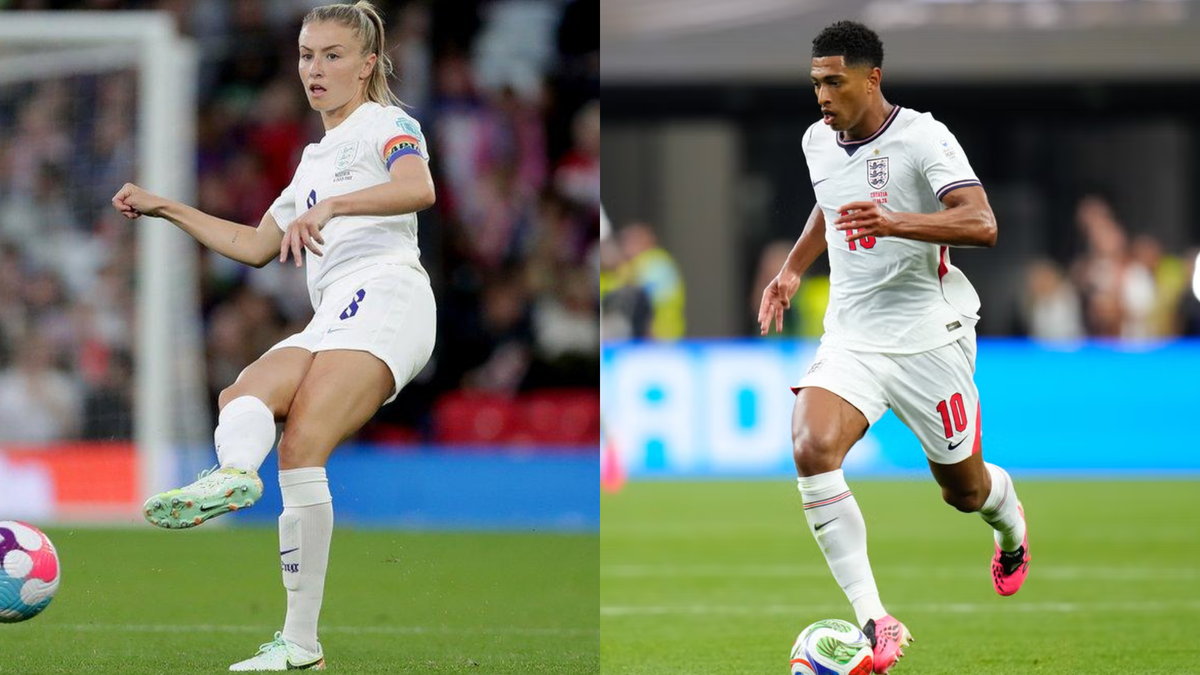
When Jude Bellingham strips down for a high-gloss Calvin Klein campaign, the headlines celebrate him as an ‘it boy’, effortlessly cool. When Leah Williamson steps into that same cultural spotlight, the framing is almost always heavier.
Despite Williamson’s 69 senior caps and her historic feat of captaining the Lionesses to back-to-back Euro titles, her athletic brilliance is too often treated as secondary. Instead, her legacy is frequently narrowed to her value as a symbol, cast primarily as an inspirational role model for grassroots and academy players.
Why does the media enforce these double standards? Placing the weight of an entire sport onto one player’s shoulders is deeply unfair. As many commentators have pointed out, this framing undermines how seriously women's football is taken - with critics even going so far as to compare the Women's Super League (WSL) to the men's Championship in quality and competitiveness.
Brand Bellingham
Coverage of Bellingham's Calvin Klein campaign leaned effortlessly into themes of global marketability and style, with outlets showing zero concern over how a fashion shoot might affect his reputation on the pitch. Launching across 40 to 110+ countries, the campaign was celebrated as a masterclass in modern branding rather than a distraction - and crucially, it sparked no wider debate over whether it damaged the credibility of men’s football.
Why is that? Part of the answer lies in history: women’s football was banned by the FA in England on December 5, 1921, over claims that the game was ‘quite unsuitable for females’ - a setback that stunted the global and generational momentum women’s football could have built. Freed from that baggage, Bellingham’s commercial visibility comes with no strings attached; he is never asked to justify his fame or prove that his sport deserves a stage.
Symbol Williamson
Where Bellingham is marketed as an individual icon, Williamson is consistently treated as a symbol - carrying the unspoken burden of representing an entire movement every time she speaks.
When her photoshoot debuted just ahead of UEFA Women's Euro 2025, critics accused her of a ‘crude betrayal’ of her teammates, claiming she was ‘parading’ her body and cheapening the value of women’s football. While detractors were swift to link the backlash to a 35% drop in the WSL viewership during the 2024-25 season, plenty of voices pushed back. Given the stark pay gap in the sport, they argued, major fashion partnerships are vital for the financial independence and stability of both the players and the game.
Williamson commands undeniable space in mainstream culture, yet her visibility is rarely allowed to exist without a larger message bolted onto it. As writers in Glamour UK noted, being ‘sexy’ doesn’t ‘make her any less of a role model’ - a point she proved beyond doubt by silencing the noise with a Euro 2025 triumph, delivering a trophy the England men's team still hasn't won.
Who gets to just play football?
Zooming out from these two stars, a broader editorial pattern emerges across press conferences, front pages, and talk shows.
Compartmentalisation is getting the chance to crash in a pub without being labelled as unprofessional, only as ‘sleepy’ or writing it off as a normal reaction to a tough match day.
Male footballers, and sports stars more generally, are routinely granted the luxury to compartmentalise: tactical professionals on match day, global celebrities by Sunday night. Female footballers are rarely given permission to simply exist within the sport. Instead, they are expected to double as part-time spokespeople - constantly defending women's football while carrying the duty of inspiring the next generation of girls, all while remaining confined to societal pressures about what they can, and cannot, do.
Levelling the editorial playing field
Even with the growing media coverage of women's football, Leah Williamson remains boxed in by labels within the football community.
Two England players, one the captain of two Euro victories, the other a potential future captain, both have tremendous talent, skill and composure; however, gendered comments continue to create a chasm between the two.
We all have the power to take action, so the question is: when do we start?
By Emerem Azubike