The Battle of Chokepoints

“Smart Tech is making War a Dumber Choice.”
This provocative headline from last week’s Economist highlights a profound truth: the nature of modern warfare has been fundamentally transformed. There are two critical developments behind this.
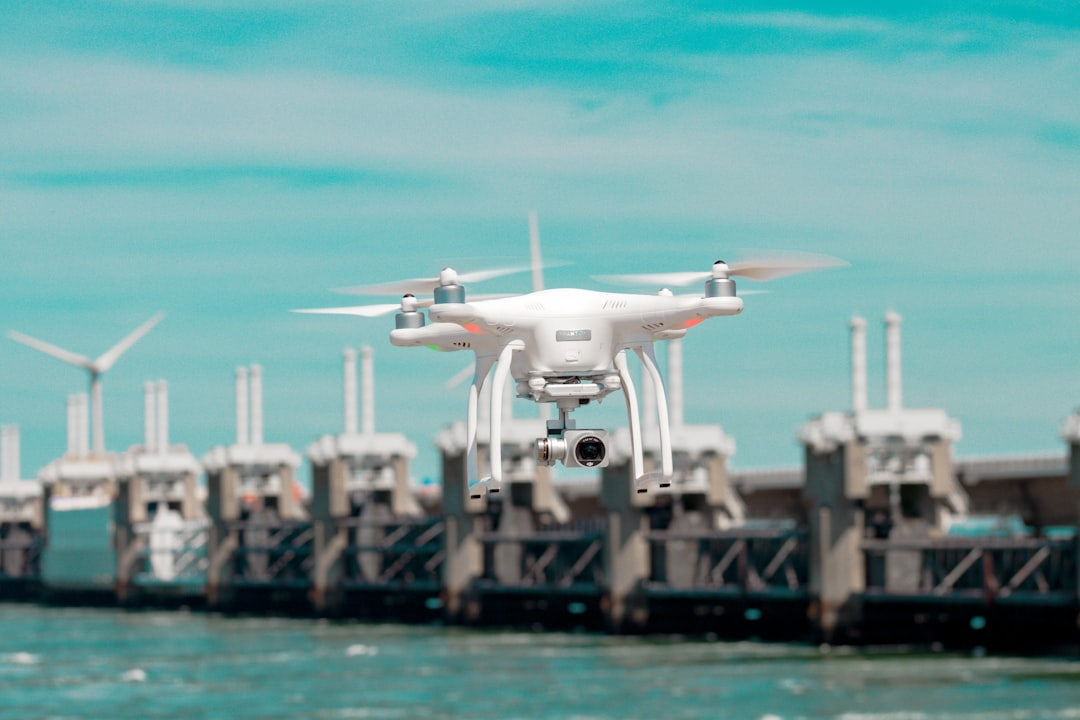
First is the advancement in drone technology. Versatile capability at a minimal price tag has granted an unanticipated position of strength to those that invested in them. Given the low cost, it is smaller nations rather than superpowers that have maximised the potential of drones for war - applying brute force through sheer volume against the much more expensive, but limited, arsenals of their powerful aggressors.
The second development is the diffusion of precise targeting tools. Formerly a privilege enjoyed by the stronger militaries, the technology is now more accessible, making it much easier to defend against. Additionally, the ensuing wariness erodes the lethal value of these weapons: if it were to be used for a serious cause, the retaliation could be equally devastating. When aggression could yield severe harm for little progress, a stalemate on this front becomes the better choice.
Multiple, distinct wars of choice have revealed that military might does not necessarily translate to swift victory. And while this levelling of the playing field has been a boon for weaker parties, it has also prolonged fighting and uncertainty - inevitably increasing aggregate death and destruction.
It has become clear that wars of choice can no longer be ended by choice.

The contemporary global order has long been underpinned by economic, rather than kinetic, warfare. This is because physical war - and the leverage of physical economic chokepoints 1- require high levels of expenditure, regulatory strain and deep international cooperation in order to be effective and sustainable 2.
History illustrates that extension of military might is an inefficient method of coercion for major powers, essentially driving direct military conflict toward extinction3.
Pure economic warfare, however, is a far more powerful and feasible approach - at least for the select few capable of executing it.
The global economy relies on collective financial system where every critical node is governed by the US. Think of SWIFT, the CHIPS Act, and the absolute centrality of the dollar.
When the entire network is held by a single set of hands, multiple chokepoints can be squeezed: individually, simultaneously and with varying pressure. Methods can be adapted according to situation, target and desired outcome, providing an ease and flexibility that completely eludes physical war.
Furthermore, minimal cost and unilateral execution enable sustainability. Leveraging an invisible infrastructure is essentially costless, whilst singular control means action is not contingent on co-operation. Western cooperation is virtually assured anyway, as systemic dependency compels submission from even other great powers. The plausible threat of exploitation means no country would wish to defect or challenge this dangerous dominance.
Thus, the historical shift from kinetic to economic warfare is perfectly logical. So, why the return to physical conflict? Two answers come to mind.
- The power of American economic leverage is diminishing
Years of aggressive sanctions and restrictions has forced their biggest victims to innovate. A chokepoint’s power is highly contingent on dependency; increased self-sufficiency and assertion have eroded American influence, bleeding the potency of their economic leverage. No amount of economic manipulation could deter Iran from continuing its nuclear programme, and sanctioning Russia has done little to resolve the war in Ukraine
- America’s ambition is growing too large
Unchecked dominance paired with erratic leadership has transformed complacency into aggressive exploitation. Because nothing stands in Trump’s way, it seems that nothing can stand in America’s way. The resulting series of geopolitical shocks have met minimal global retaliation, reinforcing this behaviour and ultimately culminating in a large-scale war based on whim rather than reason.
But, as discussed, physical warfare has become even more onerous for large powers than it was before. This reality necessitates a reinforcement of economic chokepoints. Holding these assets when weaker opponents do not greatly amplifies their strategic potential, as they remain an advantage that “smart tech” cannot yet erode. If America were serious about this newfound ambition, the course of action would be to identify new nodes to squeeze, or manipulate the old ones in novel ways.
However, America is no longer the only one with chokepoints. And as geopolitical tensions reach new highs, reinforcing them is not a unique idea.
Crucially, a capsized dynamic has facilitated the leverage of physical economic chokepoints 4.The difficulty here arose from coordinating a global coalition against an individual rogue actor. But when it’s an individual actor weaponising a chokepoint against the global body, it becomes a unilateral action requiring neither consensus nor cooperation.
The only requirement is a desire for vengeance - which years of American exploitation has allowed to sufficiently accumulate.
In his book ‘Chokepoints’, Fisherman suggested that economic weaponisation has long existed, but its implications become truly dangerous in today’s hyper-globalised world.
As the present world turns inwards, the consequences are yet to be seen - but we can be rest assured that they will be equally grave.
Footnotes
1 E.g. embargos, blockades, closing down critical pathways
2 An idea I first encountered in Edward Fisherman’s fantastic book ‘Chokepoints’
3 Source: ‘Chokepoints’, Edward Fisherman
4 Consider Iran’s weaponisation of the Strait of Hormuz