Permanently Temporary: Refugee Camps and the Politics of Postponement
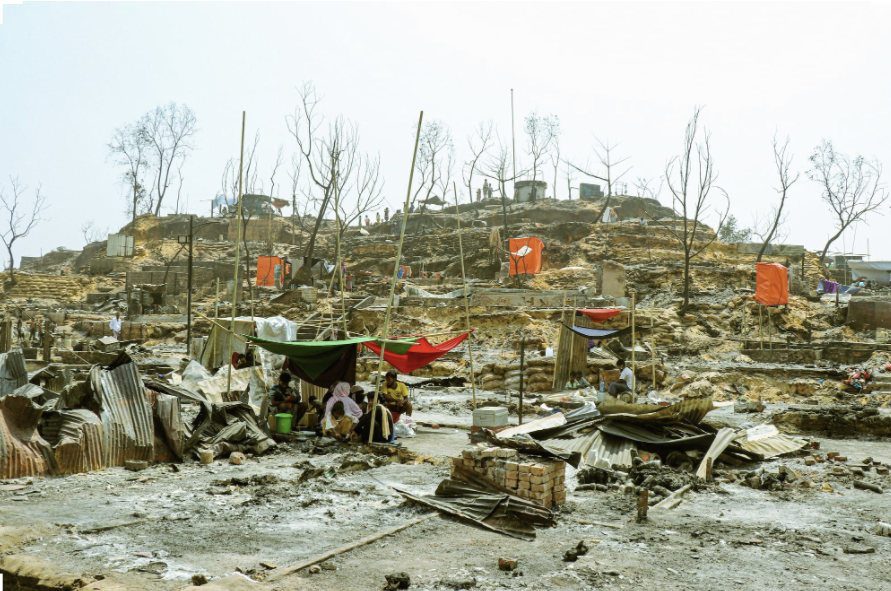
A refugee camp is supposed to be an intermission: a place of safety between flight and return, resettlement or a new home. Yet for millions, that intermission is extending into a lifetime. UNHCR estimates that 70 per cent of refugees now live in “protracted” situations, meaning displacement lasting five years or more without an immediate solution. In 2025, 24.9 million people were caught in more than 1,300 such situations.
The camps themselves show what happens when a temporary solution lasts for decades. Kenya’s Dadaab complex was created in 1991 for Somalis fleeing civil war, but more than thirty years later its camps resemble towns and commercial centres. Jordan’s Za’atari camp opened in 2012 as an emergency response to the Syrian war. Ten years later, more than 20,000 babies had been born there and around 1,800 refugee-run shops lined a three-kilometre market street. Far from being frozen in emergency, these camps have evolved into communities with their own economies, neighbourhoods and generations.
Yet while the camps evolve, the policies governing them can remain stubbornly temporary. Refugees who have spent years, sometimes decades, in the same place may still face restrictions on where they can move, work and live. The 1951 Refugee Convention recognises refugees’ rights to work and, in specified circumstances, to move freely, while Article 34 asks states “as far as possible” to facilitate assimilation and naturalisation. In practice, however, long-term displacement can leave refugees living permanently in one place without the freedom that permanence would seem to imply.
Kenya’s encampment system demonstrates how easily protection can coexist with severe restrictions on freedom. For decades, refugees registered in Dadaab and Kakuma were required to obtain permission before travelling outside the camps. Human Rights Watch documented refugees being arrested for leaving without movement passes and argued that these restrictions conflicted with the Convention’s protection of freedom of movement. Refugees could therefore be protected from the immediate danger they had fled while remaining unable to choose where to live, pursue work or build an independent future.
Uganda pursued a markedly different model. Its refugee framework has allowed greater freedom of movement and access to employment, with some refugees receiving land on which to live and farm. This has given refugees greater scope to work, trade and participate in the economy around them rather than remaining wholly dependent on humanitarian assistance. Greater freedom, however, does not itself produce classrooms, clinics or jobs. Host communities absorb much of the pressure of a larger population, often in areas where public services were already stretched. Uganda therefore exposes the weakness in simply demanding greater integration from countries hosting large refugee populations: rights are essential, but they mean little without the infrastructure to support them.
These pressures help explain why temporariness has proved so politically tenacious. Integration requires sustained public spending and raises difficult questions over housing, employment and, eventually, belonging. Governments may fear resentment from citizens already competing over scarce services, while allowing refugees to work and settle more freely can appear to make their presence permanent. The continued emphasis on ‘return’ as the official destination allows these questions to remain unresolved.
Bangladesh shows the consequences of this most starkly. More than one million Rohingya refugees now live in the country, many in camps around Cox’s Bazar. Bangladesh continues to regard repatriation to Myanmar as the ultimate solution, despite safe and dignified return remaining impossible for many. This resistance to permanent integration has shaped education policy. Rohingya children who arrived after 2017 have been barred from ordinary Bangladeshi schools, denied accredited education and prohibited from learning Bangla in formal programmes. Human Rights Watch has explicitly linked these restrictions to efforts to prevent their long-term integration. Rohingya children are therefore left to live with the consequences of this insistence on return. The restrictions on their education do nothing to shorten displacement or make a safe return to Myanmar more likely. Whether they eventually remain in Bangladesh, move elsewhere or return to Myanmar, they enter adulthood with fewer qualifications and fewer choices.
Bangladesh, Kenya and Uganda cannot, however, be expected to absorb the costs of protracted displacement indefinitely. At the end of 2025, 65 per cent of refugees lived in countries neighbouring their homelands and 68 per cent were hosted by low- and middle-income countries. High-income countries, despite accounting for nearly two-thirds of global wealth, hosted only 29 per cent. Countries carrying some of the greatest responsibilities for housing, education, healthcare and infrastructure therefore often have far less fiscal capacity to meet them.
Wealthier states can advocate integration from a considerable distance from many of its costs. Host governments are expected to provide schools, healthcare and greater economic freedom while managing the political pressures created when those services are already inadequate. Humanitarian aid remains indispensable, but food, shelter and emergency medicine cannot provide the basis for twenty or thirty years of life. Once displacement itself becomes long-term, the policies surrounding it must be reappraised.
Kenya has begun to move in this direction. In March 2025, the government launched the Shirika Plan, which aims to transform Dadaab and Kakuma from camps into integrated settlements, expand refugees’ economic opportunities and incorporate services for refugees and surrounding communities into longer-term development. Its significance lies not simply in replacing the label of “camp”, but in recognising that people who may remain for years cannot reasonably be governed as though departure is soon approaching.
The justification for emergency restrictions weakens as displacement stretches from years into decades. Accredited education, access to work and freedom of movement should not depend upon governments first accepting that a refugee will remain permanently. These rights simply allow people greater control over their lives while their future remains uncertain. Wealthier states must shoulder more of the cost through sustained funding for schools, hospitals and infrastructure, alongside expanded resettlement, family reunification and routes through education and employment. Investment must also support local host communities, rather than forcing two vulnerable populations to compete over scarcity neither created.
Voluntary return should remain available whenever conditions become genuinely safe. Preserving that possibility, however, is different from structuring decades of somebody’s life around the assumption that return is imminent.
Refugee camps may begin as temporary responses to emergencies. After five, ten or thirty years, however, “temporary” ceases to describe only a period of time and begins to describe a political choice. Governments can continue to postpone decisions over who may work, learn, move and belong, but the lives of refugees do not pause with them. Refugees have already lost homes to crises they did not choose. When displacement stretches across generations, refusing to plan beyond the emergency can limit rather than preserve their ability to build a future.
By Rose Sarkar
https://www.unhcr.org/refugee-statistics/insights/explainers/refugee-hosting-metrics.html
https://www.unhcr.org/ke/about-us/where-we-work/dadaab-refugee-complex
https://www.unhcr.org/africa/news/stories/jordans-zaatari-refugee-camp-10-facts-10-years
https://www.unhcr.org/sites/default/files/legacy-pdf/4d944e1b9.pdf
https://www.hrw.org/news/2025/06/25/bangladesh-foreign-aid-cuts-affect-rohingya-childrens-education