Mediha Alhamad on the Unfinished Fight for Yazidi Justice
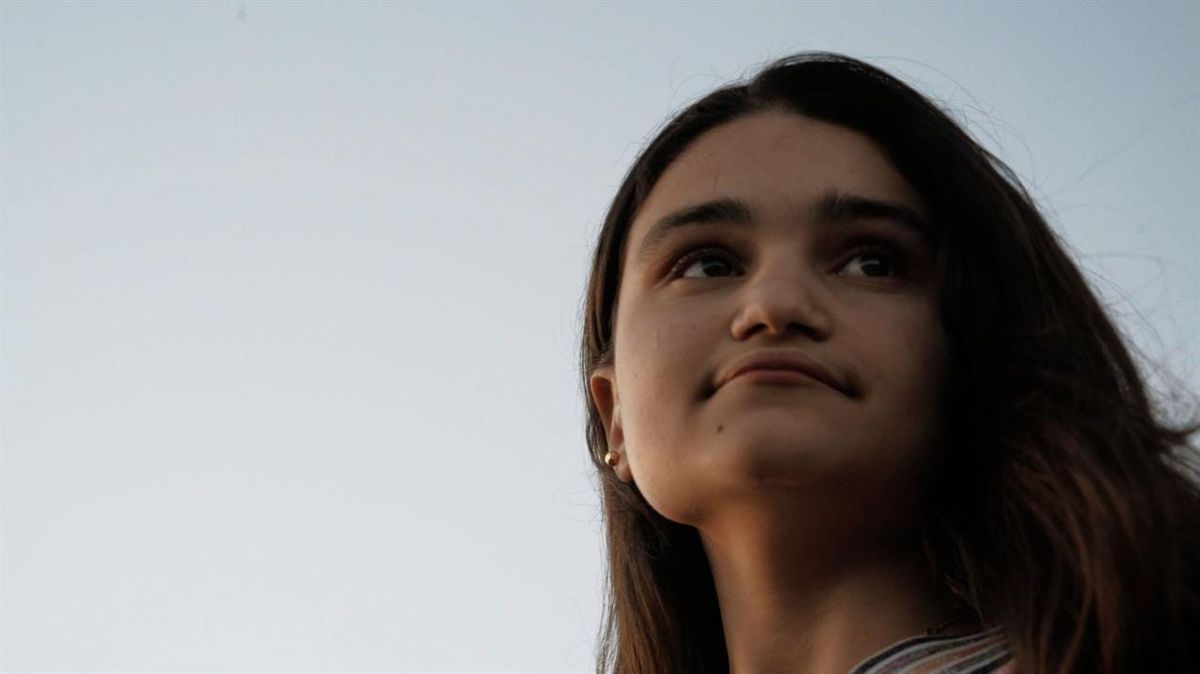
Speaking to the Agora Papers, Mediha Alhamad reflects on the ongoing fallout of the Yazidi genocide and the power of telling her own story.
The Ongoing Struggle for Justice
On 3 August 2014, ISIS launched its assault on Sinjar, the ancestral homeland of Iraq’s Yazidi religious minority. More than 90 per cent of the district’s population fled. Thousands were killed and more than 6,400 Yazidis were abducted, while families were separated, villages destroyed and women and girls subjected to systematic violence and enslavement. The United Nations later concluded that ISIS had committed genocide against the Yazidis.
Mediha Ibrahim Alhamad was ten years old when she was taken captive.
After returning from captivity, she lived in a camp for internally displaced people in Iraqi Kurdistan. Her experiences would later become the centre of Mediha, the award-winning documentary directed by Hasan Oswald. Much of the documentary was filmed by Mediha herself - an act of remarkable courage that gives us a uniquely powerful insight into her life and, crucially, puts the telling of her story into her own hands.
Twelve years later, there is a temptation to relegate the genocide to the past. For many Yazidis, however, its consequences remain an everyday reality. In 2025, the United Nations estimated that more than 200,000 Yazidis remained displaced and around 2,600 were still missing.
When we asked Mediha where the international community had failed the Yazidi community most, she told us: “Genocide is still going on, my community, they are living in refugee camps… there is no support, no housing or money, no good conditions.”
For Mediha, genocide is not confined to the violence of August 2014, but extends into the displacement and deprivation that have followed it. It is a harsh truth echoed by Nadia’s Initiative, which reminds us that genocide is not a singular event, but a process that continues through marginalisation and the destruction of the resources a community needs to rebuild.
When we asked Mediha which Yazidi woman she most admired, she named Nobel Peace Prize laureate Nadia Murad, whose advocacy has made clear that the defeat of ISIS did not end the tragedy. With homes, farmland and entire communities destroyed, thousands of Yazidis are still denied the life that was stolen from them.
The systemic failures extend to global justice. When asked about recent legal milestones (such as the landmark conviction of a French ISIS fighter for genocide in March earlier this year) Mediha acknowledged that while prosecution in court is vital, it is not happening on a broad enough scale, nor is it taking place in Iraq where the crimes occurred. Justice is what she most wants to see; the genocide does not feel finished because so many of those responsible for the atrocities committed have still never faced trial and it is this unfinished fight that drives her goal to become a human rights lawyer.
Reclaiming the Narrative
At the same time, Mediha resists a common simplification: the idea that Yazidi identity should be defined solely by tragedy.
When asked what she loves most about her heritage, she answered: “I love being Yazidi… our people didn’t kill anybody. It’s a very peaceful culture. We are nice people… I’m proud of it.”
For a community so frequently introduced to the world through the lens of massacre and displacement, understanding Yazidis only through what was inflicted upon them is to let their persecutors define their identity - a premise Mediha firmly rejects. She wants the world to confront the genocide, but she also wants people to know the rich culture that predated it, and the resilience that carries it forward.
This desire to control her own narrative was what drove her during the filming of Mediha. Responding to a question from Agora writer Leona about how picking up the lens altered what she could express, Mediha replied that “the camera was my bestie.”
She recounts that people in her own community kept asking her why she was recording, telling her to stop talking about what had happened to her, making fun of her, or even refusing to speak to her, leaving her feeling isolated. Yet she persevered. The camera became a place to confide when speaking openly to others was impossible - a tool of reclamation to exert control over a life that had been so defined by external forces.
Education, New York, and the Future
Mediha also speaks of Nobel laureate Malala Yousafzai: “I love her, she’s the best ever,” lighting up with an infectious energy when discussing women, learning, and what she calls “girl power.” Drawing inspiration from figures like Malala, she views learning not merely as a personal goal, but as a form of resistance, possibility, and independence. “Education is my power,” Mediha emphasises. “Even when people try to limit me, I choose to rise, to learn, and to become everything they said I couldn’t be.”
Yet, as her own life moves forward in extraordinary ways, she remains acutely aware of the ongoing hardship facing those around her. She recalls speaking at the United Nations and being congratulated on heading to college. While it was a moment of immense personal pride, it was also inextricably intertwined with a feeling of pain. “I told them I’m not happy about it,” she reflects, “because my people are going through such awful situations.”
Now living in New York City, Mediha is navigating the complexities of building a life in a new country. When we asked what she loves most about the city, she talked about human connection: “The people,” the “good energy” of the subway, the joy of visiting cafés, and meeting people from all walks of life.
At the same time, living far from her home and scattered family brings its own sense of loneliness - a feeling compounded by a shift in global political tides toward immigrants. Yet she continues to draw strength from education and agency.
When we asked her what she is ultimately fighting for as she looks to the future, her ambition was unwavering: “I want to be a lawyer - to fight for justice for our community and for all the people in the world.”
And to the younger generation listening, she offered a direct message: “Be strong and keep going.”
Mediha has kept going by holding a camera when others doubted her, boldly pursuing her education to build a career in human rights law. The international community owes the Yazidi people that same persistence. Remembering the genocide is important, especially when global awareness of it remains so limited, but remembrance means little if it allows the genocide to be consigned to 'history' while thousands are still missing and families remain displaced, with perpetrators of this violence still walking free. Memory must be matched by action: the sustained pursuit of justice, accountability and a future in which survival is not the end of the Yazidi story.
By Rose Sarkar
https://iraq.un.org/en/124138-new-housing-and-community-support-survivors-kocho-massacre