Explainer - The Price of a Pound: Understanding Exchange Rates
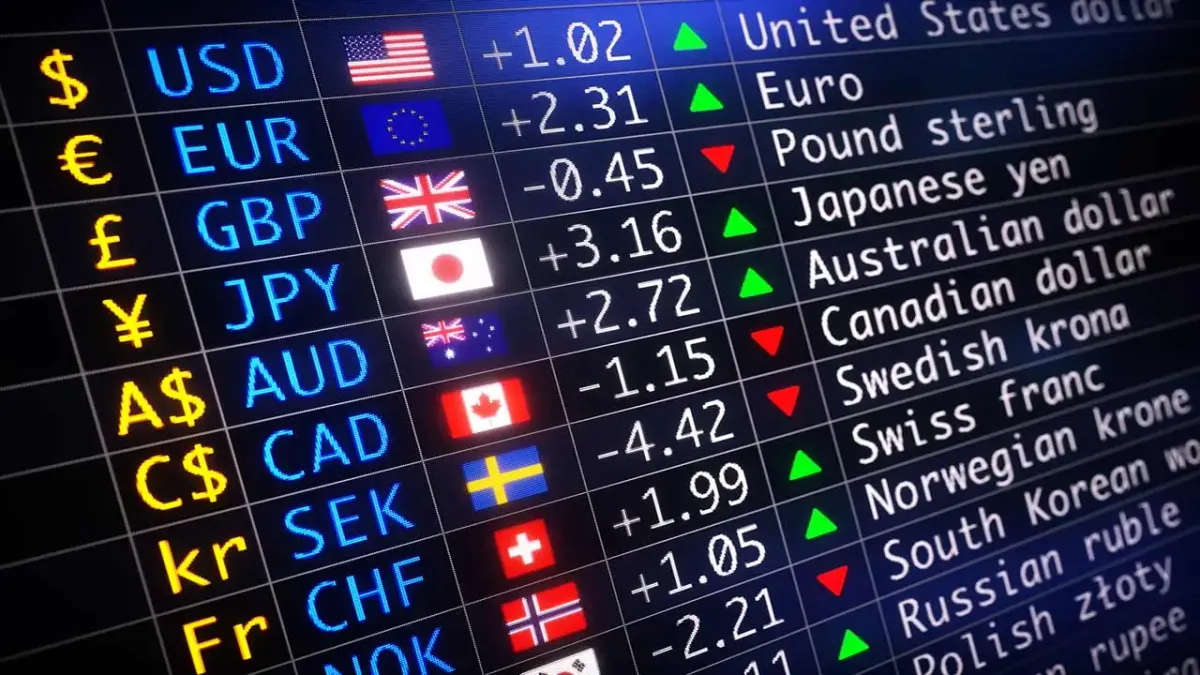
An exchange rate is the price of one currency expressed in terms of another. For example, if the exchange rate between the British pound and the US dollar is £1 = $1.25, exchanging £100 would give you $125.
Exchange rates are important because they determine how much it costs to purchase foreign goods and services, travel abroad or invest in other countries. However, the value of a currency is not always constant, and exchange rates can fluctuate considerably over time.
Floating and fixed exchange rates
Countries generally operate either floating or fixed exchange rate systems. Under a floating system, such as that used by the UK and US, exchange rates are largely determined by market forces and can change continuously. This allows currencies to adjust to economic conditions without governments having to maintain a particular exchange rate.
Under a fixed exchange rate system, a country instead seeks to maintain its currency at a specified value relative to another currency, such as the US dollar. For example, Hong Kong maintains its currency within a narrow band of HK $7.75 - 7.85 per US dollar. To sustain this, its monetary authority buys or sells currency when necessary. Fixed exchange rates can provide greater certainty for businesses engaged in international trade, although maintaining them can limit a country's control over domestic monetary policy.
What determines exchange rates?
In a floating exchange rate system, the value of a currency is determined by supply and demand in the foreign exchange market, where currencies are bought and sold. If demand for pounds increases relative to supply, the pound becomes more valuable against other currencies. This is known as appreciation. Conversely, if demand falls relative to supply, the pound loses value, known as depreciation.
Several factors influence this supply and demand, such as:
- Interest rates - higher interest rates attract foreign capital by offering international investors greater returns on assets like bonds. This drives up demand for the currency as investors flood the market to buy it, causing it to appreciate.
- Inflation - persistently high inflation erodes a currency's value because it makes domestic goods relatively more expensive than foreign imports. As international demand for these pricier exports falls, demand for the currency drops, causing it to steadily depreciate.
- Expectations - if investors anticipate future interest rate cuts or weaker economic growth, they may sell a currency before these changes occur, causing its value to fall. Exchange rates therefore reflect not only current economic conditions but also expectations about the future.
What role do governments play?
Even under floating exchange rates, governments and central banks can influence currency values. Central banks can adjust interest rates, affecting the attractiveness of domestic assets to foreign investors. They may also intervene directly in foreign exchange markets by buying or selling currencies, although such intervention does not guarantee a particular outcome.
Governments also care about exchange rates because of their effects on trade and inflation. A weaker pound can make British exports cheaper for foreign buyers, potentially increasing demand for UK goods. However, it also makes imports more expensive, raising costs for consumers and businesses. A stronger pound has the opposite effect, making imported goods cheaper but potentially reducing the competitiveness of British exports.
However, a country's competitiveness depends on more than just the value of its currency. The exchange rates discussed so far are nominal exchange rates, which compare the values of two currencies. Real exchange rates also account for differences in price levels between countries. For example, even if the pound depreciates against the dollar, British goods may not become more competitive if UK prices rise faster than US prices. Real exchange rates therefore provide a better measure of the relative cost of goods produced in different countries.
By Navika Mehta
https://www.imf.org/external/pubs/ft/fandd/2008/03/basics.htm
https://www.hkma.gov.hk/eng/key-functions/money/linked-exchange-rate-system/
https://www.bankofengland.co.uk/explainers/who-sets-exchange-rates
https://www.imf.org/external/pubs/ft/fandd/2007/09/basics.htm