MAGA - Midterms Are Great Again
On the 3rd of November, the US midterms were held, with 35 Senate seats and all 435 House seats up for election. Before the elections, Republicans held a narrow majority of both chambers, but after several flipped seats and a change in the tides, Democrats have now won control of both the House and Senate, with around 240 House seats and 54 Senate seats, with counting still taking place at the time of writing.
The overwhelming support for the Democratic Party indicates a shift in public opinion that appears to overlook President Trump altogether, despite claims from the President saying that Republicans lost because "I wasn’t on the Ballot and if I was, we would have won IN A LANDSLIDE!" This response from Trump seems to come from a place of personal defensiveness and ego, rather than reflection, as he fails to recognise the striking decline of the number of Republicans mentioning his name during campaigns, indicating that even his own party are aware that Trump is no longer an effective marketing strategy.
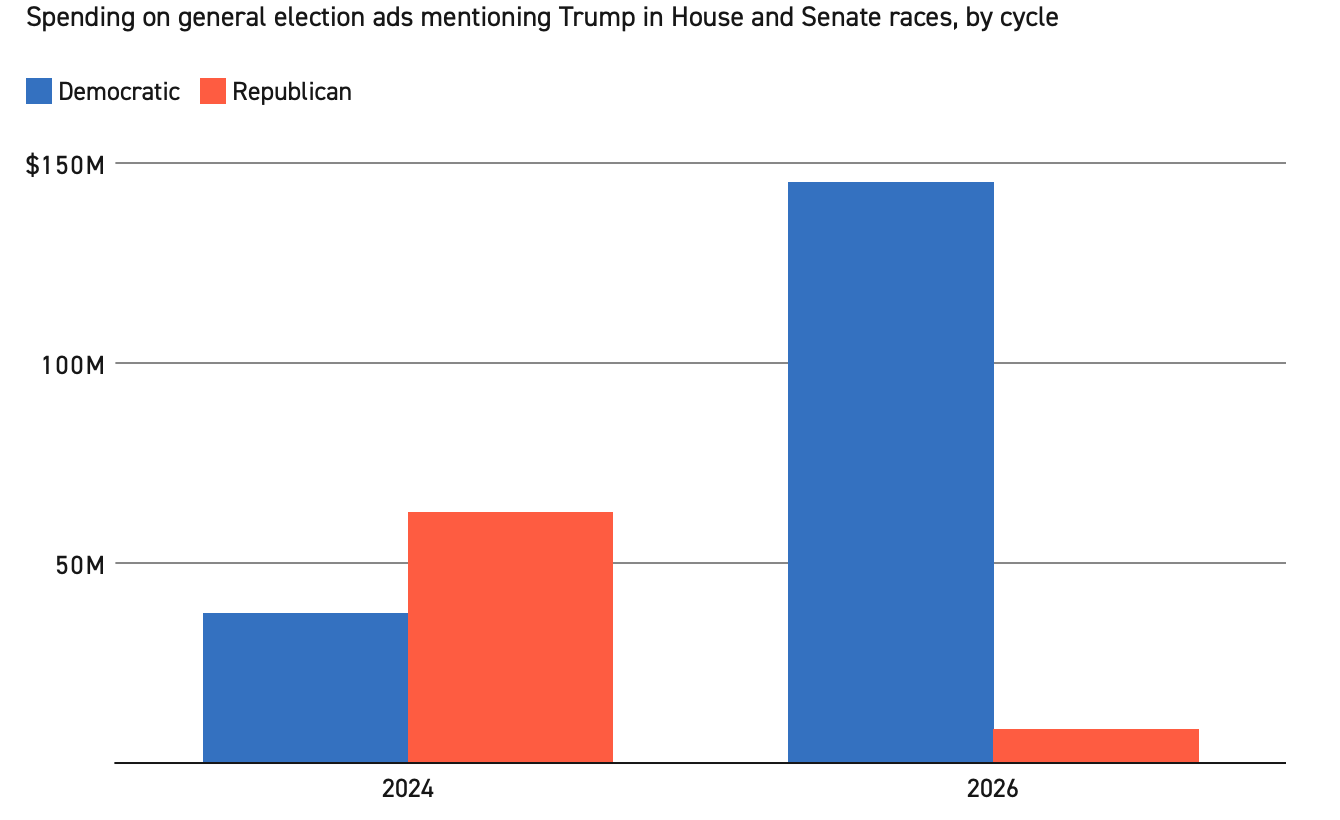
When looking at the midterm campaigns, the Democrats spent $145 million on adverts mentioning Trump, while the Republicans spent only $8 million on their Trump-mentioning campaign advertisements. This, in comparison to the $62 million the Republicans spent in 2024, reveals an awareness of Trump's unpopularity within the nation, with GOP strategist Ron Bonjean saying that "it's really important for the candidates not to be talking about Trump 24/7 on the campaign trail." Donald Trump's claim on TruthSocial appears to overlook the limited prominence of his name in the campaigns he even personally endorsed. The AP Voter Poll reported that 60% of young voters said their House vote was intended to be an opposition to Donald Trump. Trump's name was not on the ballot, and his absence may have worked in the Republicans' favour, as his presence could potentially have made the loss even greater.
When asked what their priorities were on election day, the vast majority of Americans mentioned problems with the economy and foreign affairs - two areas for which President Trump holds significant responsibility. Donald Trump's war with Iran, that he and Benjamin Netanyahu initiated in February, has contributed to rising inflation in the US economy, with diesel prices rising from $3.75 to $6.52. The Iran war has been criticised by many as unnecessary, evidenced by the 56.5% of people who disagree with the war, according to Silver Bulletin. Its consequences are now taking a toll on the standard of living of many Americans and contributing to a rift between Republicans and Trump, evidenced by an approval rating of only 38% at the time of the midterms - on of the lowest recorded.
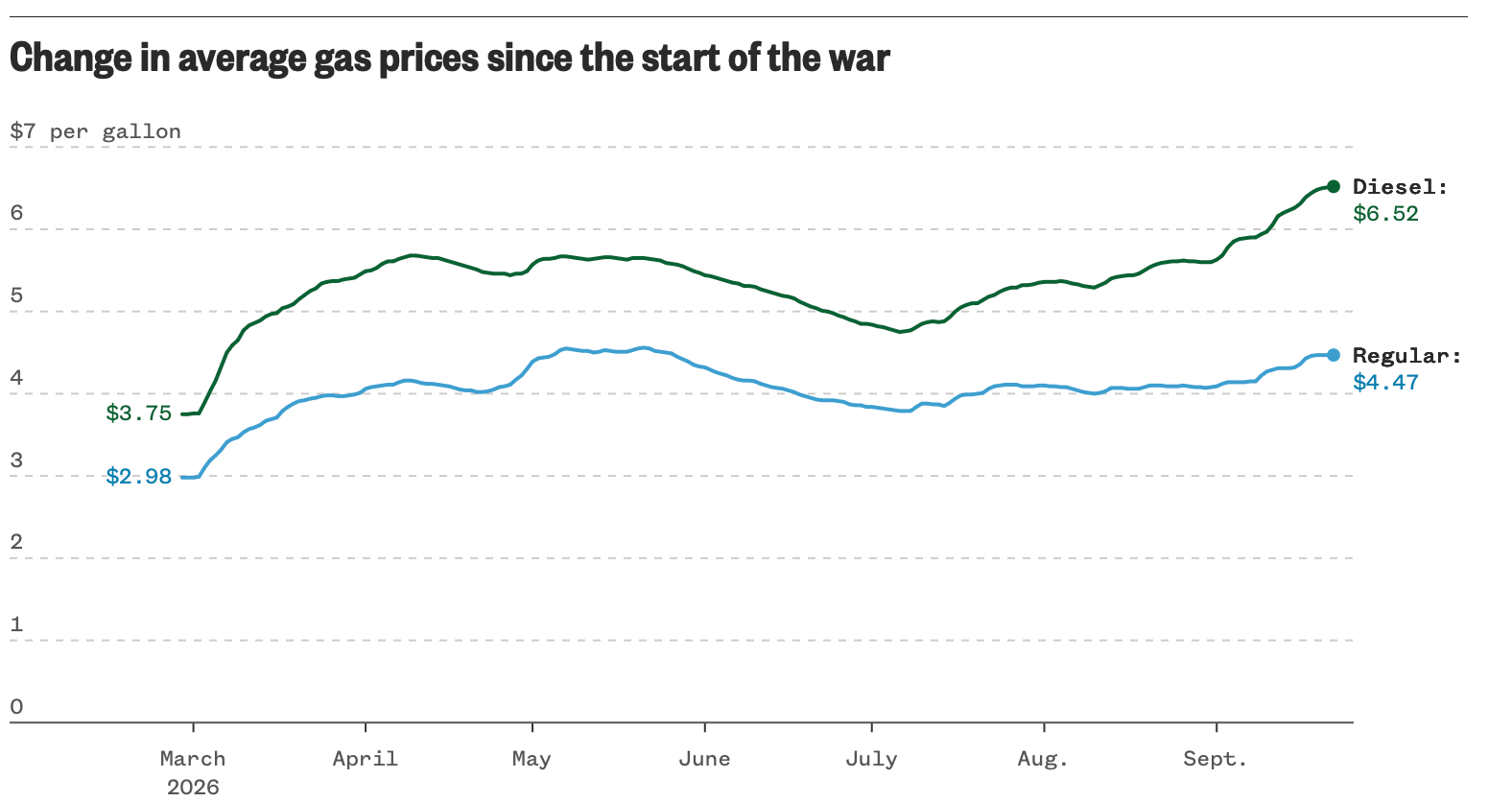
On the 5th of September 2024, President Trump said he will get "gasoline below $2 a gallon, bring down the price of everything from electricity rates to groceries, airfares, and housing costs." Despite promising to lower the prices of taxes and gas, Donald Trump has failed to deliver on these commitments, while the war has placed further pressure on the economy. Donald Trump's failure to prioritise the economy and his continued involvement in international conflicts have evidently damaged his reputation and potentially weakened the Republican Party alongside him. Donald Trump stated that one reason he started the Iran war was to seize Iran's oil and gas resources, but there also seems to be more to it. Donald Trump is a patriot of America and wants to let the rest of the world know it, seemingly viewing military intervention as one way of demonstrating this, even when its necessity is questioned.
In 2019, Donald Trump said that "Great nations do not fight endless wars", but his more recent actions appear to contrast with these words. From capturing Nicolás Maduro in Venezuela to proposing a US takeover of the Gaza Strip, Donald Trump has consistently involved himself in foreign conflicts and sought to present himself as a hero at the end of them. While the US President should be cautious about international politics and intervene if necessary, he should not impose the idea of America being the saviour of other nations and put American citizens in danger. Critics argue that Donald Trump's involvement in these conflicts is not solely for the benefit of America, but also to demonstrate his power to others; to frame himself as a hero that other nations must thank him for rather than question. It's a game of power and influence.
While Trump has not been well-liked overseas, he remained popular and clearly electable within the US - until the midterms. All three of Donald Trump's presidential campaigns were centred around 'MAGA' - Make America Great Again. The infamous red hat and white text have been a source of controversy and division between family and friends across the States, with the slogan being controversial but widely recognised. However, after the midterms and halfway through Trump's second term as president, MAGA has taken on a different reputation - one increasingly associated by critics with hatred, bigotry and a struggling economy. The MAGA hat has become a manifestation of political division that is no longer simply about differences in views on taxes, but also reflects deeper disagreements over human rights and integrity. MAGA has been associated with Christian nationalism, patriotism and conspiracy theories, and all three elements have contributed to divisions within the nation today. For some, the red hat has come to symbolise the movement's more controversial positions, including its attitudes towards immigrants and political accountability. It is no longer simply a symbol of political affiliation, but has also become a symbol of polarisation and discrimination.
During an episode of The Rest Is Politics podcast, Rory Stewart said that when he attended a Trump rally in Ohio and wore a MAGA hat, he felt as if it was not something one could wear lightly - affiliation with MAGA is a serious connection that is no longer seen in a neutral light. The changing tides have shown growing opposition to Trump's agenda and policies, but the midterms have highlighted the increasing divide between Trump and Republican voters. MAGA has become a potential liability to the Republican Party's reputation, with President Trump increasingly seen as a disadvantage to other candidates. This has also been reflected in elections taking place in other countries, where voters have sometimes opted for candidates who aren't connected to or endorsed by the US President, such as Brazil, where left-wing president Luiz Inácio Lula da Silva was elected over Flávio Bolsonaro, whose father, Jair Bolsonaro, was a close friend of President Trump.
Republicans will now have to create a new identity for themselves that is separate from Trump; otherwise, they risk remaining connected to the declining economy and concerns surrounding human rights. Vice President JD Vance has seemingly already started positioning himself for the 2028 Republican nomination by acknowledging the Iran war's impact on the election and questioning US intervention abroad, alongside suggesting that they should focus on businesses that use illegal labour instead of focusing solely on undocumented immigrants. It's important to note that JD Vance does not openly oppose these actions from Trump and has continued to stand by him throughout. His decision to speak out may therefore relate more to strategic positioning for a potential presidential campaign than to genuine remorse for these actions.
There are still two years left in Trump's presidency, so the Democrats' win does not promise significant progress within those two years, particularly as the potential for political gridlock becomes more likely. However, the midterms have shown significant developments throughout the US, with states like Texas turning blue for the first time since 1994 and Kansas electing a Democratic senator for the first time since Judy Garland was filming The Wizard of Oz in 1932. The midterms suggest that Trump has become a political liability and that the Republican Party may need to address the consequences of its actions.
Trump's loss of domestic power could lead to him focusing more heavily on foreign affairs, potentially becoming a concern for other countries, but a more likely outcome is that Trump and Congress will disagree continuously and little will get done. Congress can pass a law, and Trump can veto it. Trump can introduce an act, and Congress can oppose it. It's a seemingly unproductive situation, but it could benefit the Democratic candidate in 2028 - if Trump says no to popular bills, the Republican Party risks being remembered as the party that didn't pass what the majority of America wanted.
It's a tight corner the republican party have got themselves stuck into, but it comes largely as a consquence of their actions and their candidate for president. In the two years it has been in power, the Republican Party has overseen the war with Iran, restricted and defunded gender-affirming care, introduced aggressive deportation policies that have resulted in several deaths, placed tariffs on a wide range of US imports, contributed to rising inflation, pardoned those involved in the January 6 riots and considered live-streaming the execution of a criminal (although this was subsequently called off).
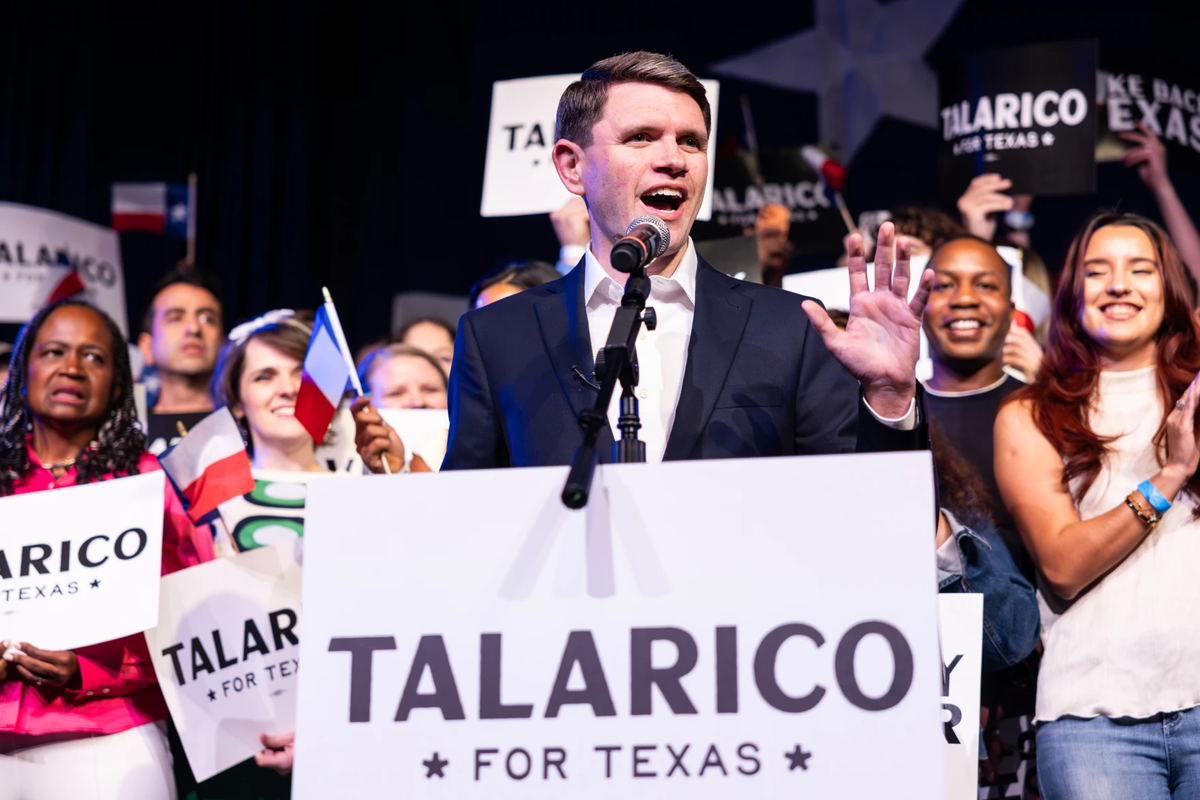
The midterms have shown that it is time for a new wave of democrats to make an impact in congress, with Senators such as Jon Ossoff, James Talarico and Abdul El-Sayed potentially creating a new generation for politics that Trump may, soon, struggle to connect with at all. These elections have shown a decline in support for Trump from voters and politicians alike, suggesting that MAGA is no longer as widely respected as it once was. Two years into his presidency, more and more Americans appear to be questioning Trump's failure to follow through on his campaign promises, with some concluding that he was never going to do so anyway. Trump's 'American dream' of making the nation great has been criticised for focusing heavily on his own political interests, rather than the wider population. When he yells 'Make America Great Again', his actions have raised questions about how far he is considering the working class of America, young people trying to enter the workforce, or anyone other than himself. The Republican Party has allowed him to exert considerable influence over its identity and, with two years of his presidency remaining, will have to confront the possibility of its own voters turning away from it. This voting change does not necessarily reflect a change in America's morals overall, with the rights of transgender people still being contested across the political spectrum, but it does represent a frustrated and exhausted nation that has started to demand what it was promised.
These elections have introduced an idea of hope for Americans, which once seemed bleak and futile after the 2024 result. With Democrats in control of Congress, nothing is promised, especially not while Trump is still president, but it does allow a new direction for American politics to emerge. It may be a while until America sees real progress, but there are signs of a decline in the influence of MAGA politics, both domestically and internationally. It may be the start of a new era for Democrats, but it could also mark the beginning of the end of MAGA's hold over the Republican Party.
By Izzy Hines