Is a successful democracy compatible with social media?
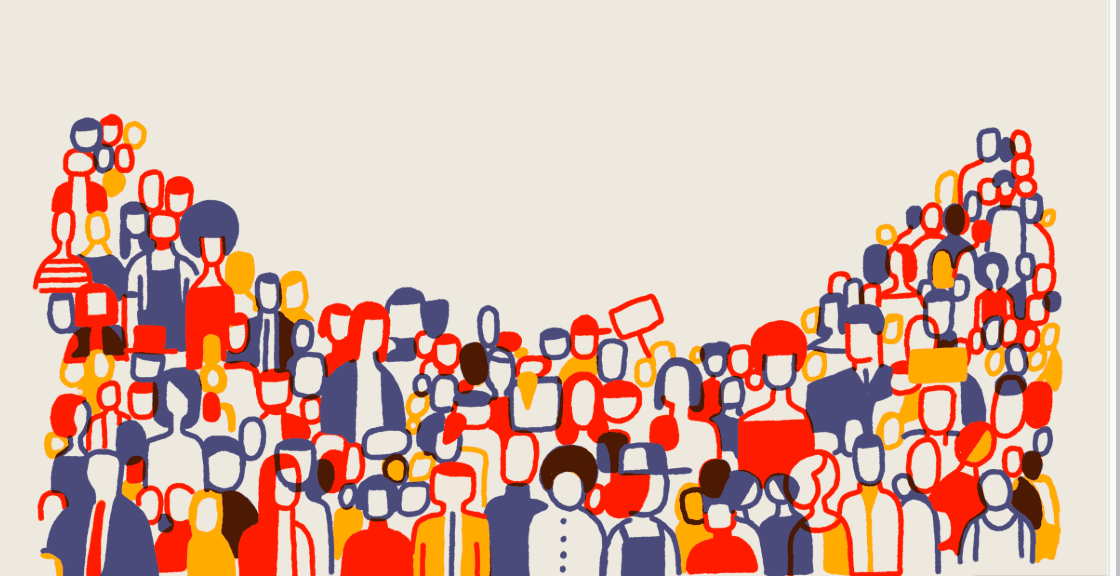
A system of government in which it is the people that rule, democracy strikes a delicate balance with ochlocracy, more commonly referred to as mob rule. A successful democracy draws this distinction, but to do so it must meet the following criteria (Dahl, 1998): effective participation, voting equality, enlightened understanding, control of the agenda, inclusion of all adult citizens. Together, when met, they provide a framework conducive to a successful democracy. Today, democracy is the primary governing system around the world; however, the recent rise of social media has brought with it a unique new threat to democracy.
Social media poses benefits to democracy through widening outreach and allowing a platform for users to voice and discuss opinions; however, the nature of the firms that run these platforms means their compatibility must be questioned. Social media companies are profit-driven corporations; as a result, their algorithms prioritise engagement over truth. These firms have become political actors (Scherer and Palazzo, 2007, 2011); they shape the information citizens are exposed to yet are driven by an accountability to shareholders over upholding democratic values. Although Dahl's model does not regulate the institutions through which political information is distributed, the requirement for enlightened understanding and control of the agenda by citizens remains possible when political discourse is driven by profit-driven firms.
To determine whether they are truly incompatible, we must first consider the benefits brought by the emergence of social media as a form of political media. Allowing citizens to challenge the monopoly of information control held by traditional political media (von Hippel 2005), social media has allowed citizens to become active players in the political system, sharing alternative perspectives and challenging discourses (Grossi 2024), aligning with the democratic requirement of effective participation (Ferree 2002). As citizens become more exposed to online political messages shared through social media, they become more inclined to seek further information (Bond, 2012), increasing their involvement and "enlightened understanding”. The unique “sharing” aspect of social media, in which users can communicate and share posts with friends and family, has a significant impact in affecting voting turnout (Kramer, Guillory, & Hancock, 2014). A study conducted by Bond (2012) found that of users who accessed Facebook on the 2nd November 2010 (the day of the US congressional election), those who received a politically mobilising message from their close friend circle were four times more likely to vote in the election. This personal connection is unique to social media networks, with this finding conveying the benefits to effective participation generated by these new forms of media sharing.
However, the positioning of social media as increasing participation and openness relies on the assumption that previously disengaged citizens would not become politically active without it. In fact, social media tends to reinforce the engagement of those already invested in politics, rather than turning uninterested and uninformed citizens into active participants (Norris, 2001). Social media companies aim to maximise consumer engagement by presenting users with information they are more likely to click on (Liu et al., 2021); as a result, algorithms do not present users with no demonstrated prior interest in politics with political content, limiting their exposure to discourse. Rather than broadening political engagement, algorithmic curation concentrates political information among those already interested. Political participation therefore becomes self-reinforcing: engaged citizens grow increasingly informed and active, while disengaged citizens are progressively excluded from political discourse. Instead of reducing inequalities in democratic participation, social media risks deepening existing gaps in political participation and knowledge.
The self-enforcing cycle extends beyond participation itself. The market-driven prioritization of engagement results in algorithms designed to provoke an emotional response from the user (Toubiana and Zietsma, 2017). A 2024 experimental study by Milli et al. found that tweets that exhibited greater partisanship and displayed more animosity to other groups were disseminated more widely compared to less divisive content. Peddling content which separates voters into “us and them” can result in members beginning to reduce themselves and others to their partisanship; with this, politics can expand beyond policy ideas into entire lifestyles. As the role of politics becomes more central to a person's life, so does the intensity in which they believe their beliefs (Talisse, 2021). With this shift to extremism, hostility towards other parties increases, and they become more intolerant to other perspectives. This dichotomous view, exacerbated by the binary nature of social media, threatens the access of citizens to balanced and fair information.
Beyond increasing online polarisation, these engagement-maximising mechanisms mean social media platforms provide the ideal conditions for strategic manipulation (Allcott and Gentzkow, 2017), where platform owners or other powerful actors exploit these features for their own political or economic gain. To maximise engagement, firms collect extensive data on users' online behaviour and demographics (Cui, Tan and Shi, 2024). Research in marketing and psychology has reported that psychologically tailored adverts towards this information are significantly more effective at influencing behaviour than non-tailored ones (Hirsh et al., 2012; Matz et al., 2017; Moon, 2002). The capacity for effecting behaviour extends beyond commercial use into political spheres. During the 2016 Trump presidential campaign, the consulting firm Cambridge Analytica, hired by the team, were accused of harvesting data from millions of Facebook users to construct psychological profiles and used it for targeted campaign advertising. By allowing political communication to be conducted in a private and user-specific manner rather than in a public sphere, it removes transparency and uniformity found in traditional political campaigning methods, thereby making democratic debate more difficult to scrutinize and holding political actors less accountable for claims made in the process. As users aren't provided with uniform information, it makes it structurally impossible for them to evaluate and challenge claims, challenging enlightened understanding.
These mechanisms through which social media undermine democratic deliberation are not politically neutral. These firms do not act as passive platforms for democratic debate but actively shape the conditions under which such debate occurs. During the past decade, firms have begun to engage with activities traditionally regarded as the responsibility of the government: enabling, and implementing citizenship rights (Matten and Crane 2005). This involvement in the public process and the control they wield to influence societal decisions has caused scholars to increasingly argue that firms are no longer just business but political actors in global society. Social media firms are a key part of this development; by controlling the distribution of content, they decide which viewpoints are amplified and which become marginalized. Unlike governments, social media exerts influence over political discourse without democratic accountability. Governments are obligated to justify conduct, provide transparency in decision making and justify performance (Northern Ireland Open Government Network, 2015) and remain accountable to their citizens, who retain the ability to remove them through elections/democratic process. Social media firms hold no such democratic mandate. Their primary obligation remains to shareholders, not the electorate, yet retain the ability to control political content without meaningful public oversight. Political authority therefore becomes detached from the democratic principles that justify its use.
The commercial ownership of news providers is not unique to social media. Traditional media publications are also commercially controlled enterprises that also possess the ability to influence political opinion, yet their existence is not generally regarded as contradictory to democracy. Newspapers and similar outlets follow editorial guidelines and abide by journalistic standards that are designed to maintain accuracy, credibility and public trust. These standards stipulate that traditional media holds a responsibility towards citizens and society (Parliamentary Assembly of the Council of Europe, 1993) and must consider themselves socio-economic agencies whose role is to provide a fundamental right - access to information -, therefore limiting the extent to which they can pursue commercial objectives. Although traditional media can and does exhibit bias, its institutional objective remains the provision of information necessary for democratic participation. By contrast, social media platforms, existing solely as commercial systems, basing information access on engagement, treat information as a commercial asset rather than a right. Even if governments aim to apply similar standards to social media, traditional regulation is less effective. In traditional media, editorial responsibility is concentrated in a small group of individuals: journalists, editors and publishers who can all be held responsible for information published. They produce a single uniform edition that ensures readers are provided with the same political information. By contrast, social media distributes personalised political information to users who will each receive a unique feed; as regulators are no longer overseeing a single product, rather than millions of changing recommendations, it becomes much harder to apply traditional models of editorial accountability. The personalized algorithm fractures the shared political sphere where democratic deliberation occurs. As citizens no longer receive similar exposure to political information, political claims become increasingly difficult to scrutinise, weakening accountability and making traditional standards harder to apply. Traditional media is privately owned; however, its sole responsibility is not to the shareholders but also to maintain journalistic integrity and to its consumers; this prevents it from controlling political discourse, allowing it to co-exist with democracy.
Social media has undoubtedly widened opportunities for political participation; were participation alone sufficient to constitute a successful democracy, it could be considered a democratic success. However, Dahl's definition for democracy extends beyond just blind engagement to require enlightened understanding, control over public agenda by citizens and electoral accountable institutions. The incompatibility that arises from social media is not that it enables political participation but that the conditions in which this participation occurs are placed under the control of privately owned firms. Whilst the differences in democratic objectives and that of social media firms stay opposing, the existence of social media remains incompatible with the principles upon which a successful democracy depends. To reconcile the two would require social media platforms to be treated as political actors with democratic standards: public-interest content standards and algorithmic transparency imposed upon them.
By Freya Brolly
Bibliography
Allcott, H. and Gentzkow, M. (2017), 'Social Media and Fake News in the 2016 Election', Journal of Economic Perspectives, Vol. 31, No. 2, pp. 211–236.
Bond, R.M. et al. (2012), 'A 61-million-person Experiment in Social Influence and Political Mobilization', Nature, Vol. 489, No. 7415, pp. 295–298.
Castelluccia, C. and Le Métayer, D. (2019), Understanding Algorithmic Decision-Making: Opportunities and Challenges, European Parliamentary Research Service, PE 624.261.
Castello-Molina, I., Colleoni, E., Scherer, A.G. and Trittin-Ulbrich, H. (2025), 'Social Media are a Threat for Democracy! – A Political Perspective for Analyzing and Diminishing Harm', Journal of Management Studies (advance online publication).
Dahl, R.A. (1998), On Democracy, New Haven: Yale University Press.
Ferree, M.M. (2002), Shaping Abortion Discourse: Democracy and the Public Sphere in Germany and the United States, Cambridge: Cambridge University Press.
Hirsh, J.B., Kang, S.K. and Bodenhausen, G.V. (2012), 'Personalized Persuasion: Tailoring Persuasive Appeals to Recipients' Personality Traits', Psychological Science, Vol. 23, No. 6, pp. 578–581.
Kramer, A.D.I., Guillory, J.E. and Hancock, J.T. (2014), 'Experimental Evidence of Massive-Scale Emotional Contagion Through Social Networks', Proceedings of the National Academy of Sciences, Vol. 111, No. 24, pp. 8788–8790.
Liu, P., Shivaram, K., Culotta, A., Shapiro, M.A. and Bilgic, M. (2021), 'The Interaction between Political Typology and Filter Bubbles in News Recommendation Algorithms', Proceedings of the Web Conference 2021 (WWW '21), pp. 3791–3801.
Matten, D. and Crane, A. (2005), 'Corporate Citizenship: Toward an Extended Theoretical Conceptualization', Academy of Management Review, Vol. 30, No. 1, pp. 166–179.
Matz, S.C., Kosinski, M., Nave, G. and Stillwell, D.J. (2017), 'Psychological Targeting as an Effective Approach to Digital Mass Persuasion', Proceedings of the National Academy of Sciences, Vol. 114, No. 48, pp. 12714–12719.
McCoy, J. (2019), 'Polarization Harms Democracy and Society', Peace in Progress, No. 36, Barcelona: Institut Català Internacional per la Pau (ICIP).
Milli, S., Carroll, M., Wang, Y., Pandey, S., Zhao, S. and Dragan, A.D. (2024), Engagement, User Satisfaction, and the Amplification of Divisive Content on Social Media, Knight First Amendment Institute at Columbia University.
Moon, Y. (2002), 'Personalization and Personality: Some Effects of Customizing Message Style Based on Consumer Personality', Journal of Consumer Psychology, Vol. 12, No. 4, pp. 313–326.
Norris, P. (2001), Digital Divide: Civic Engagement, Information Poverty and the Internet Worldwide, Cambridge: Cambridge University Press.
Northern Ireland Open Government Network (2015), NIOGN Factsheet: Public Accountability.
Parliamentary Assembly of the Council of Europe (1993), Resolution 1003 (1993) on the Ethics of Journalism.
Scherer, A.G. and Palazzo, G. (2007), 'Toward a Political Conception of Corporate Responsibility: Business and Society Seen from a Habermasian Perspective', Academy of Management Review, Vol. 32, No. 4, pp. 1096–1120.
Scherer, A.G. and Palazzo, G. (2011), 'The New Political Role of Business in a Globalized World', Journal of Management Studies, Vol. 48, No. 4, pp. 899–931.
Talisse, R.B. (2021), Sustaining Democracy: What We Owe to the Other Side, New York: Oxford University Press.
Talisse, R.B. (2024), 'When Is Political Polarization Good—and When Does It Go Bad?', Greater Good Magazine, Berkeley: Greater Good Science Center, 16 April 2024.
von Hippel, K. (2005), Democracy by Force: US Military Intervention in the Post-Cold War World, Cambridge: Cambridge University Press.