Who Protects Her on Campus?
Writer’s note: this piece discusses sexual assault and may be triggering for some readers.
In October 2024, a woman claimed she was sexually assaulted by seven students at a Cornell University fraternity house. Almost two years later, in September 2026, she filed a civil lawsuit against the men, the fraternity and the university. No one has yet been convicted, and at the time, no criminal charges were brought at all. The university ran its own internal investigation and issued sanctions. Only after the lawsuit and a wave of public attention did the local prosecutor announce the criminal investigation would be reopened.
Whatever the courts eventually decide about this particular case, it exposes something uncomfortable about how justice for women in educational institutions actually works.
The gap between harm and accountability
According to the American anti-violence organisation RAINN, about 73% of sexual assaults are never reported to the police, and of the few that are, almost none reach a courtroom. For every 1,000 sexual assaults in the United States, only around 50 lead to an arrest, 28 to a felony conviction, and just 25 to a prison sentence. Put simply, 975 out of every 1,000 perpetrators walk free.
These statistics are not just representative of one campus or one country. This is because sexual assault is uniquely hard to prove to a criminal standard. It usually happens in private, often without witnesses, frequently between people who know each other, and commonly where alcohol or drugs cloud memory and consent. The result of this is a crime that is common in everyday life, yet extremely rare in courtrooms.
Two systems, two standards
The Cornell case highlights how universities fit into this massive problem. When an assault is alleged on campus, there are effectively two separate systems that can respond, and they do so very differently.
The first is the university’s own disciplinary process. A school can investigate and punish, through expulsion, suspension, or closing a fraternity, but it cannot directly send anyone to prison. Crucially, many schools use a lower standard of proof than the legal system. This is known as "preponderance of the evidence", meaning it only has to find that something was more likely than not to have happened, a threshold just over 50%. Critics argue that elite institutions can be slow to believe a high-achieving student could be a predator, therefore justice can be avoided.
The second is the criminal justice system. In order to convict, a court must be sure "beyond reasonable doubt", which is a far higher bar. Ultimately, only a court can actually imprison someone.
These two systems run independently, and both may fail to hold perpetrators accountable. In cases like this, a university can expel or suspend students while no one is ever criminally charged. Even if a school decided something was more likely than not, prosecutors may still decide not to pursue it, doubting they can clear the higher bar. To a survivor, the message can feel contradictory: their pain is serious enough to have someone expelled, but not serious enough for the law to act.
Why this matters for women everywhere
The most significant cost is not only that perpetrators go free. It is that the women who come forward are so often the ones who end up paying.
Reporting for many can mean the end of their education. A 2021 report by the US group Know Your IX found that 39% of student survivors who reported their assault had their education substantially disrupted. Around 27% took a leave of absence, 20% transferred, and nearly 10% dropped out. Strikingly, 35% said their school actually encouraged them to take time off, and 15% were punished or threatened with punishment for coming forward; some even threatened with defamation suits for naming what happened.
This is where harm stops being personal and becomes economic and political. A woman who is pushed out of an educational institution loses the degree that shapes her earnings, her independence, and her career for the rest of her life. Multiply that across thousands of women and a pattern appears: the institutions meant to produce the next generation of female leaders, lawyers, doctors and politicians may actually help in thinning their numbers. Around a quarter of undergraduate women report experiencing non-consensual sexual contact during their studies. A system that so often responds by removing them, rather than protecting them, doesn’t just fail individuals but actively shapes who gets to lead in the long run, and whose voices are missing from rooms where decisions are made. This ultimately perpetuates gender inequality.
This quietly teaches women a lesson: reporting may cost you enormously and change nothing. That belief is almost certainly part of why so many assaults go unreported in the first place. It becomes a cycle: low conviction rates discourage reporting, and low reporting rates keep convictions low.
What could actually change
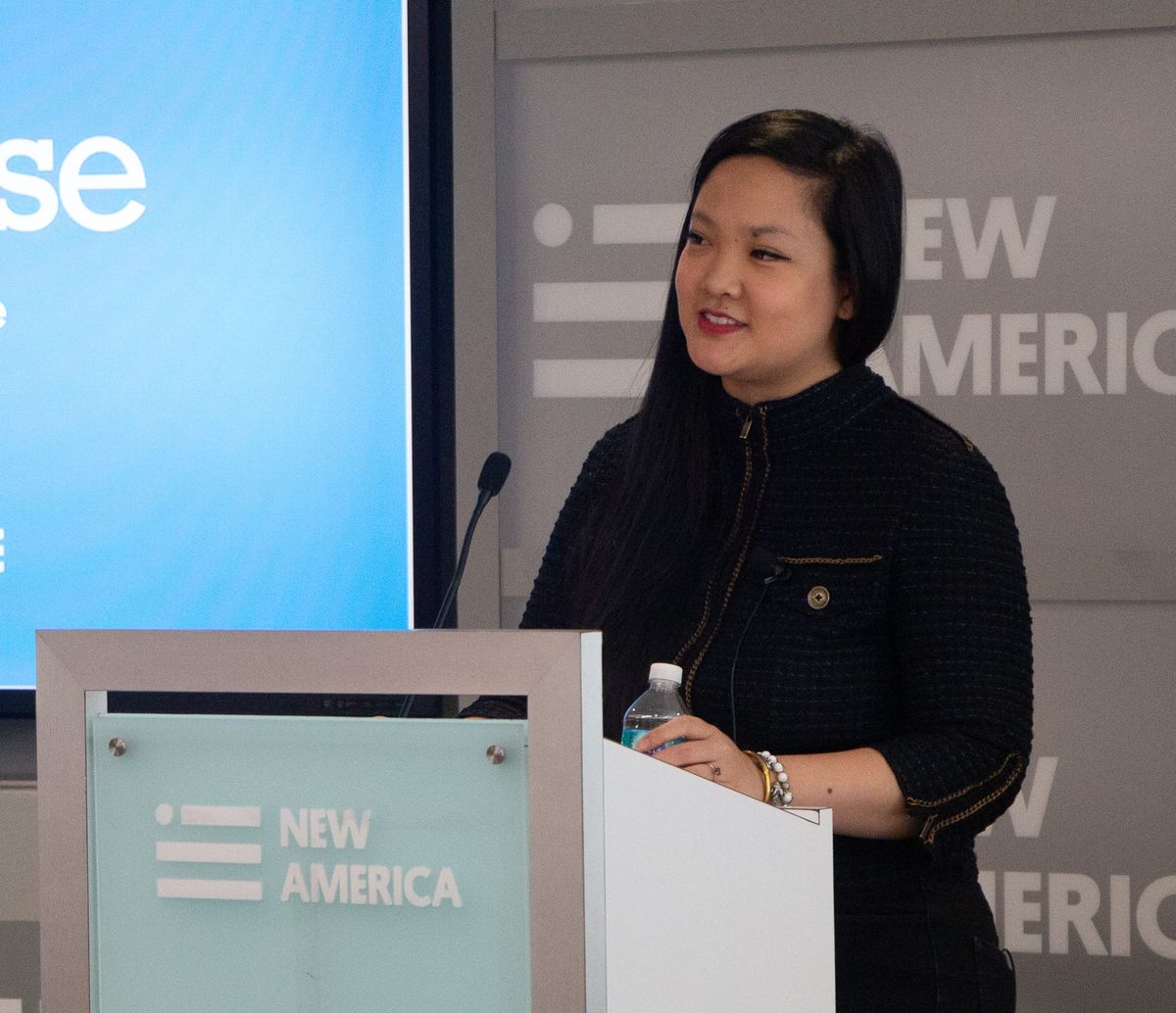
The most powerful tool we have may be the simplest: refusing to stay quiet. In 2013, Amanda Nguyen was sexually assaulted while studying at Harvard University and discovered how badly the system was built for survivors. Rather than accept it, she founded an organisation called Rise and helped draft the Sexual Assault Survivors’ Rights Act, guaranteeing basic protections for victims. In 2016, backed by a petition of over 100,000 signatures, it passed unanimously through both chambers of the US Congress. One survivor used her voice to rewrite the law for millions.
The public conversation matters more than it seems, and the Cornell investigation highlights this: it reopened because people refused to let the story fade. Going public requires a lawyer, money, time, and the willingness to be named, scrutinised and doubted in front of the world. Most survivors have none of those things, but attention itself is a form of pressure, and amplifying the voices of those frightened into silence is something any of us can do.
Universities could also be far more transparent about what they find and what they do, guaranteeing that reporting never costs a woman her place, through firm academic protections. Justice systems can be trained and resourced specifically to handle difficult cases, as some jurisdictions have begun to do with specialist units.
The question the case leaves us with isn't about seven individuals whose guilt or innocence a court has yet to weigh. It is far bigger than that. It is about how both the justice and education systems have failed to safeguard women and what we are willing to change so that fewer victims ever feel that they have to remain silent.
By Aisha Abdulsalam
[3]
https://rainn.org/title-ix
[4]
https://www.advocatesforyouth.org/wp-content/uploads/2024/06/Know-Your-IX-2021-Cost-of-Reporting.pdf
[5]
https://www.pbs.org/newshour/show/woman-behind-sexual-assault-survivor-bill-rights
https://www.congress.gov/bill/114th-congress/house-bill/5578
[6]
https://www.aau.edu/key-issues/aau-climate-survey-sexual-assault-and-sexual-misconduct-2015