Explainer - Power in International Relations
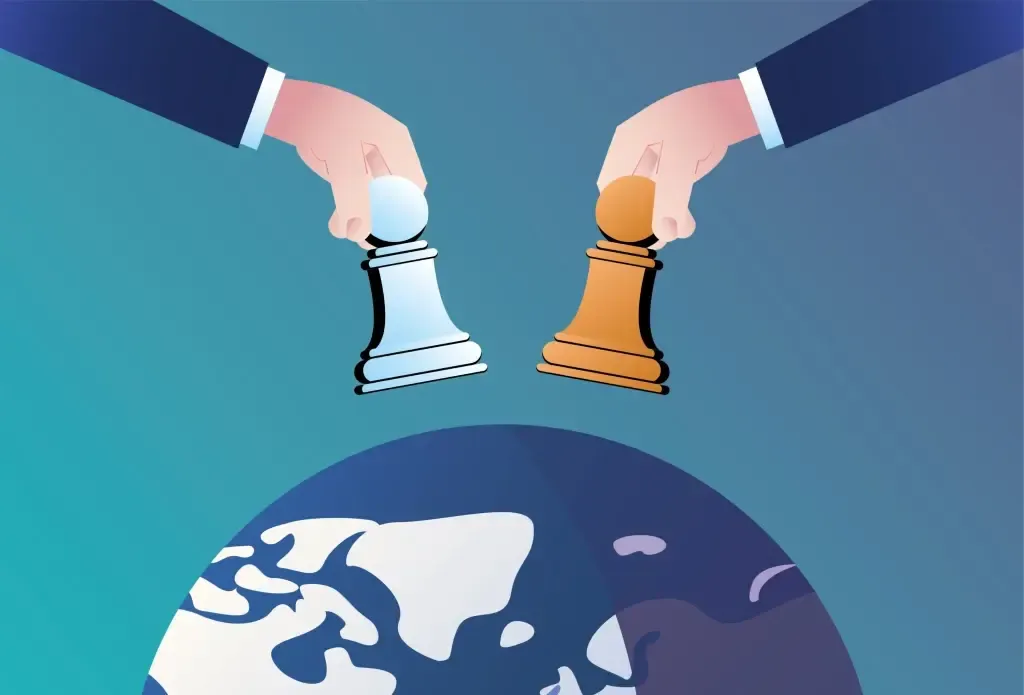
Power lies at the very heart of international politics. Power is typically defined as ‘the ability of X to make Y do something they would not otherwise do’. Power dictates how nations interact, how easy it is to resolve disputes, and how they operate within the global order. As international politics is increasingly becoming more interconnected, the nature of power: how it is built, deployed, and measured, continually remains one of the most fiercely debated questions in international relations.
At the centre of the modern debate over power in international politics, it is the distinction between hard power and soft power. Hard power relies on tangible (the ability to be measured) assets. Which is predominantly military strength (troop numbers and nuclear/technological capabilities etc) and economic leverage like trade sanctions. Where realists argue that hard power is the ultimate power in global affairs. In an ‘anarchic’ international system with no global government to enforce rules, states exist in a self-help environment where survival depends on military strength and national self-interest. Recent actions, such as Russia’s invasion of Ukraine or China’s naval expansion, highlight how hard power continues to dictate territorial boundaries and global security dynamics.
Soft power, however, operates through diplomacy, and cultural influence rather than force or payment. Soft power emphasizes that states can achieve foreign policy goals by persuading others to want what they want. Elements of soft power include a state’s political values, educational institutions, cultural exports, and global leadership on issues like climate change or humanitarian aid. A clear example was seen during the COVID-19 pandemic, where emerging powers engaged in ‘vaccine diplomacy’ by distributing medical supplies across developing nations to build long-term diplomatic goodwill and regional influence.
To navigate the modern world, states increasingly rely on ‘smart power’, the strategic combination of hard and soft power. President Barack Obama’s foreign policy often sought (such as his 2009 Cairo address to the Islamic world) with targeted military force.
Crucially, how power is distributed among states dictates global stability, which is a concept known as polarity:
Unipolarity (a hegemony) occurs when one dominant superpower dictates global norms. The United States held this status following the collapse of the Soviet Union in 1991, acting as a ‘global policeman’. While unipolarity can offer stability, critics argue it risks imperial overreach and breeds resentment among rival states.
Bipolarity is instead characterized by two competing superpowers, best exemplified by the US and Soviet Union during the Cold War. Realists argue this creates a stable ‘balance of terror’. Where nuclear weapons and Mutually Assured Destruction (MAD) prevent direct conflict. While liberals often point out that bipolarity frequently destabilizes the rest of the world through violent proxy wars.
Multipolarity instead features five or more major power centers competing and cooperating. While liberals argue multipolarity fosters multilateral cooperation, realists contend that shifting alliances make it inherently volatile, pointing to the alliance systems that sparked the First World War.
Today, global power is shifting once again. While the US retains dominant military spending, global financial influence, and cultural reach, rising powers like China are challenging Western dominance. Through initiatives like China's Belt and Road Initiative and new financial bodies like the Asian Infrastructure Investment Bank, alternative power centres to the US are emerging.
By Amelia Scott