Why is Africa still ‘developing’? The myth of one path to progress.
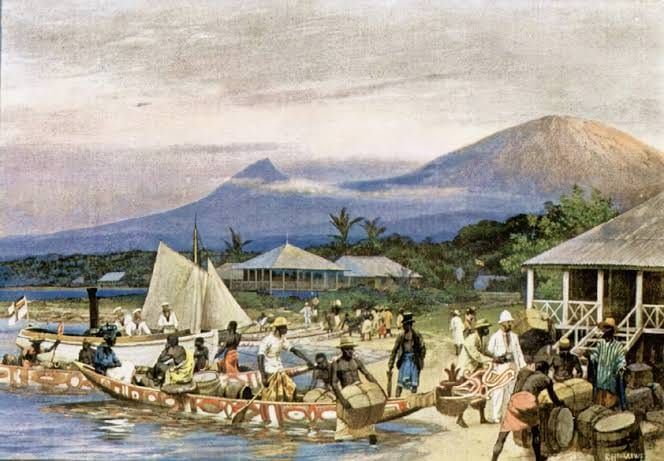
In 1897, British soldiers marched into Benin City, in what is now southern Nigeria, and burned it to the ground. Before they did, they looted thousands of bronze sculptures so detailed that European experts refused to believe Africans had made them. Two centuries earlier, Dutch visitors had compared the city’s wide, organised streets to Amsterdam’s. Today, those same sculptures sit in glass cases in London and Berlin, while Nigeria is crushed under the weight of a single, belittling label: “developing.”
I want to take that word apart, because I don’t think it means what we’ve been taught it means.
The idea we’ve inherited
A huge amount of modern economics rests on one big theory: that a country’s wealth today traces back to the institutions Europeans built, or didn’t build, during colonisation. Economists Daron Acemoglu, Simon Johnson and James Robinson argued that where colonisers could settle safely, they built strong courts, property rights and accountable government. Where disease made settling dangerous, they built “extractive” institutions instead: systems designed purely to pull resources out, not to develop the place they were taking them from.
It’s a compelling theory, and colonial extraction really did do lasting damage. But it rests on a crucial assumption: that before Europeans arrived, there was not much institutional life worth building on. Africa was a continent of disorder. A blank page.
The page wasn’t blank
Here’s what we’re rarely taught in our history classes. The Benin Kingdom had a centralised bureaucracy, a labour system organised by age and a sophisticated legal system. Its Obas (kings) negotiated trade terms with Portuguese merchants, requiring royal approval before any European could do business.
Benin wasn’t unique. The Asante Empire, in present-day Ghana, ran a civil service so complex it had a dedicated Foreign Office. Great Zimbabwe, built by the Shona people, controlled trade routes reaching China and Persia by the 11th century.
None of these societies were perfect. Benin became deeply entangled in the transatlantic slave trade, and Asante’s power rested partly on conquest. But that’s the point: they were real, complex states, with precisely the kind of institutional depth (successes and failures) that theories like Acemoglu and Robinson’s treat as something colonisers introduced.
Building our own path
So, if institutions capable of running large societies already existed in Africa long before colonisation, then maybe the goal of “development” shouldn’t be to copy Western systems built for Western societies. It should be to look back at what worked and adapt the parts that still make sense.
It’s true that many systems wouldn’t translate in the modern world. Benin was an absolute monarchy, and nobody is suggesting we return to that. But other elements including decentralised local authority, community-based dispute resolution, and trade networks built around African partners rather than distant former colonisers are worth a serious look. Drawing on the past dismantles the assumption that every excellent idea must be imported
This is important because the western path of “development” often simply isn’t available. The fastest modern route to “development” is export-led growth as seen in China. But for African nations, colonisation dismantled local industry and rebuilt economies to export raw materials, not finished goods. Today, 45 of Africa’s 54 countries still depend on exporting primary commodities like oil, cocoa and minerals, then buying back the finished products made from them. You cannot copy China’s rise when your economy was built to do the opposite.
Additionally, economist Ha-Joon Chang’s argues, using his theory of “kicking away the ladder” that Britain and the United States industrialised behind enormous tariff walls, shielding their infant industries till they gained strength. They then began preaching free trade to everyone else, making it far harder for developing countries to build industries of their own.
So, what does “development” actually mean?
The problem with the word “developing” is that it assumes a single, universal pathway: a race with the West as the finish line and every other country trying to imitate those societies. But context matters significantly for countries. To some Western eyes, eating with your hands instead of utensils looks “backward,” yet across much of Africa it’s a normal, meaningful part of how people share food. There’s nothing underdeveloped about it; it’s simply different, rooted in its own history and meaning.
That small example says something big: we cannot use one culture’s habits and systems as a fixed measure of progress, then call every society that differs from it “behind.”
So perhaps “development” doesn’t have one universal definition at all. Next time you hear a country described as “developing,” it’s worth asking: developing toward what, and by whose measure? For “development” to truly begin, maybe the best answer is for each country to define progress for itself.
By Aisha Abdulsalam
REFERENCES:
[1]
[2]
[3]
[4]
Ha-Joon Chang, Kicking Away the Ladder: Development Strategy in Historical Perspective (Anthem Press, 2002)