When doing it well still feels like doing it badly


IncomingbyPiya started because my friends - smart, capable people - asked me to teach them after a decade working in investing. I drew up a short course and began hosting sessions on my sofa. To this day, I meet so many people who want to learn, but are unsure where to start. So it’s time to share.
“In tennis, perfection is impossible”
Roger Federer is a GOAT. He needs no introduction. 20 Grand Slams and eight Wimbledon titles. Across the 1,526 matches he played, he won almost 80% of them.
But he won only 54% of the points he played.
Yes - 54%.
That is a lot of losing. And a lot of losing, not just for a winner, but for someone so many of us still see as one of the best tennis players of all time.
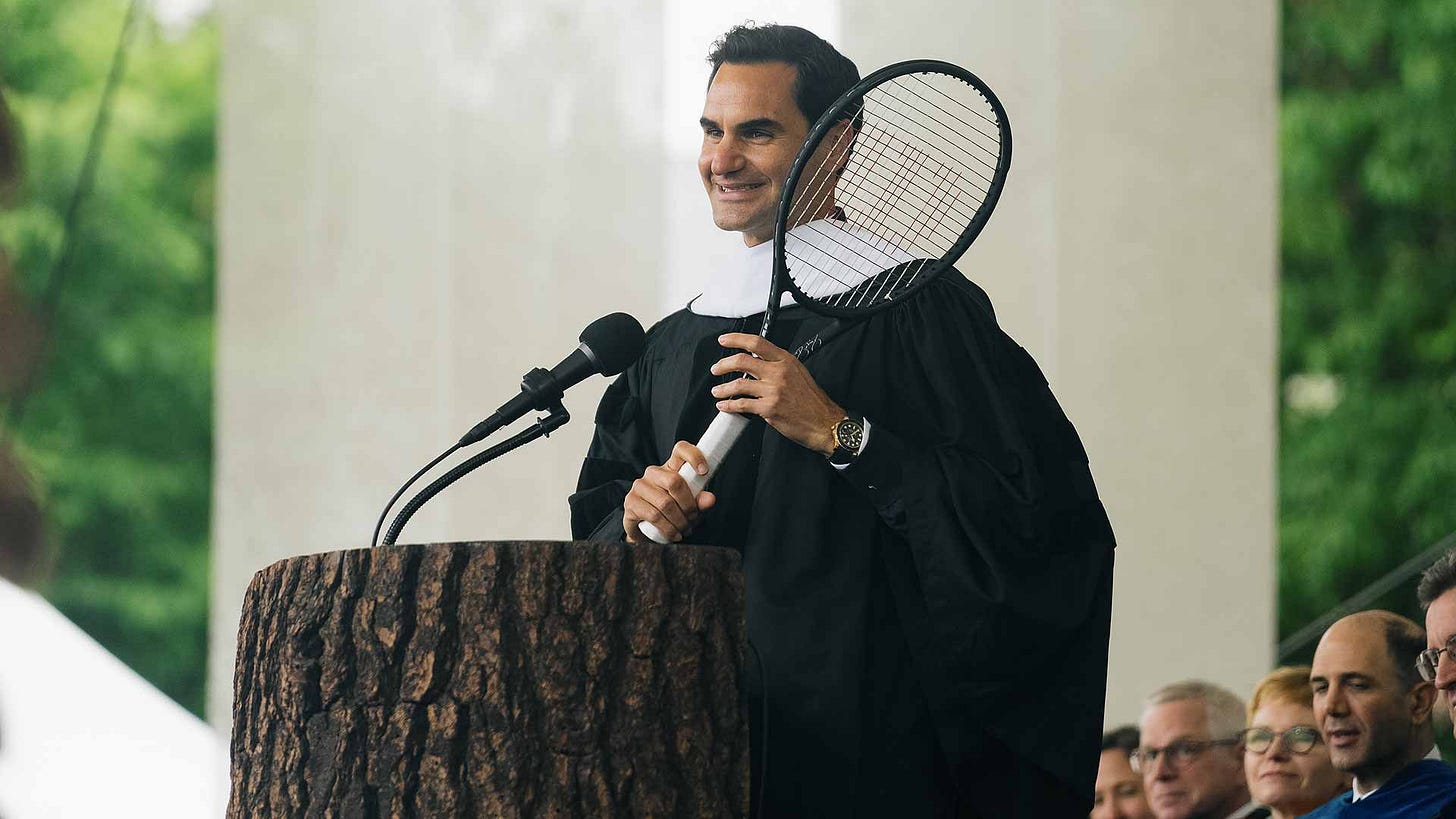
In his commencement address at Dartmouth a couple of years ago, Federer told us himself: even the best tennis players in the world barely win half the points they play.
The best don’t just learn to win, they learn to lose and to not dwell on those losses.
“In tennis”, he said, “perfection is impossible”
A great investor is wrong 4 times out of 10
Great investors barely win half their points either: a great stock-picker is still right only 6 out of 10 times. And in fact, you can be wrong more than half the time and still make money.
What matters is this: when you are right, you are more right than how wrong you are wrong when you are wrong. In other words, let your winners run, cut your losers quickly and you can lose half your points and still win the match.

My own scoreboard
My own portfolio is a good example. Right now I have 13 trades in equities. Some are individual stocks and some baskets (equity funds). I won’t tell you what they are, but here is - with full transparency - how well (or badly) each one has done:
Eight have made money. Five have lost money. That puts me at a 62% win rate (known as a hit rate in investing). Just slightly better than Federer himself (!)
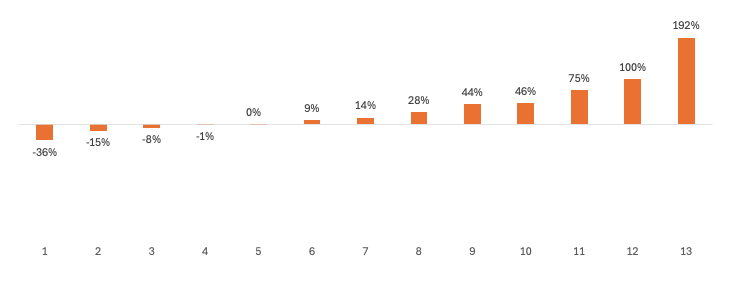
A couple of trades (no. 4 and 5) are pretty much sitting at zero. These I bought quite recently so the jury is still out on those. We will see what happens, if they swing my way, my win rate could climb to 77%. I know what you’re thinking: Sabalenka better watch out.
OK. Back to more reasonable things the portfolio. Even with only 62% of my bets correct, I’ve done well overall because my best trade (no.13) has made far more than my worst has lost (no 1), and on average my winners are bigger than my losers.
Points that swing the match
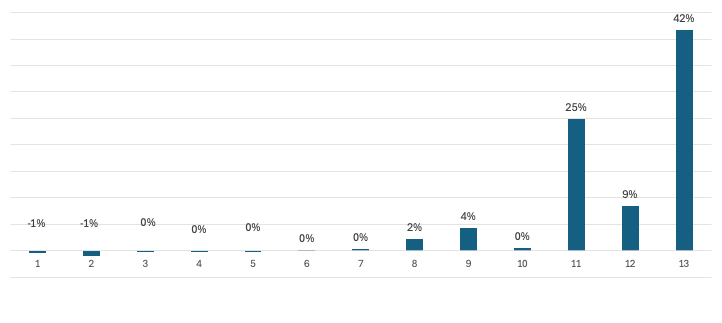
It’s not just about being right more often, it’s about having more riding on the trades that work. All points are not equal. So the amount I decide to put in each trade can help shift things too.
I have more money in my winners than my losers - and much more in my best trade no.13 than in my worst no.1 - so I’m on the right side of both levers: bigger wins than losses and bigger bets on the wins.
In tennis, not every point is equal: a tiebreak point can swing a match. In investing, you only need a handful of really good trades to drive your whole performance. Most of my returns come from three or four good trades.
Why winning still feels tough
All of us who have watched a tight tennis match has seen the best players hold their nerve at the key moments. Points get lost thick and fast sometimes, what separates the great players is how quickly they move past it and turn things around. This mindset is crucial.
In investing, cutting a loser fast can feel like giving up. We all have that moment of realisation: no, we are not Warren Buffett after all. But limiting the losses is exactly why the math works.
It’s also in our nature to get greedy. We can be unsure about a trade, then once its working, swiftly move the bar: sure, we made money, but our mind wanders to how we could have made more. Bought lower. Sold higher. Put in more. There’s always something we could have done differently.
Psychology also tells us that loss aversion is real: losing just hurts more than winning feels good. We are wired that way.
Losing is the price of admission
The truth is, in investing, not only is perfection is impossible, is far from possible and losing is the price of admission. And unlike tennis, there is little real time feedback about how you are doing. The score presents itself slowly over time and in aggregate.
Chasing perfectionism is a setback in investing, and the sooner we let it go, the better. Losing is inevitable. What matters is that we limit those losses and that when we win, we win by more than we lose.
Turns out that in investing, tennis, and life, doing it well still feels like doing it badly.
For more articles by Piya, see incomingbypiya.substack.com
After a decade at the heart of the investing world, Piya is becoming the teacher she never had. She breaks down complex investing principles into simple, actionable steps that fit into everyday life and empowers you to take charge of your future. Piya has changed her financial trajectory using simple principles and is here to encourage you to do the same.