Explainer - Does Britain need a new voting system?

Prime Minister Andy Burnham has put electoral reform back on the political agenda, announcing a national commission on the issue and promising that Labour will fight the next election committed to changing Britain’s voting system so that “everyone’s vote counts”. At the centre of the debate is First Past the Post (FPTP) - the system currently used to elect MPs to Westminster.
Under FPTP, the UK is divided into 650 constituencies. In each, voters choose one candidate and whoever receives the most votes becomes the MP. Crucially, they do not need more than half. If Candidate A receives 35%, Candidate B 34% and Candidate C 31%, Candidate A wins the seat. This is repeated across all 650 constituencies to form the House of Commons.
The main advantages of FPTP are that it is simple, tends to produce clear parliamentary majorities and maintains a direct connection between an MP and a particular constituency, making it easy for voters to know who represents them.
The difficulty is that winning individual constituencies do not necessarily produce a Parliament that reflects how the country voted overall. The 2024 general election was the most disproportionate on record: Labour received just 33.7% of votes but won 411 seats, while Reform received 14.3% of votes but returned only five MPs. Around 74% of votes were also either cast for losing candidates or were surplus to what the winning candidate needed, meaning they made no difference to who was elected.
That is the problem proportional representation (PR) tries to solve. Proportional systems try to make a party’s share of seats more closely reflect its share of votes. A party winning 30% of the vote should, broadly speaking, receive something closer to 30% of the representation.
In fact, alternatives to FPTP are already used across the UK. Scotland elects its Parliament through the Additional Member System (AMS), where voters choose both a constituency representative and a regional party, with additional regional seats used to make the final result more proportional. Northern Ireland instead uses the Single Transferable Vote (STV), under which voters rank candidates in order of preference so their vote can still help elect another candidate if their first choice does not win. Wales uses the Closed Proportional List System, where voters choose a party and seats are distributed roughly according to each party’s share of the vote.
These systems, however, involve their own compromises. The regional element of AMS can give parties greater influence over which candidates are elected through their lists. More broadly, proportional systems tend to make outright parliamentary majorities less common, increasing the likelihood of coalitions and negotiations between parties, which critics argue can mean less decisive and weaker government.
Britain has, however, rejected electoral reform before. In the 2011 referendum, voters opposed replacing FPTP with the Alternative Vote (AV). Under AV, voters would have ranked candidates in order of preference, but it was not a proportional system: each constituency would still have elected a single MP, so a party’s share of seats could still differ substantially from its share of the national vote. The result is also often understood partly as a rejection of the Liberal Democrats, whose leader Nick Clegg strongly backed AV at a time when the party had become deeply unpopular in government.
Burnham’s proposal therefore reopens this contested question: what should an election prioritise? A strong government, a local representative, or a Parliament that more closely reflects how people actually voted? No electoral system will deliver all three perfectly.
By Rose Sarkar
 Electoral Reform Society
 Chris Mason and Camellia Sinclair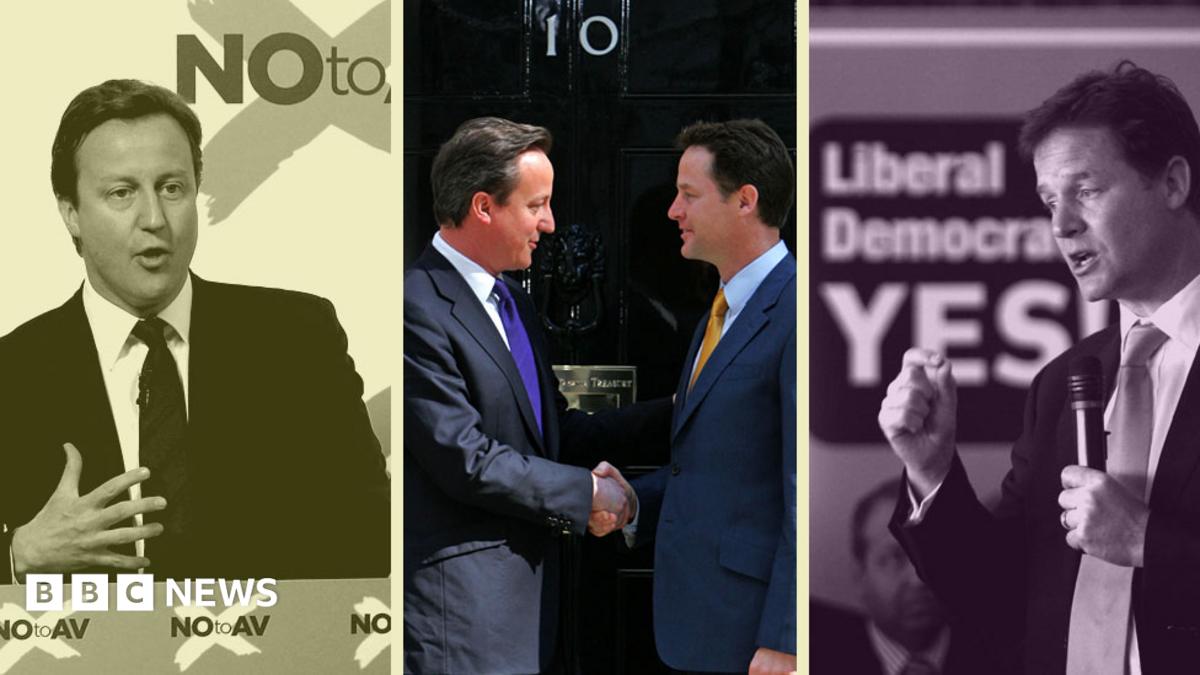
https://commonslibrary.parliament.uk/research-briefings/cbp-10009/
https://labour.org.uk/updates/stories/andy-burnhams-speech-to-labour-party-conference-2026/
https://commonslibrary.parliament.uk/research-briefings/rp11-44/
https://www.electoralcommission.org.uk/senedd-election-2026-media-guide