What does the EU actually do?

There are hundreds of trading blocs around the world - the World Trade Organisation (WTO) recognises just under 400 active trade agreements [1]. The European Union (EU) is one of the largest in terms of integration, seen in how they’re often treated as a single entity in trade negotiations. But what does that actually mean?
Trading blocs come in different forms, with different levels of integration. Generally, they aim to encourage trading between nations, and this can be achieved through reducing trade barriers such as lowering tariffs (taxes on imports) or quotas (a set limit on the number of imports).
The EU is a customs union - this means that, apart from removing tariffs and quotas within EU members, they also coordinate their external trade policies. This allows EU members to trade more freely amongst themselves, and combines the economic strengths of its 27 member nations in negotiations with non-EU countries.
On top of that, the EU is also a single market. This means that, apart from economic integration, there is also a free movement of goods, services, capital, and people across the borders of EU members. This means that certain regulations are imposed across all EU member countries, such as the General Data Protection Regulation (GDPR) or packaging requirements. The EU is not the only single market - other examples include CARICOM in the Caribbean and the Gulf Cooperation Council for the Gulf states, but the EU is certainly the most prominent one.
Simply put, the EU allows for economic cooperation and free movement of goods, services, capital, and people. The EU's prominence on the world stage is both due to its sheer size (it accounts for around 14% of the world's GDP! [2]) and deep integration.
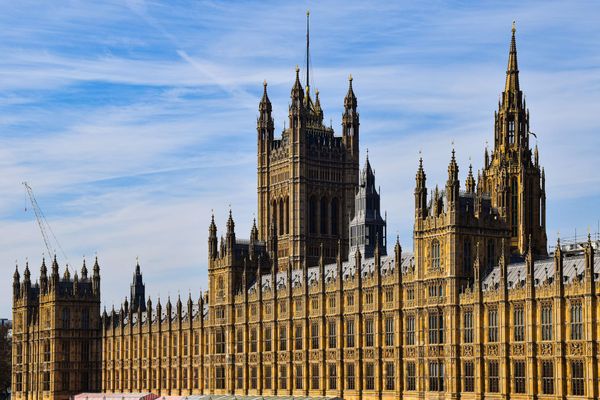
The United Kingdom’s withdrawal from the EU, commonly referred to as Brexit, became a hugely complex task partly due to the deep integration within the EU. While a seemingly simple process on the surface, having followed EU regulations for the past 47 years, Britain had to find solutions to remove themselves from a large amount of economic, legal, political, and social frameworks, demonstrating the scale of the influence of the EU.
By Macy Ng
[1] WTO. 2025. ‘WTO | Regional Trade Agreements Gateway’. Wto.Org. https://www.wto.org/english/tratop_e/region_e/region_e.htm.
[2] Eurostat. 2025. ‘Key Figures on the EU in the World – 2025 Edition’. @EU_Eurostat, Eurostat, March 26. https://ec.europa.eu/eurostat/web/products-eurostat-news/w/wdn-20250326-1.