Violence isn’t the answer, so what is? Latin America’s approach to reducing organised crime
Homicide rates across South America have fallen dramatically, with a reduction of 22.6% in the last decade. So why is there still such desperation to reduce crime?
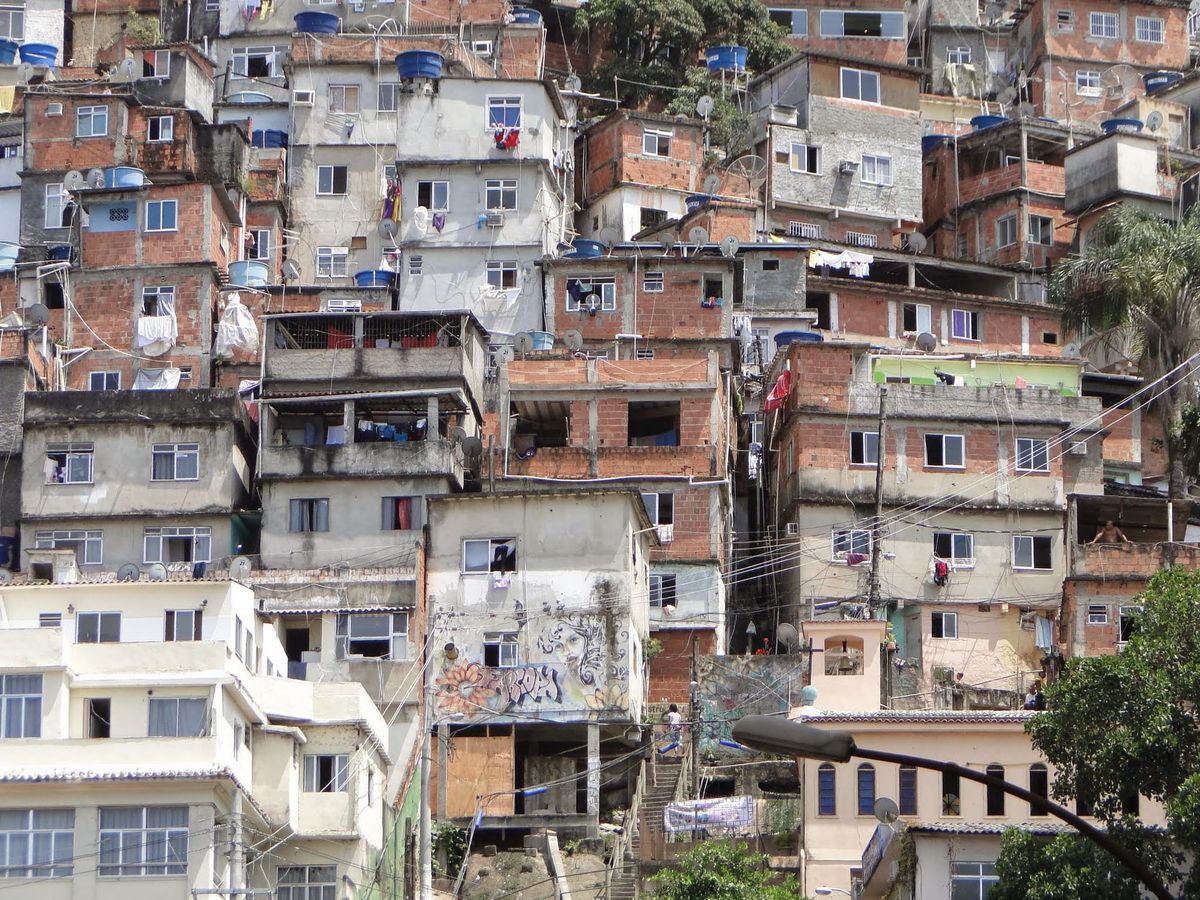
Aside from the ideal growing conditions for coca leaves, one of the main factors that has left South America vulnerable to drug trafficking gangs, such as Brazil’s Primeiro Comando de Capital (PCC) and Venezuela’s Tren de Aragua, is the harsh inequalities that persist in the region.
Such prevalent disparities in wealth amongst different groups can be traced back as far as the 15th century, when the majority of South America was colonised by the Spanish and the Portuguese. In an attempt to explain mixed race families to those back in Europe, the conquistadors developed the Casta System to classify the social standing of a person based on their racial background. These notions of white superiority were enforced by legislation, such as laws which forbade Mestizos (people with both Spanish and Indigenous heritage) from becoming priests. Rules similar to this cemented Spanish superiority within society.
More recently, inequality has been exacerbated by an increase in the popularity of commodity exports from South America since 1870, which has disproportionately benefited the wealthy elite who own farmland or areas rich in minerals.
These inequalities mean that poverty is rife, with roughly one in seven people experiencing extreme poverty across Latin America and the Caribbean. It is clear to see, therefore, how organised crime groups can exploit those who are suffering and looking for a source of income, and why such groups have such large amounts of influence across the continent.
Despite the fall in homicide rates across South America, Central America and Mexico, individual countries are still experiencing a rise in crime. For instance, Ecuador experienced a 31% rise in killings this year, Haiti’s homicide rate increased by 9.7%, and Guatemala saw a rise of 8%. Alongside homicides, the expansion of the cartels into new ventures, such as illegal mining for gold, extortion, and trafficking have further contributed to the urgency for stability.
This desperation for peace has led to right-wing parties gaining influence in the majority of Latin American countries. Examples of increased support for more hard-line, or mano dura, policies include the election of Chilean President José Antonio Kast, who is in the process of constructing a physical barrier on Chile’s northern border, as well as the election of Colombian President Abelardo de la Espriella, who pledged to construct mega-prisons and stop negotiations with organised crime groups.
However, while such strict policies have worked in El Salvador under President Nayib Bukele, with the homicide rate falling to from 36 per 100,000 inhabitants in 2019 to 1.3 per 100,000 inhabitants in 2025, there are significant concerns about human rights violations when enacting such rigorous crackdowns. In order to reduce homicide rates so significantly, Bukele permanently suspended civil rights, allowing him to incarcerate 3% of El Salvador’s male population in mega-prisons without trial.
While tackling crime in Central and South America is still one of the key priorities for politicians in the region, it is clear that unless these countries address the underlying structural issue of inequality, either organised crime will remain prevalent, or democracy will take a hit.
Fixing inequality should be Latin America’s answer to violence.
By Tilly George
https://economia.lse.ac.uk/articles/10.31389/eco.526
https://borgenproject.org/causes-of-poverty-in-south-america/
https://cowlatinamerica.voices.wooster.edu/2020/05/04/the-casta-system/
https://www.nber.org/digest/jun15/origins-latin-american-inequality?page=1&perPage=50
https://igarape.org.br/en/issues/citizen-security/homicide-monitor/
https://insightcrime.org/news/insight-crime-2025-homicide-round-up/
https://www.ft.com/content/0fcdacb4-77ae-435b-9e87-416b29731650?syn-25a6b1a6=1
https://peacerep.org/2026/06/30/colombias-new-president-el-tigre-promises-an-iron-fist/
https://www.bbc.co.uk/news/articles/clye4ky2yzpo
https://www.iiss.org/online-analysis/online-analysis/2025/02/the-hidden-costs-of-mass-incarceration/