Explainer - What can the Bank of England do about an oil shock?
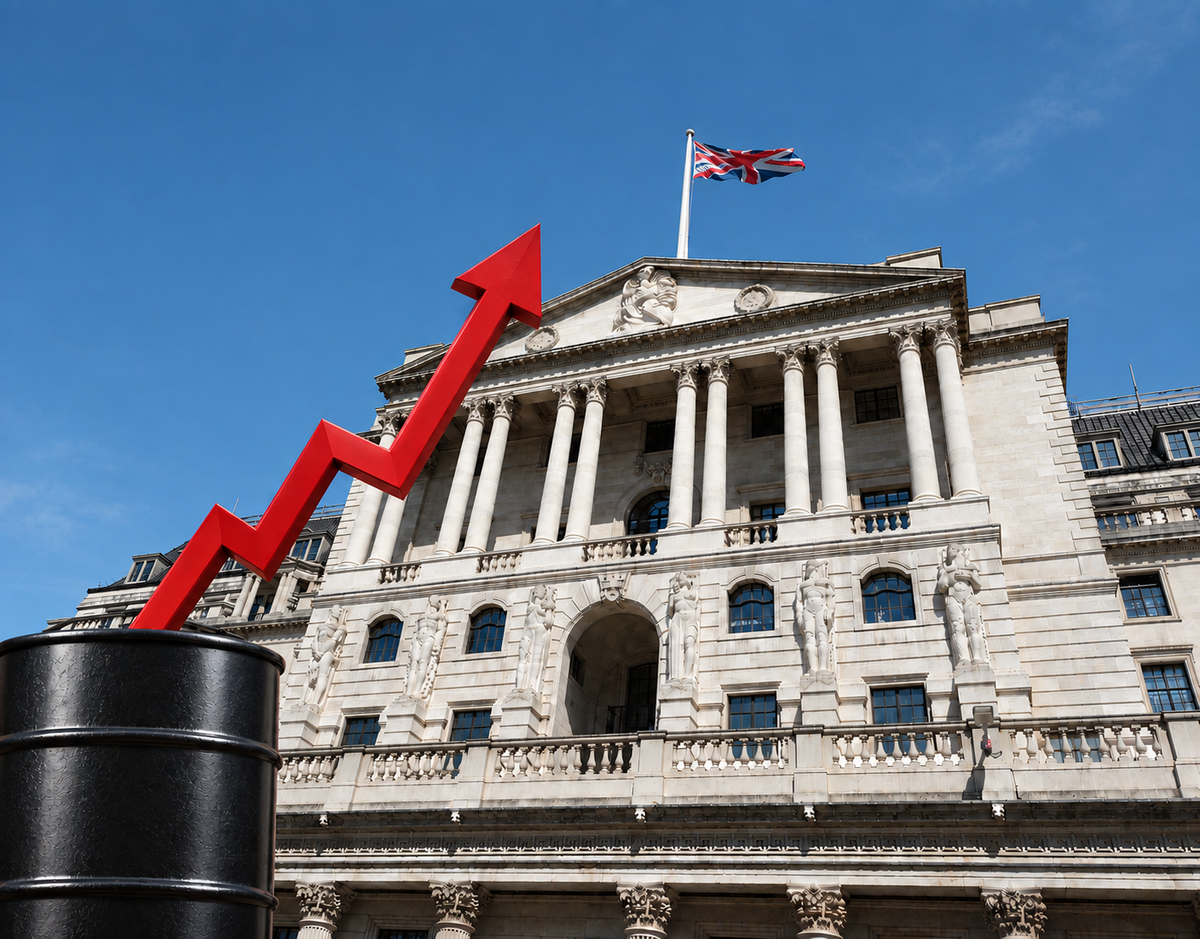
In both inflationary times, and during times of economic downturn, economists look towards the central bank to manipulate interest rates, encouraging either spending or saving. Today, UK inflation is at 3.1%[i], above its 2% target. Ordinarily, in times of inflation, the Bank of England would be expected to use monetary policy to raise interest rates in response. This makes borrowing more expensive and the reward for saving more attractive, discouraging consumption. Higher loan costs also reduce consumers' disposable income, further decreasing spending levels and slowing inflationary pressure.
However, it is important to understand the differences between the two main types of inflation: demand-pull and cost-push. Demand-pull inflation tends to occur during economic booms, when high levels of consumption and economic activity push demand to the right, leading to higher prices (Graph 1).
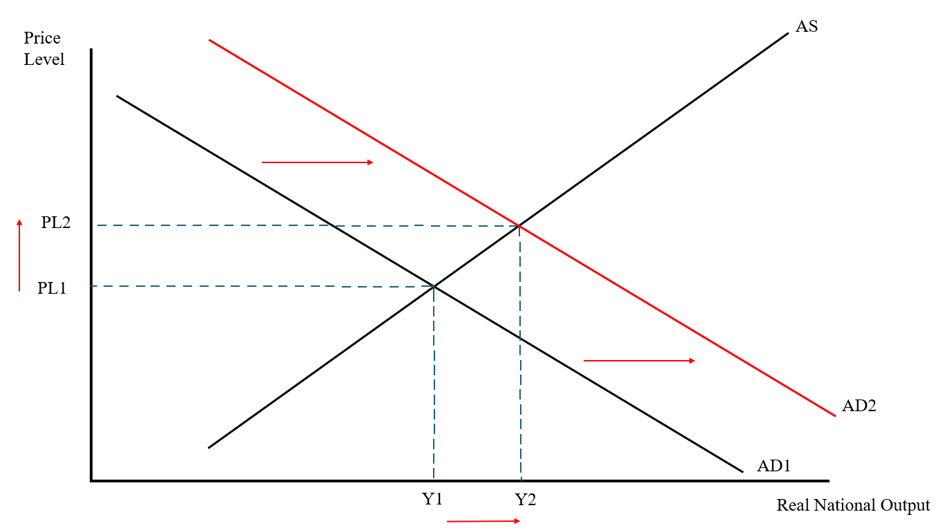
Alternatively, an economy can experience cost-push inflation, where the cost of production increases, leading to higher prices for consumers. When this happens on a national level, it leads to widespread inflation (Graph Two). The combination of rising prices with low economic growth is what economists call stagflation. This is generally seen as a more worrying type of inflation, as where demand-pull inflation can act as a signal of a growing economy, this does not. Secondly, cost-push inflation is problematic as it often cannot be solved through monetary policy as the issue falls with supply and not demand.
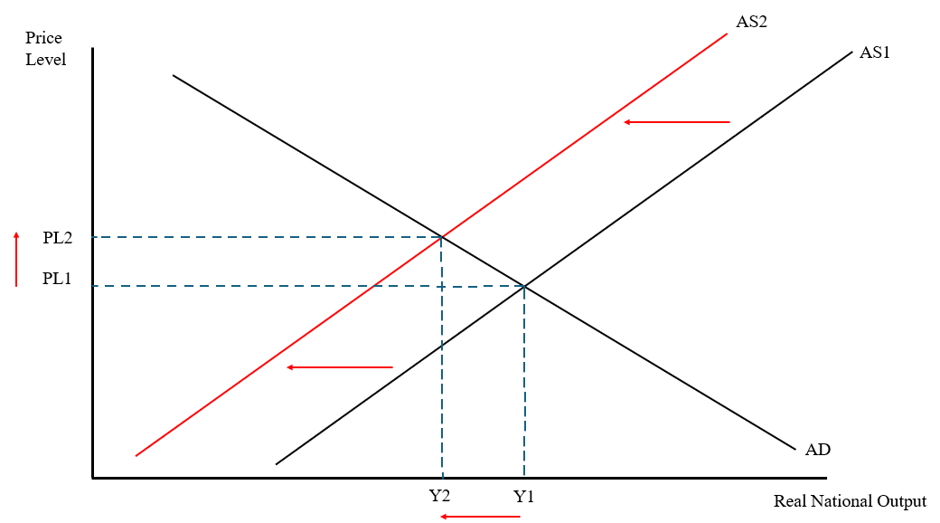
The current inflation that the UK is experiencing is driven significantly by global oil shocks. This is because an increase in the cost of oil affects everyone, as it makes consumers' energy bills and the price of fuel more expensive. These costs are also experienced by producers who need energy and fuel throughout the production process; these expenses are passed onto the consumer through higher prices.
Due to the nature of oil as a vital resource for the UK economy, supply shocks in the industry have substantially larger effects on the UK’S CPI. (The CPI is a weighted measure of inflation that takes into consideration the cost of different goods including food, energy, clothing and transport[ii].) It has been found that an oil shock that raises oil prices by 10% could contribute to 0.2 to 0.3 percentage points of overall inflation.[iii]
Therefore, as the UK is experiencing cost-push inflation, the Bank of England is limited in its ability to use monetary policy to fight rising prices. If they were to increase interest rates, then it would exacerbate the current cost of living crisis as consumers would have even less money to spend on increasingly expensive commodities. Hence, interest rates have been held at 3.75%.[iv]
As the economic environment remains uncertain due to uncontrollable geopolitical factors, we cannot be sure of whether the central bank will continue to hold interest rates. However, Andrew Bailey - the Governor of the Bank of England - has predicted a further increase in inflation in the months to come[v]. This could indicate that should the economy start to provide some evidence of growth, through consumer spending data or wage growth, the bank may use this as an opportunity to slowly increase interest rates in response. This could help to control as much inflationary pressure as possible, without worsening the squeeze of the cost of living crisis.
By Isabelle Borg
[i]https://www.ons.gov.uk/economy/inflationandpriceindices/timeseries/d7g7/mm23
[ii]https://www.ons.gov.uk/economy/inflationandpriceindices/articles/consumerpriceindicesabriefguide/2017
[iii] https://uk.investing.com/news/commodities-news/what-do-higher-oil-prices-mean-for-the-uk-4135546 and https://www.bankofengland.co.uk/-/media/boe/files/macro-technical-paper/2026/inflation-thresholds-and-oil-shock-transmission-in-the-uk.pdf
[iv] https://www.bankofengland.co.uk/monetary-policy/the-interest-rate-bank-rate
[v] https://www.bankofengland.co.uk/monetary-policy/the-interest-rate-bank-rate