Explainer - “Left” and “Right” Wing
You hear it everywhere: a newspaper is "right-wing” or someone’s views are "too far left." But nobody stops to explain what the words actually mean.
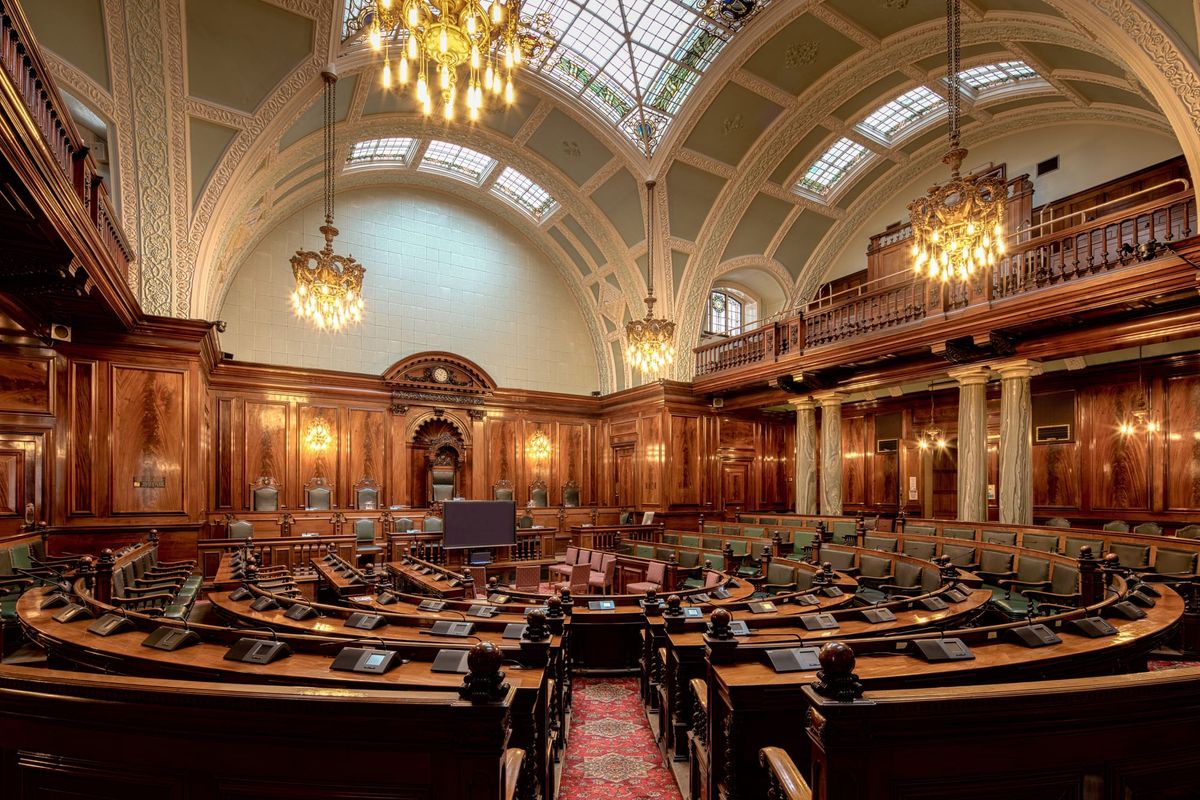
These terms originated in 1789. During the French Revolution, members of France's new parliament sorted themselves by where they sat: those who wanted to keep the king and the old traditions sat on the right, and those who wanted big change and more power for ordinary people sat on the left. That's the first clue to what the terms mean: the left tends to favour change, the right tends to favour tradition.
The ways they usually differ
The economy: the left generally wants the government to play a bigger role. For example, higher taxes (especially on the wealthy) to fund public services like the NHS and benefits. The right generally wants the government to play a smaller role. For example, lower taxes and freer markets, trusting businesses and individuals to create wealth.
Society: The left tends to prioritise change and equality between groups. This can be done by reforming old rules and championing newer social movements. The right, however, tends to prioritise stability and continuity, valuing established institutions, customs and a sense of national identity.
Change itself: Both sides take very different approaches when establishing policy. The left usually looks at society and asks, "how could this be fairer?” while the right usually asks, "what's worth protecting before we change it?" Neither question is wrong, and a healthy country arguably needs both.
A real-world example
In the UK, the two biggest parties sit on opposite sides of this line. Labour is the main party of the centre-left: historically it has backed a strong welfare state, public ownership and higher spending on services. The Conservatives ("Tories") are the main party of the centre-right: historically they've favoured lower taxes, private enterprise and a more cautious approach to changing institutions.
Why it's not that simple
Left and right are a spectrum: you can be economically left-wing but socially traditional, or economically right-wing but socially liberal. This is why two people who both call themselves "left-wing" can still disagree. Most people, and most dominant political parties, actually sit somewhere near the middle. Someone described as a "centrist" or “moderate” borrows ideas from both sides rather than committing fully to either.
The edges have names too. You'll often hear "far-left" and "far-right" in the news, and these describe the more extreme ends of the spectrum. The far-left might want to get rid of private business almost entirely, putting nearly everything in the hands of the state, as in the former Soviet Union. The far-right might push a very strong form of nationalism, placing one nation or group firmly above others. Fascist states like Nazi Germany are the most extreme example. Most mainstream politicians sit a long way from these extremes, which is why "far-left" and "far-right" are often used as warnings rather than compliments.
Lastly, the terms are relative. What counts as "left-wing" in the United States would look different in France or Sweden. And the terms shift over time: ideas once seen as radical may eventually become normalised and accepted by most, for example equal voting rights for women.
So next time someone throws around "left" or "right," you'll know they're pointing at a rough position on a much bigger map.
By Aisha Abdulsalam
Sources:
[1]
https://www.history.com/articles/how-did-the-political-labels-left-wing-and-right-wing-originate
[2]