Explainer - A War Without Borders: The US-Israel-Iran Conflict and Its Impact on the Global Economy
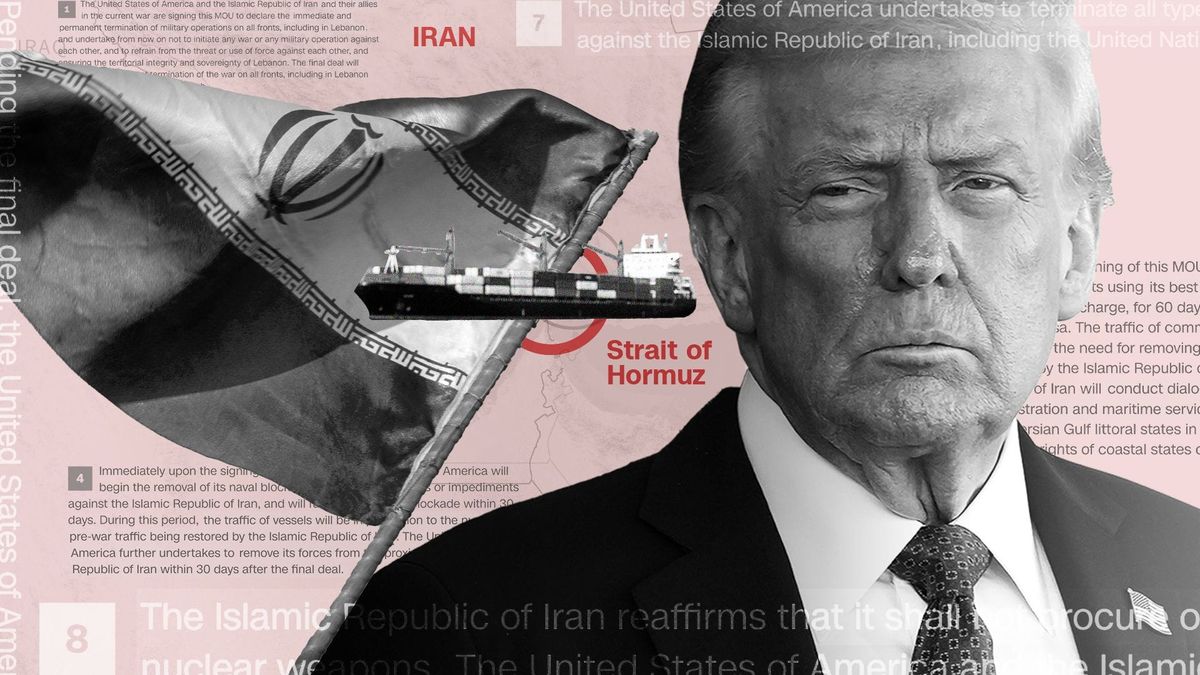
Every day, around 20 million barrels of oil pass through the Strait of Hormuz. This represents approximately a quarter of the world’s seaborne oil trade, according to the International Energy Agency. When war breaks out and conflict threatens a route carrying such a large proportion of the world’s energy supplies, its consequences rarely remain within the borders of the countries involved. The conflict involving the United States, Israel and Iran has created uncertainty surrounding oil prices, global trade, inflation and financial markets across the world.
Oil Prices Under Pressure
One of the biggest economic consequences of the conflict has been uncertainty surrounding global oil supplies. The Strait of Hormuz is a crucial shipping route connecting the Persian Gulf to the Gulf of Oman. Countries including Iran, Iraq, Kuwait and Qatar rely heavily on the Strait to export their oil. Saudi Arabia and the United Arab Emirates have some alternative routes, but these cannot fully replace the oil normally shipped through the Strait.
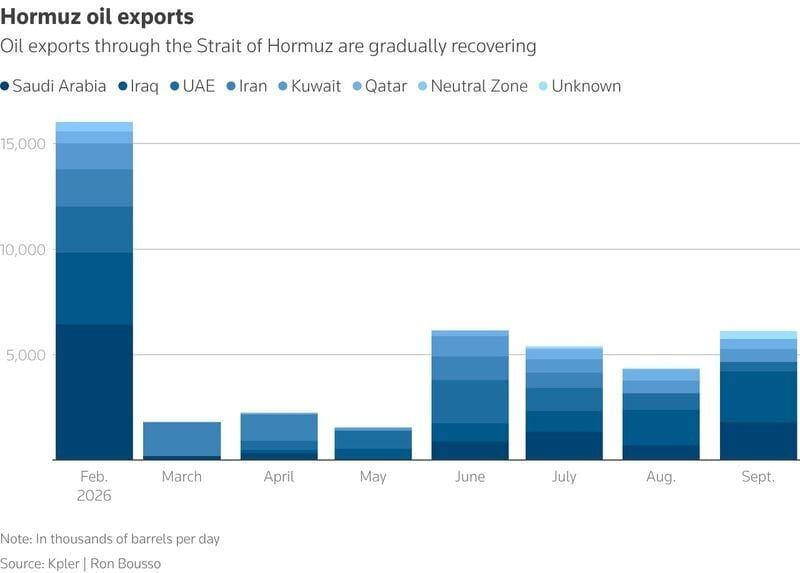
If shipping is disrupted, less oil may reach international markets while demand remains high. Buyers then compete for the available supply, pushing prices upwards. This matters because oil is used not only for petrol but also in transport, manufacturing and energy production. When fuel becomes more expensive, delivery companies, airlines and manufacturers face higher operating costs. They may pass these costs on to consumers through higher prices, contributing to cost-push inflation. Households can therefore face more expensive travel, goods and energy bills, even in countries far removed from the conflict.
UK government figures show that average petrol prices rose from 152.29p per litre in the week beginning 20 July 2026 to 172.0p in the week beginning 21 September. This is an increase of almost 13%. The conflict is not the only factor affecting petrol prices, so the rise cannot be attributed to it alone. However, the timing illustrates how global uncertainty can coincide with higher costs for ordinary consumers.
Disruption to Global Stock Markets
The conflict has also created uncertainty across global stock markets. When investors fear that conflict could increase costs and reduce business profits, they may sell shares, pushing indices such as the US S&P 500 and the UK's FTSE 100 downwards.
However, not all companies are affected in the same way. Oil and gas producers may benefit when oil prices rise, as they can sell their output at higher prices. In contrast, airlines face higher fuel bills, while manufacturers and delivery companies pay more to transport goods and operate equipment. Consequently, some firms may see their profits increase while others struggle.
This uncertainty was reflected in market movements on 24 September 2026. Reuters reported that the S&P 500 closed 0.02% lower, while Brent crude oil rose by more than 3% to almost $107 a barrel. Investors were weighing escalating tensions in the Middle East against reports that US and Iranian negotiators were exploring a possible route towards ending the war. Markets recovered from their lowest points following these reports, demonstrating how even the prospect of diplomacy can influence investor confidence.
Diplomacy or Escalation?
The conflict began with US and Israeli strikes on Iran on 28 February 2026. The US administration has outlined military objectives, including destroying Iran’s missile capabilities and navy, preventing it from obtaining a nuclear weapon, and stopping its support for armed groups in the region. President Trump publicly outlined these aims on 2 March. Understanding these stated objectives is important: while the US maintains that it is acting for security reasons, the scale and duration of the conflict also raise questions about power, national prestige and the desire to avoid appearing weak.
The economic consequences have also become a domestic political issue in the United States. In the November 2026 midterm elections, Democrats won control of both the House of Representatives and the Senate. The Associated Press reported that voter anger over inflation, the cost of living and the Iran war contributed to the result. A Congress controlled by the opposition could make it harder for President Trump to implement his policies, demonstrating how an overseas conflict can influence domestic voting behaviour and constrain a president's political freedom - although perhaps only temporarily.
Ultimately, it remains uncertain whether diplomacy will bring a lasting resolution or whether tensions will escalate further. The conflict demonstrates that wars are not fought solely between governments and armed forces; their economic consequences reach businesses, households and voters across the world. Disruption to a single shipping route can raise costs thousands of miles away, while decisions made by political leaders can influence markets and elections. The question is no longer simply who will win the war, but how much more economic and political damage will be caused before peace becomes possible.
By Dinah Milton