Diplomacy vs Development: 6 Years of the FCDO Merger
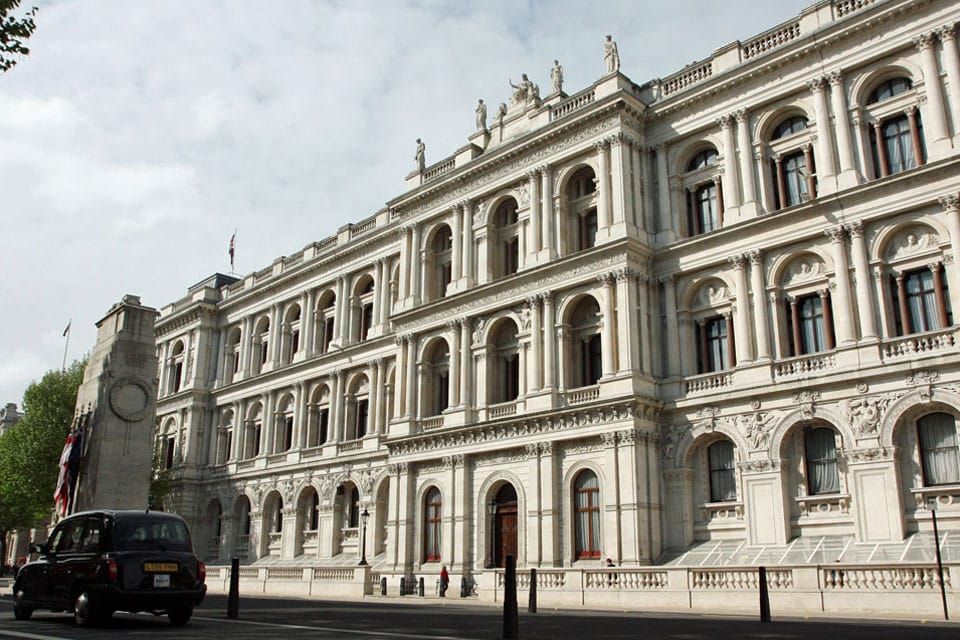
On the 2nd September 2020, under the Johnson Government, the merger of the Department for International Development (DFID) and the Foreign Commonwealth Office (FCO) was taken into effect and became the Foreign, Commonwealth and Development Office (FCDO). The Government claimed that this merger would be a new opportunity for the UK to have a greater impact on the world stage (specifically after the Covid 19 pandemic and when preparing to hold the G7 Presidency and COP26), where UK aid was claimed to be given a new ‘prominence’ with the UK’s international policy. Alongside, the Foreign Secretary being able to make empowered decisions on aid spending in line with the UK’s overseas priorities. However it has now been nearly six years since the creation of the FCDO, and there is still the question of whether merging foreign policy and aid truly works?
DFID was historically an independent, global leader in poverty reduction across the globe. It was created under the Blair Government in 1997 when it was formally separated from the FCO. During its 23 years running as an office, DFID ended the practice of ‘tied aid’, which forced developing nations into spending British Aid on exclusively British products and services, ensuring that the aid was spent as efficiently as possible. Where ultimately DFID championed the UK’s rise to meet the UN’s target of spending 0.7% of Gross National Income (GNI) on development aid, which made Britain one of the few major global powers to fulfill this goal.
However, the latest reports from 2025 show that 0.43% of the UK’s GNI was spent on international aid. The UK government is aiming to further reduce spending on international aid to 0.3% of GNI by 2027/2028. This has demonstrated that the 0.7% of GNI target which DFID achieved has effectively been abandoned in practice where spending is now dictated by defense spending targets and fiscal tests rather than the previous legal standard by the UN.
The National Audit Office (NAO), the UK’s independent public spending watchdog, produced a report in 2024 which suggests that the development and aid capacity of the FCDO ‘has reduced’. The NAO report highlighted that there has been significant negative implications from the merger, meaning the FCDO has lost many of their senior development roles from DFID and had a shortage of aid programme managers, where there is a risk of the department losing expert skills and expertise in international development. Furthermore, Professor Melissa Leech (during her tenure being Director of Development Studies) said that the merger has ‘also cost the UK its reputation for excellence in international development, and damaged the all-important trust required for effective global partnerships’.
Where ultimately, the merger integrated international aid into broader diplomatic and security goals for short term priorities, rather than long term development and poverty reduction. DFID originally operated under a legal mandate tied strictly to longer term global poverty reduction. Whereas the FCDO’s budget is integrated into the Foreign Secretary's budget, which had explicitly redesigned aid to serve the UK’s immediate diplomatic, commercial and geopolitical ideals. Which has allowed short term and transactional outcomes, such as trade deals or diplomatic influence, to take greater priority over multi-year developmental deals with the globe's poorest nations to help eradicate poverty.
Following the merger, the Independent Commission for Aid Impact had created an overview for the UK’s aid spending till 2029. This has outlined that the UK is rapidly winding down long term bilateral development programmes (a structured aid or cooperation initiative funded and managed directly by one country's government to support the economic, social, or political progress of another specific country). Across 11 key historic partners (primarily in sub-saharan Africa, including Kenya, Rwanda, Tanzania etc) the allocations are being cut by 80-90%, leaving the baseline for £5.0m a year by 2029. This hence means that bilateral aid is being narrowed down almost entirely into short-term humanitarian relief, conflict zones and refugee support. Where now 70% of the UK’s aid allocations are now mandated to go to fragile and conflict-affected states, such as Ukraine, Sudan and Palestine, however it is at the expense of stable and low income nations facing deep structural poverty.
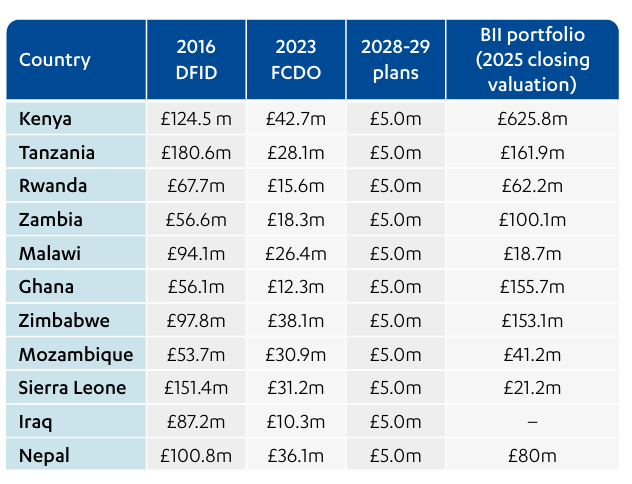
(image from Independent Commission for Aid Impact 16/7/26)
These budget cuts to bilateral developmental programmes have caused a shift in the UK’s strategy. The UK has lost some of its ‘soft power’ status through retreating from these bilateral developmental programmes as it has severed the long term relationships and also leaving many developing countries with high debts and the continuing struggle against the climate crisis. Which has ultimately created a vacuum that other competing global powers can fill to create new relationships. However, the new strategy for the UK is through security spending and technological investments to create diplomatic advancements, essentially meaning the poverty-alleviation goals has reduced significantly under the FCDO since aid budgets are having to juggle competing targets (humanitarian relief, climate resilience, gender equality and poverty eradication) in an ever shrinking budget.
Overall, the merger of diplomacy and development does offer strategic alignment from the outside, however in practice the short-term national interests will always push aside long-term humanitarian outcomes. Yet in today’s world real global influence and power does rely on technological investments and security spending, rather than aid spending as geopolitical levers.
By Amelia Scott
Footnotes:
[2] book-review-the-rise-and-fall-of-the-department-for-international-development
[3] https://www.ids.ac.uk/news/development-capacity-reduced-since-fcdo-merger-new-nao-report-finds/
[4] https://commonslibrary.parliament.uk/research-briefings/cbp-9208/
[5] https://css.leeds.ac.uk/from-dfid-to-the-fcdo-what-does-this-mean-for-uk-aid/
[8] cbp-10243